The Camel Club
The Camel Club
A modern alternative to SparkNotes and CliffsNotes, SuperSummary offers high-quality Study Guides with detailed chapter summaries and analysis of major themes, characters, and more.
Summaries & Analyses
Quizzes
NEWReading Tools
Chapters 12-23Chapter Summaries & Analyses
Content Warning: This section of the guide includes discussion of religious discrimination, substance use, death by suicide, and death.
Chapter 12 Summary
On the outskirts of Brennan, Pennsylvania, two Arab men, an engineer and a chemist, work out of a strip mall office. They fit a former US National Guard sergeant with an advanced prosthetic hand to replace his missing right hand. The realistic silicone device matches his skin tone and vein patterns, with powered movement controlled by wrist muscle flexing. The sergeant, who lost his other hand as well but uses a steel hook for it as a reminder, practices with the new hand. While anyone shaking it might notice unusual texture and temperature, it appears convincingly real.
After the sergeant leaves with his uniform and a promise that he will be taken care of after his mission, the two men open a box containing a canister of liquid poison. The prosthetic hides a pouch that can secrete this liquid through artificial pores when a concealed button is pressed. When the chemist remarks on the sergeant’s bitterness, the engineer replies that his anger is understandable.
Chapter 13 Summary
Late that night, Tom Hemingway sits in his Capitol Hill apartment, adrenaline high after learning from Reinke and Peters that Patrick Johnson is dead. He feels no remorse but worries about the witnesses who escaped. From a hidden floor safe, he retrieves photographs of over two dozen Muslim people he spent two years assembling, some of whom he has made appear legally dead.
Hemingway reflects on his father, Franklin T. Hemingway, a respected ambassador and peacemaker who died violently. Unlike his diplomatic father, Tom entered intelligence work with the NSA and CIA, becoming a skilled field agent. He eventually concluded that his work was a sham driven by business interests that worsened global instability. His disillusionment led him to develop a secret plan with the help of a wealthy friend of his father. He concludes that his motivation is neither patriotic nor regional but global, perhaps a tribute to a peacemaking father who met a violent end.
Chapter 14 Summary
The morning after Patrick Johnson’s death, his body is discovered on Roosevelt Island by fifth graders on a field trip. At the Secret Service’s Washington Field Office (WFO), Alex’s supervisor, Jerry Sykes, assigns him to the case. He justifies their investigation by pointing out that Johnson worked at the National Threat Assessment Center and was technically a joint employee of the Secret Service and the National Intelligence Center. He was found with a gunshot wound, a revolver, a bottle of Scotch, and a suicide note.
Sykes pairs Alex with rookie agent Jackie Simpson, a former Alabama police officer who is known in the agency for getting special treatment; she has connections, but Alex doesn’t know who. Her casual enthusiasm annoys Ford, who reminds her that a man is dead. Sykes emphasizes that the case is a high priority and requires daily, detailed reports to senior leadership.
Chapter 15 Summary
Djamila Saelem cares for three young boys at the Franklin residence in Brennan, Pennsylvania. Their mother, Lori Franklin, appears dressed for the country club and makes cynical remarks about men and marriage. The two women discuss contrasting views on Islam and American culture. Lori expresses pity for what she perceives as the oppression of Muslim women, while Djamila, who is Muslim, quietly corrects her misconceptions. Djamila hides her resentment of Lori’s condescending attitude and her revulsion at American excess.
After Lori leaves—supposedly for tennis, though Djamila knows she is meeting a lover—Djamila takes the children to a park. She reflects that she wants sons but doubts she will live long enough to become a mother. She drives the sleeping boys around town, conducting detailed surveillance of roads and landmarks with a miniature camera. That evening, she plans to file her report through the movie chat room.
Chapter 16 Summary
Unable to sleep after witnessing the murder, Stone decides to alter his appearance. He visits Adelphia’s Chinatown apartment, where she cuts his hair and shaves his long beard, leaving him barely recognizable. She mentions that Agent Alex Ford came by Stone’s tent around midnight the previous night.
Troubled, Stone buys new clothes at Goodwill. When he returns to Lafayette Park, a Secret Service guard fails to recognize him. Stone finds a newspaper that confirms there is no public story yet about the Roosevelt Island incident. He calls Caleb and asks if they can meet at Caleb’s work the next day.
Chapter 17 Summary
Alex and Jackie arrive at Roosevelt Island, where multiple agencies are already investigating Patrick Johnson’s death. A park policeman describes the apparent death by suicide: gunshot wound to the mouth, revolver, suicide note, nearly empty bottle of Scotch. Johnson’s soaked clothing and a waterproof plastic baggie suggest that he swam to the island.
FBI Special Agent Don Lloyd initially questions the Secret Service’s presence but accepts their involvement. Jackie impresses Lloyd with her extensive knowledge of forensic techniques. As they prepare to leave, NIC agents Tyler Reinke and Warren Peters approach; they are also investigating, and they offer to have NIC analyze the suicide note. They all know it will be faster, and Alex agrees.
After the NIC agents depart, Jackie questions the decision. Alex reveals he deliberately gave them the note to create justification for them to visit NIC and conduct their own investigation.
Chapter 18 Summary
Carter Gray arrives at the National Intelligence Center to meet with his inner circle. One of the prisoners who refused to cooperate is effectively sentenced to death. Gray orders that one week be spent extracting intelligence from al-Omari by any means necessary.
Tom Hemingway delivers a comprehensive briefing covering Middle East instability and global threats, arguing that US foreign policy is failing in Iraq. Gray authorizes preemptive lethal action against targets. Near the meeting’s end, Gray receives a file about Johnson’s death and becomes furious at learning of it so late. He orders a complete background report within an hour. Hearing Simpson’s name among the investigating agents makes him smile, and he returns to his windowless office to read the Johnson report.
Chapter 19 Summary
Stone, transformed by his haircut and shave, meets Caleb at work in the Rare Books Reading Room at the Library of Congress. Caleb barely recognizes him.
Over lunch, Stone asks about Johnson; Caleb used his access to investigate, but he has limited clearance and found nothing. Stone mentions Alex’s midnight visit to his tent, which he finds troubling. Caleb receives a call from Milton, who has hacked the Secret Service database and discovered that Patrick Johnson worked as a data management supervisor at the National Threat Assessment Center, a division of Carter Gray’s NIC. Stone immediately devises a plan: That evening, they will visit Johnson’s home in Bethesda. He instructs Caleb to bring his dog, Goff.
Chapter 20 Summary
Tyler Reinke and Warren Peters leave the suicide note at NIC’s lab, hoping that one of the witnesses touched it and left a fingerprint. They search the Georgetown riverbank for the witnesses’ boat, knowing only that the group includes an old man with a white beard, likely unhoused.
Meanwhile, Alex and Jackie interview Johnson’s fiancée, Anne Jeffries, at her Springfield apartment. She insists that they were happy and reveals that Roosevelt Island was the site of their first date. Jackie’s blunt questioning upsets Jeffries. Alex informs her that the suicide note indicated that Johnson was sorry—information the FBI had not shared.
As they leave, Alex confronts Jackie about her aggressive style; she defends it as a deliberate good-cop/bad-cop routine. Alex receives a call from FBI Agent Lloyd, who says they may have discovered why Johnson died by suicide.
Chapter 21 Summary
Alex and Simpson arrive at Johnson’s Bethesda home. They are surprised by the million-dollar property, which far exceeds Johnson’s salary. Agent Lloyd reveals that Johnson also owned a new Infiniti and a Lexus. Upstairs, Lloyd shows them bundles of heroin hidden in the attic.
Lloyd theorizes that Johnson died by suicide from the pressure of his secret drug operation and his upcoming marriage. He dismisses murder because the elaborate staging seems too sophisticated for drug dealers. As they leave, Alex gives Jackie blunt career advice: Stop relying on connections, do grunt work, and earn genuine respect. He tells her that if she follows this advice, she will make at least one friend in the Service—him.
Chapter 22 Summary
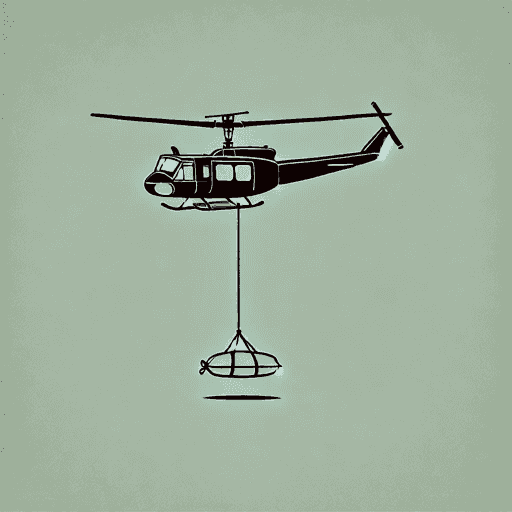
Gray takes a helicopter to the White House. He proactively addresses Johnson’s death, informing Brennan about the heroin and promising an internal investigation. Brennan expresses anger about a potential scandal during reelection. Gray frames the issue as a weapon for opponents and convinces Brennan to let him help manage media coverage under the guise of national security.
Secretary of Defense Joe Decker, Gray’s rival for presidential influence, proposes covertly assassinating extremist Iraqi legislators. Though initially shocked, Brennan becomes receptive when Decker warns that failure could define his legacy negatively. Gray accepts an invitation to Brennan’s hometown dedication ceremony.
Meanwhile, Peters and Reinke find the witnesses’ boat and decide to stake out Johnson’s house in case they decide to go there.
Chapter 23 Summary
Alex files his report on the Johnson case, believing it is closed. He confronts Jackie about earning respect through hard work. Pressed, she angrily reveals that her father is Senator Roger Simpson, Chairman of the Intelligence Oversight Committee. Alex criticizes her distinctive red handkerchief and custom pistol as symbols that alienate colleagues, advising her to use standard equipment.
At the LEAP Bar, Kate asks Alex out, and they arrange dinner for the following evening. A news report reveals the heroin discovery, and Hemingway appears on screen, delivering NIC’s statement. Alex notices Kate’s sudden silence about her connection to Hemingway and calls her out on it.
Chapters 12-23 Analysis
These chapters continue to develop the novel’s central conflicts through the parallel investigations undertaken by the Camel Club and the National Intelligence Center, juxtaposing the unofficial and flexible methods of outsiders with the procedural and bureaucratic work of state institutions. While Alex and Jackie are constrained by jurisdiction and protocol, and further hampered by several other law enforcement and intelligence agencies, the Camel Club operates with extralegal freedom. Milton’s ability to hack the Secret Service database grants immediate access to critical information, while Stone’s plan to surveil Johnson’s home using a dog for cover exemplifies the ingenuity and spontaneity the Club adopts in order to bypass official barriers.
Alex’s tactical decision to relinquish the suicide note to NIC is a strategic maneuver: an attempt to circumvent the layers of agency security. However, the unintended consequences of this decision illustrate the difficulty of pursuing an investigation within the system. It also highlights the system’s vulnerability to manipulation by the entities it oversees, as the NIC, FBI, and local law enforcement all vie to control the investigation, leading to a lack of information sharing. In addition, the discovery of heroin in Johnson’s house provides an easy solution for all involved investigative parties, and overall, they are willing to accept it. Alex initially is as well, and it is only his discussion with Stone that reignites his interest in the case. Once Alex steps outside of protocol and agency standards, he can see the superficiality of the solution, and Stone inspires him to continue investigating. The Camel Club, on the other hand, is unbound by official narratives and protocols, and their investigation moves forward unhampered by hierarchy, highlighting the theme of The Power of Outsiders Against Institutional Corruption.
These chapters explore Tom Hemingway’s motivations specifically, examining how his experience and reaction to it both parallel and diverge from Carter Gray’s, continuing the novel’s exploration of The Lingering Impact of the Past on Present Identity. The motivations of both men are rooted in disillusionment and personal tragedy. Hemingway’s father was a diplomat, and he was raised in a family that prioritized service and integrity. He idolized his father, calling him “one of the great peacemakers of his generation” (68). His unjust and violent killing catalyzes Hemingway’s conclusion that his intelligence work was a “sham, fueled more by business interests than national ones” (69). He positions his operation as a radical attempt to correct a broken system—a tribute to his father’s failed pacifism transformed into violent intervention. Gray’s character is shaped by 9/11 and the tragic deaths of his wife and daughter, and this loss motivates the way he shapes and runs the NIC. The photo gallery of terrorist atrocities in the NIC lobby fuels his absolutist doctrine, demanding that his agents adopt the same vengeful attitude. The gallery is also a constant reminder of threats to national security, fostering a paranoid environment in which moral ambiguity can be rationalized. His windowless office symbolizes his insular worldview, and his mandate to “do all you can to make certain these things never ever happen again” reveals a man whose personal loss has fused with his professional approach (97).
Deception functions as both a plot device and a thematic exploration of institutional fallibility. The murder is staged as a death by suicide, supported by details like Roosevelt Island and the waterproof baggie. The planted heroin in Johnson’s home provides a secondary layer of deception, designed to close the case quickly. At a higher level, Gray’s manipulation of Brennan demonstrates how national security language conceals information—framing the Johnson incident as a political liability to Brennan’s reelection campaign ensures the permission and access he wants.
The novel also uses secondary characters to reflect contemporary anxieties about American culture and foreign policy and develop the theme of Government Secrecy as a Catalyst for Conspiracy. The ex-National Guard sergeant, who is a part of Hemingway’s plot, responds cynically that it is “[n]ice, to be finally taken care of” (67), a comment that suggests a sense of abandonment. His grievance is exploited for a larger agenda. Djamila’s point of view provides a critical outsider’s perspective, with her disdain for her employer’s materialism serving as a critique of Western excess. The detail that she files reports via a chat room for To Kill a Mockingbird creates an irony—a classic film centered on American justice is used as a covert channel for a plot aimed at destabilizing the nation.

Get in-depth, chapter-by-chapter summaries and analysis from our literary experts.
- Grasp challenging concepts with clear, comprehensive explanations
- Revisit key plot points and ideas without rereading the book
- Share impressive insights in classes and book clubs