The Camel Club
The Camel Club
A modern alternative to SparkNotes and CliffsNotes, SuperSummary offers high-quality Study Guides with detailed chapter summaries and analysis of major themes, characters, and more.
Summaries & Analyses
Quizzes
NEWReading Tools
Prologue-Chapter 11Chapter Summaries & Analyses
Content Warning: This section of the guide includes discussion of mental illness, graphic violence, substance use, death by suicide, and death.
Prologue Summary
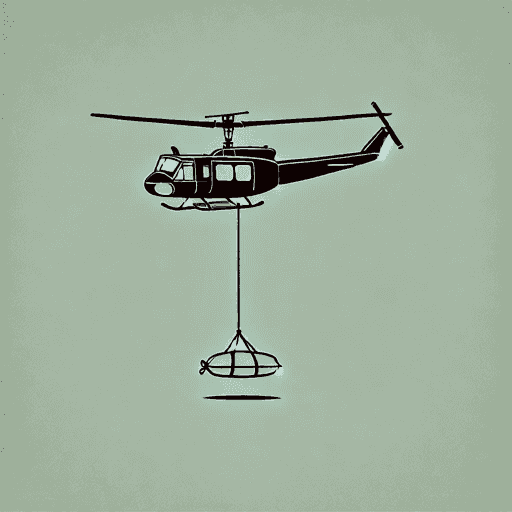
Adnan al-Rimi drives a Chevy Suburban through rural Virginia at night with two passengers: Muhammad al-Zawahiri, an Iranian on his cell phone, and Gul Khan, an Afghan man checking his machine gun. Al-Rimi, an Iraqi man who fought against Iran, distrusts al-Zawahiri. When they hear a helicopter overhead, al-Zawahiri orders them to hide under trees. As the helicopter begins landing, al-Zawahiri panics and orders al-Rimi and Khan to hold off the Americans while he escapes.
Al-Rimi demands al-Zawahiri’s gun, shoots Khan dead, and pursues the fleeing al-Zawahiri, killing him with his own weapon. Two Western men emerge from the helicopter with a body bag containing an unconscious man dressed identically to al-Rimi. They place al-Rimi’s wallet on the body, then use a shotgun—with al-Zawahiri’s dead hands pressed to it—to kill the unconscious man, staging a murder-suicide. Al-Rimi boards the unmarked helicopter with the men. Now officially dead, he will be more valuable than ever. The helicopter heads north toward Brennan, Pennsylvania.
Chapter 1 Summary
Oliver Stone wakes from a recurring nightmare about his wife and daughter being shot. He examines photos; his wife is dead, and he has no pictures of his daughter beyond toddlerhood. Stone, who renamed himself after the famous director, works as caretaker of Mt. Zion Cemetery in northwest Washington, DC, a job that pays cash and includes modest housing in the cemetery.
He travels to his protest tent stationed near the White House, where he observes and records activity in his journals. Adelphia, a fellow protester, criticizes his shabby appearance. When President James Brennan’s motorcade departs, Stone briefly locks eyes with Brennan. Carter Gray, the intelligence czar and head of the National Intelligence Center (NIC), sits beside the president. A guard threatens to confiscate Stone’s binoculars.
Chapter 2 Summary
Tyler Reinke and Warren Peters drive to a wooded area and remove a bound, sedated man from their trunk using a plastic tarp. After they carry him down a steep slope, Reinke inflates a dinghy and attaches a small engine. They wade into the river and repeatedly dunk the captive’s body—keeping his face above water—to soak his clothes. Peters pilots the craft downriver through thickening fog, planning to wait in a deserted cove to enact their plan.
Chapter 3 Summary
Secret Service agent Alex Ford works an overtime protection detail at a reception for a visiting Baltic prime minister. He reflects on his career’s tedium and a chronic neck injury from a motorcade accident that required surgeries and steel implants. Though he could have taken disability, he chose to return to duty. Now 43, single, and childless, he questions remaining with the Service.
Chapter 4 Summary
Stone arrives in Georgetown and meets Caleb Shaw, a Library of Congress employee in 19th-century attire, who reports that Reuben Rhodes is present, but Milton Farb has not arrived. Reuben, a former Defense Intelligence Agency (DIA) agent, joins them. Milton arrives, and they wait for him to complete his ritual, a manifestation of his obsessive-compulsive disorder. Milton shyly announces he has made a new female friend at his anxiety clinic.
The four retrieve a hidden rowboat and row through fog toward Theodore Roosevelt Island. They discuss patrol patterns and the elevated threat level before hauling the boat into the bushes and heading inland.
Chapter 5 Summary
Alex goes to the LEAP Bar, where Kate Adams—a Department of Justice lawyer who bartends—serves his usual martini. He deduces from her hands that she plays piano. Alex watches Carter Gray on television, announcing that three alleged terrorists—including Muhammad al-Zawahiri and Adnan al-Rimi—were found dead in rural Virginia, with related arrests following.
Kate introduces Alex to Tom Hemingway, a liaison from an undisclosed intelligence agency. Alex is unsettled by Hemingway’s powerful grip and Kate’s warmth toward him. Defeated, Alex leaves.
Chapter 6 Summary
President Brennan and Carter Gray return to the White House after a fundraiser. Gray tells Brennan to stop obsessing over polls since victory is certain.
Late that night, Gray travels to the National Intelligence Center in Loudoun County, Virginia. Via satellite video, he interrogates Salem al-Omari, a ghost detainee, demanding that he become a US spy and infiltrate terrorist organizations. When al-Omari repeatedly refuses, Gray threatens to take his infant son and arrange for a Christian upbringing in America unless he cooperates within 24 hours. Gray presents similar proposals to other detainees; only a neo-Nazi agrees. He returns home, kisses photos of his dead wife and daughter, and sleeps.
Chapter 7 Summary
Alex visits the Secret Service agents near the White House perimeter, and one mentions that President Brennan’s Pennsylvania hometown has been renamed after him. Alex knows Oliver Stone from his years of perimeter duty and looks for him at the protest tents but finds only Adelphia.
Walking home later, he notices two men working on an ATM at midnight. Suspicious, he draws his weapon and discovers stolen cards and a skimmer device. He arrests both men. Despite the successful bust, Alex remains preoccupied with Kate Adams, whom he was hoping to ask out, and Tom Hemingway.
Chapter 8 Summary
At the Roosevelt statue on Roosevelt Island, Stone formally convenes the Camel Club meeting, and its members report. He reports seeing Brennan with Gray. Reuben shares political gossip, Milton presents conspiracy theories, and Caleb mentions a misplaced rare Bible. Stone proposes working to remove Carter Gray from power. Caleb is shocked, and Reuben notes the difficulty of such an undertaking for a group of outsiders. As they debate, they hear a boat engine and hide in the brush.
Chapter 9 Summary
The Camel Club watches Tyler Reinke and Warren Peters arrive with a bound captive. Peters splashes scotch on the man, forces a revolver into the victim’s mouth, and fires. They place evidence suggesting death by suicide.
After they leave, Stone uses a handkerchief to search the body. He finds a wallet identifying Patrick Johnson of Bethesda, a planted suicide note, and a small red lapel pin. Milton touches the suicide note and begins compulsively counting until Stone calms him. They run when they hear the killers returning.
Reinke and Peters return to press dirt into Johnson’s shoe soles, making his presence on the island plausible. Peters notices that the suicide note has been disturbed and realizes that someone else has been there. Hearing someone running, they sprint after the sound with guns drawn.
Chapter 10 Summary
The Camel Club jumps into their boat and rows through fog, but they are spotted and fired upon. Stone’s hand is hit, and Reuben is grazed. Hearing a police boat, the killers flee. Stone orders silence as the patrol passes within 30 feet of their boat. He explains that they cannot go to the police—they were illegally on the island with a boat capable of transporting the body, and no one would believe them. Stone insists that they must identify Johnson, learn why he was killed, and find the killers before the killers find and kill them. He tells them the lapel pin identifies the man as a member of the Secret Service.
Chapter 11 Summary
Three men drive into Brennan, Pennsylvania. One mimes shooting President Brennan’s image on a welcome sign. The three—two Afghan men and one Iranian man—live in the town and pose as community college students while possessing expertise in ballistics. At their apartment, they meet their American leader, Captain Jack, who studies nearby Mercy Hospital through binoculars, having obtained floor plans and traffic patterns. Using an encrypted movie chat site, the team confirms that all operational cells are progressing with the plan. Adnan al-Rimi, now working as a security guard at Mercy Hospital, is part of the plot.
Prologue-Chapter 11 Analysis
The opening chapters establish a fragmented narrative structure employing multiple, discrete storylines that converge to create tension and raise the plot’s stakes. The narrative shifts between an international conspiracy, citizen-investigators, a disillusioned Secret Service agent, professional killers, and the highest echelons of the US government. This splintered perspective creates a disorienting effect that mirrors the disconnected nature of intelligence work. The reader knows that Adnan al-Rimi is alive and part of a plot in Brennan, Pennsylvania, even as Carter Gray announces his death to the world, a narrative device that positions the reader as an omniscient observer and builds suspense through the gap between character and reader knowledge. The collision of these threads is foreshadowed when the Camel Club witnesses the murder of a Secret Service agent, the catalyst that forces them out of the role of observers and into the central conflict.
With the introduction of the Camel Club, the novel establishes the theme of The Power of Outsiders Against Institutional Corruption. Stone and his compatriots live on the fringes of Washington, DC, society, and they are defined by their distance from the centers of power they scrutinize. Stone is an enigmatic figure whose dangerous past is only alluded to in these early chapters. He lives in a cemetery and operates from a protest tent proclaiming “I WANT THE TRUTH” (11), highlighting both his removal from society and his desire for governmental accountability. His associates—Rueben, a former military man, Caleb, an academic, and Milton, a gifted programmer—are similarly marginalized and concerned about government activity. They playfully refer to themselves as conspiracy theorists, but their scrutiny of government activity is real, and they use a network of unconventional allies, like a White House chef’s assistant, to gain inside information. Their meeting on Theodore Roosevelt Island physically represents their outsider status, illustrating how they have an intellectual freedom unavailable to institutional players like Alex Ford, who is constrained by protocol and hierarchy. The Club’s mission to challenge official narratives directly opposes the state-sanctioned secrecy exemplified by Gray’s operations, establishing an asymmetrical conflict between citizen oversight and institutional might.
Oliver Stone and Carter Gray are immediately juxtaposed in these chapters as narrative foils. They are both driven by significant personal loss, and the novel tracks their divergent paths to explore The Lingering Impact of the Past on Present Identity. Stone is haunted by nightmares of his wife’s murder and his daughter’s disappearance, and this trauma fuels his anti-authoritarian worldview and quest for accountability and justice. Gray’s grief over the deaths of his wife and daughter at the Pentagon on 9/11 manifests as a ruthless consolidation of state power rationalized by the need for national security. Like Stone, he keeps a private vigil to remember them, kissing their photographs before sleeping, but enacts his need for revenge on public policy. While both men’s identities are forged by loss, their responses diverge: Stone seeks truth from the outside to dismantle corrupt power structures, while Gray wields immense power from within to impose his version of order.
Washington, DC, is immediately established in these chapters as more than a setting. The location itself becomes a symbol of the tension between public image and secret reality, reinforcing the theme of Government Secrecy as a Catalyst for Conspiracy. The Camel Club meets on a darkened island within sight of the capital’s monuments, Alex Ford seeks solace in the popular Secret Service hangout, LEAP Bar, and Gray conducts interrogations of “ghost detainees” from a secret facility in the nation’s capital. This dichotomy is best represented by the juxtaposition of the White House and Lafayette Park, just across the street, where the protesters, including Stone, maintain a watchful vigil over its daily operations. This series of geographical juxtapositions underscores the idea that official governance is a facade behind which extralegal actions unfold. The recurring images of surveillance reinforce this theme—Stone watches the motorcade with binoculars, killers use night-vision goggles, and Gray monitors prisoners via satellite—creating an atmosphere of paranoia that immediately draws attention to the blurred lines between security and oppression.

Get in-depth, chapter-by-chapter summaries and analysis from our literary experts.
- Grasp challenging concepts with clear, comprehensive explanations
- Revisit key plot points and ideas without rereading the book
- Share impressive insights in classes and book clubs