The Extraordinary Life of Sam Hell
The Extraordinary Life of Sam Hell
A modern alternative to SparkNotes and CliffsNotes, SuperSummary offers high-quality Study Guides with detailed chapter summaries and analysis of major themes, characters, and more.
Summaries & Analyses
Author Insights
Quizzes
NEWReading Tools
Robert Dugoni on The Extraordinary Life of Sam Hell
In his own words: quotes and insights from the author.Why he wrote it
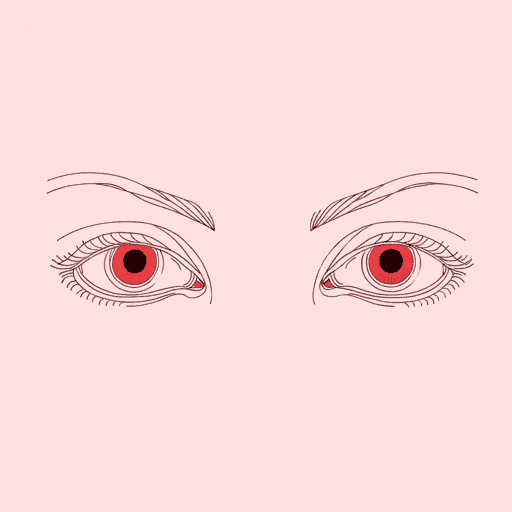
A newspaper clipping and nine yearsThe book began with a detail so small it occupied only a few column inches in a Sunday paper. Dugoni had been sitting on a premise for months with no entry point into it, and what broke the stalemate was a brief article about a boy in Australia refused entry to a Catholic school because his red eyes unsettled a nun who worried he would be called ‘The Devil Boy.’
Then, on a Sunday, I was reading the newspaper and stumbled on a small article about a boy in Australia denied admittance to a Catholic School because he had red eyes. The principal, a nun, expressed concern that the boy would be disruptive since the children apparently called him ‘The Devil Boy.’ That was all I needed to get rolling. I wrote the first draft in six weeks, then worked on it over the next nine years.
The article gave Dugoni his protagonist, but the emotional core of the book was older and more personal. He grew up the third of ten children in Burlingame, California, the town where the novel is set, and his youngest brother, Michael, was born with Down syndrome. When doctors recommended institutionalization, their mother refused and spent years fighting for Michael’s right to an education.
I know about bullying firsthand and how it breaks the heart of the family because I have a brother who has Downs Syndrome.
That firsthand knowledge of a family reconfigured by a child’s difference runs beneath every scene in which Sam’s mother refuses to accept the world’s verdict on her son.
A first draft in six weeks still left the question of what the book was actually for. The answer arrived not at a desk but in a conversation with his mother after his father died of cancer, when she said three words that unlocked the novel’s argument.
The theme came to me while visiting my mother and discussing the death of my father to cancer. I was expressing how unfair it was when she said, ‘It’s God’s Will.’ And I realized I desperately wanted to believe she was right, and that belief was exactly what Sam Hill wanted also. He wanted to believe his mother was right. That common thread helped me to finish the novel.
When a Goodreads reader asked him to name the single impulse behind Sam’s story, he set aside the craft explanation and gave the shorter, less calculated answer.
I don’t really know. To honor my mom, perhaps. Honestly, Sam just came to me one morning and wanted to tell his story.
How he wrote it
The vignette problem and its solutionThe first draft poured out in roughly five or six weeks, then went into a drawer for close to a decade. The problem Dugoni could not solve was structural: early readers could follow the scenes but not the through-line that made them cohere into an argument.
It simply all poured out of me. I sent it out to get feedback from the editors and my readers, and they all said the same thing, what’s the point of this book. It seems like a lot of vignettes, they stated. I was stumped. It would take ten years until 2018 before the book would come out.
The solution to the vignette problem came partly from a lesson about character Dugoni absorbed at the Surrey International Writer’s Conference, where Diana Gabaldon described waiting for her characters to speak before she wrote them. He applied that patience to Sam, and the result changed how he understood his own material.
I thought I was going to wait for my characters to speak to me. Sam Hell was the first one who did. I wrote him raw, unfiltered, and honest. When I was done, I was really proud of the product.
Even with a character who spoke clearly, the narrative structure still had to carry a specific weight: the hypocrisies of a Catholic school childhood needed to land on an adult reader even though the boy experiencing them could not name them. Dugoni’s answer was to give Sam two temporal identities, an adult narrator looking back at a child who could only see the surface of what was happening around him.
One of the struggles I had in structuring the novel was conveying the difficulties and the hypocrisies of Sam’s childhood through the eyes of a six-year-old boy. By telling the story through the perspective of Sam as an adult looking back on his life, I could convey to the reader the details of Sam’s childhood and illustrate his growth from these experiences, though he does not realize it at the time. Sister Beatrice was not just the Wicked Witch of the West, as Sam the child sees her, but a woman with an illness that affects millions of adults. David Bateman is not just a sociopath who bullies Sam, but the victim of an abusive parent lashing out at the world.
Dugoni had spent his career in crime fiction absorbing Stephen King’s principle from On Writing that every page needs pressure. Moving into literary fiction meant finding a different mechanism for that pressure. He solved it by following Sam’s childhood bully, David Bateman, into adulthood, so that Sam’s decision to confront Bateman’s daughter’s abuser becomes the novel’s crisis.
I wanted to draw a parallel between Sam being bullied as a child and the young girl, Daniela Bateman, being bullied by her father. Sam believes that standing up to Daniela’s tormentor is a means for him to finally stand up to his own bully, but Sam’s belief is short-sighted and misguided, and it ends in tragedy. It is not until Sam accepts himself for who he is and likes who he is, that he can finally dismiss the bullies in his life.
Before Sam Hell, Dugoni had built his reputation in genre fiction. The literary novels he grew up on, Fitzgerald, John Irving, Hemingway, were the reading that formed him, and this book was the first time he could write inside that tradition rather than toward it.
I grew up mostly reading literary novels like The Great Gatsby, A Prayer for Owen Meany, and The Old Man and the Sea. I got the opportunity to write a literary novel with The Extraordinary Life of Sam Hell, and it did very well.
The personal thread
His mother’s faith as the missing pieceOcular albinism, the condition that gives Sam his red eyes, is the book’s central physical fact, but the faith that surrounds it belongs to a real woman. Dugoni’s mother watched doctors write off her son Michael, traveled to Michigan to pursue an experimental treatment the family could barely afford, and received other mothers of disabled children in her home who came in tears asking what to do. Her composure in all of that was the model for Sam’s mother in the novel.
Rather than dealing with his struggles, Sam avoids them, as signified by his covering up his affliction with brown contact lenses. He doesn’t realize this is a superficial remedy and not an actual resolution.
Sam’s mother never covers anything up. The contrast between her willingness to stand in the world as it is and Sam’s literal concealment of his own eyes is the engine of the novel’s moral argument, and it is drawn from a real woman’s example.
The sight metaphor that structures the whole book, Sam the ophthalmologist restoring other people’s vision while hiding his own red eyes behind brown contact lenses, had a personal counterpart in Dugoni’s own need to believe his mother’s certainty about suffering. He was not writing about her faith from the outside; he was writing about his own wish to share it.
Sam says something in the foreword of the novel that I believe all readers are searching for in their own lives — they want to believe. They want to believe that all the trials and tribulations they endure in their own lives have a purpose; that something good and meaningful will come from those struggles. Without that belief, without that hope, I would think life, and all the difficulties it presents, would be very difficult to get through.
What he wants us to sit with
Redefining the word in the titleThe title is an argument, not a description. Dugoni uses the word ‘extraordinary’ to mean something that has nothing to do with public achievement or dramatic event, and the redefinition is the whole point of Sam’s retrospective narration.
The extraordinary moments in our lives are those quiet moments that touch our hearts — the days someone tells us they love us, the day we get married, the days our children are born. Sadly, we don’t often appreciate these moments until we are older and we look back at our lives and realize those moments were special.
Alongside the question of what makes a life extraordinary, the book places a question about sight: who in Sam’s world actually sees clearly, and who is hiding. Mickie, Sam’s oldest friend, functions as his corrective lens throughout the novel, naming what he refuses to look at directly.
Rather than dealing with his struggles, Sam avoids them, as signified by his covering up his affliction with brown contact lenses. He doesn’t realize this is a superficial remedy and not an actual resolution.
A reader going into book club with this question ready will find it everywhere in the novel: who is wearing the metaphorical contacts, and what would it cost them to take those contacts out.