The Giver of Stars
The Giver of Stars
A modern alternative to SparkNotes and CliffsNotes, SuperSummary offers high-quality Study Guides with detailed chapter summaries and analysis of major themes, characters, and more.
Summaries & Analyses
Author Insights
Quizzes
NEWReading Tools
Jojo Moyes on The Giver of Stars
In her own words: quotes and insights from the author.
Why she wrote it
A photograph that demanded a novelThe book began on a single morning in June 2017, not with a story idea but with a chance encounter in a magazine. What she found stopped her cold.
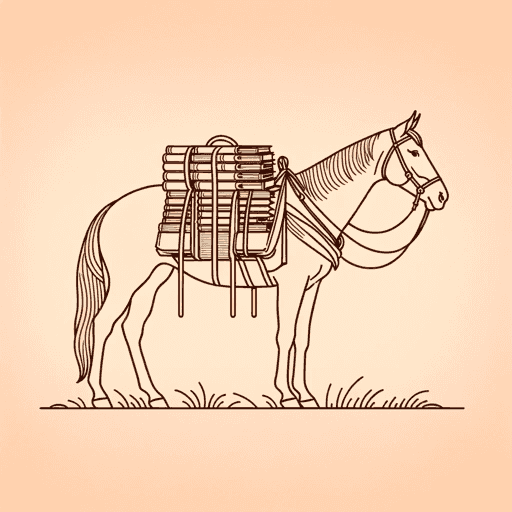
I was reading an edition of the Smithsonian Magazine and came across an extraordinary series of pictures of women on horseback. They were on rough, mountainous terrain, clutching parcels of books, gazing out proudly. I read the accompanying text, about the real-life horseback librarians of Kentucky, and knew immediately that I wanted to write a book about them.
mauriceonbooks.wordpress.com, “Q&A With Jojo Moyes, author of THE GIVER OF STARS | Maurice on Books”The certainty that arrived with those photographs was not intellectual. She described it as something closer to a bodily event, the kind of pull that bypasses deliberation entirely.
Sometimes you want to write something so badly that you have an actual physical response.
The packhorse librarians solved a problem she had carried for years before she ever heard of them. She had wanted to write about women’s friendship specifically because she felt fiction kept distorting it into something it was not.
I had long wanted to write a book about female solidarity and friendship (I get tired of narratives that always pit women as competitors). I wanted to show female friendship in its messy, loving, irritable, supportive glory — where you can crab at your friends one minute, but will stick up for them against all others the next.
The 1930s WPA program that sent women on horseback into the Kentucky mountains was created in part because Roosevelt feared that families cut off from knowledge would be vulnerable to misinformation and extremism. Moyes read that history and saw the present.
I thought about the issues of misinformation today, and of the pushback against women’s rights, and I knew that this story would resonate on many different levels.
Speaking at an ALA author lunch in 2019, she named what the book had given her that she had not known she needed when she started writing it.
That book said everything I wanted to say about living through 2016 to 2020, I think. [paraphrased from audio]
How she wrote it
Three trips and a mountain lionBetween 2017 and 2019, Moyes traveled to Kentucky three times. She stayed in a cabin five miles down a dirt track in a holler, run by a 72-year-old woman named Barbara Napier who had built the other cabins herself, set up her own water filtration system, and once told a mountain lion to leave. The mountain lion left. Napier ate dinner with Moyes every night, and those meals were where Moyes absorbed the rhythm of the language she needed.
I’m a great believer in on-the-ground research; if you don’t visit places, the text doesn’t truly come alive, and often what you discover leads your story into unexpected places.
Napier also became the book’s first reader, chosen because she would not soften any criticism of the Appalachian detail. Moyes also rode horses along the mountain trails the librarians had ridden, buying stacks of old magazines at auction to work out exactly which publications would have been in the saddlebags. She brought back something no archive could supply. At the PRH Author Lunch at ALA 2019, she described the physical knowledge she gained from those hours in the saddle.
I loved writing it more than anything I’ve ever written. I wrote it in what we in England call a muck sweat. It took me nine months even with the research. [paraphrased from audio]
Placing an English newcomer at the center of an Appalachian story was a deliberate structural decision, not a default. Moyes was writing from outside a closed, specific world, and she chose to make that position visible rather than paper over it.
It felt pretty audacious to be writing about Appalachia, even with research. I felt that if much of it was seen through the eyes of someone unfamiliar with that world, it made everything a little more accessible. Given it was such a closed world, I also liked the tensions inherent in introducing someone ‘foreign’ into it.
Once she had the book’s voice, the writing consumed every hour she could take from her ordinary life. She described the experience as unlike anything in her previous decade of publishing.
I have never enjoyed writing a book like I enjoyed writing this one: I wrote when I was meant to be on holiday, at weekends, whenever I could spare half an hour to sit down. I didn’t want to leave it, or these women. That rarely happens.
The personal thread
Built in a library, healed in the mountainsHer childhood shaped her response to the book’s central institution in a way that was not metaphorical. The library was where her education actually happened, and that gave her a specific personal stake in what the packhorse librarians were doing.
I was built in a library. My parents didn’t have much money when I was growing up so the weekly visit to the local library was a key part of my education, and my love of reading. Libraries are one of the few resources where people can be sheltered, educated and entertained without having to pay, and it pains me that they are under such threat.
During the writing, Moyes went through what she described as her first-ever bout of depression. She returned to the Kentucky cabin alone. What she found there was not escape but a kind of recalibration: the mountains, the stories she heard from people in the holler, and the characters she had already built on the page.
I stayed until I felt my soul ease again. I hiked the mountains and listened to people’s stories and I thought about the women I had been writing about, and how they had survived far worse. Most writers hear their characters’ voices, and I heard mine, and they gave me strength.
The book that started as a response to photographs in a magazine became, by the time she finished it, something she had needed to write in order to get through a specific period of her own life.
What she wants us to sit with
Knowledge as protection, friendship as resistanceShe was direct about the argument she wanted the novel to make on the subject of women and competition, one she had identified as a recurring damage done by fiction as well as by culture more broadly.
One of the reasons I wanted to write this book in the first place was that I wanted to write about a woman of a certain age (i.e., not twenty-one) having great sex with a mutually respectful partner. It happens! And yet so often in fiction we don’t see it.
The 1930s setting gives the story historical distance, but Moyes was deliberate about collapsing that distance. The argument she wanted readers to carry out of the book connects the depression-era mountains of Kentucky directly to the present moment.
We live in an age where the very notions of truth and facts are under attack — without knowledge we are prey to anyone who can work up a smart speech. Without knowledge women have little control over their own bodies.