The Glass Castle
The Glass Castle
A modern alternative to SparkNotes and CliffsNotes, SuperSummary offers high-quality Study Guides with detailed chapter summaries and analysis of major themes, characters, and more.
Summaries & Analyses
Author Insights
Quizzes
NEWReading Tools
Jeannette Walls on The Glass Castle
In her own words: quotes and insights from the author.Why she wrote it
The taxi, the dumpster, and the dareFor years before the book existed, the contradiction was visible to anyone paying attention: a celebrity journalist on television asking stars about their outfits, while her own childhood went unexamined and unspoken. She knew the hypocrisy was there. She couldn’t find a way past it.
I knew for a long time that I should write about this, I just didn’t, I didn’t see how I could do that and not ruin my life. I mean, I was the bonehead you see on television on the red carpet sticking my microphone into celebrities’ faces, asking them who designed their outfits... the irony — some would say the hypocrisy — had not escaped me that I really was telling other people’s stories and could not tell my own. And, you know, I really grappled with it.
The immediate trigger arrived as a shock of shame. Spotting her mother rooting through a New York dumpster from a taxi window, Walls ducked down rather than be seen. Days later, she sat with her mother and asked what she was supposed to tell people. Her mother’s answer dissolved the years of evasion.
She looked at me as though I just asked her a completely silly question, and she said, ‘Tell them the truth.’ [paraphrased from audio]
That instruction was both obvious and, at first, genuinely impossible. Walls had tried earlier drafts and abandoned them, uncertain whether her story was a tragedy, a comedy, or something else entirely. What she hadn’t yet reckoned with was that it was all three at once.
Before she could write anything honest, she had to say the specific things she had spent decades not saying. Her second husband kept pressing her on the most basic facts of her childhood survival, and the pressure of articulating them broke something open in her.
My second husband, Billy, pulled it out of me. He was like, ‘Jeannette, if your parents weren’t buying food, how did you survive?’ I would say, ‘I got by.’ He’d say, ‘What do you mean?’ ‘You know, I got by.’ He’d say, ‘No, I don’t. You have to spell it out.’ It was such an interesting process because, with stuff like eating food out of the garbage, I never told anybody. I was crying and was a mess. And afterwards, it doesn’t bother me as much.
How she wrote it
Six weeks bad, five years honestThe first draft was finished quickly and was, by her own account, a prosecution, not a memoir. Her journalism training made it efficient and airless. Her editor Nan Graham told her to take off the cellophane. The problem went deeper than style: accuracy, she came to understand, is not the same thing as truth.
Even though something it’s accurate, it’s not necessarily truth. As a journalist, you know this — you could make me look like a complete nincompoop without twisting any of my quotes or anything. It’s like, how do we tell our story? What the heck is my story? I kind of thought it was going to be an homage to Dad. I really didn’t know what it was going to be.
The structural decision that finally unlocked the book was a shift in narrative vantage. By writing from inside the consciousness of the child she had been, rather than from the knowing distance of an adult looking back, she reached her parents before she had formed conclusions about them.
It wasn’t until I went into first person present, that it kind of clicked for me. [paraphrased from audio]
The emotional rewrite came from a single phrase her mother used about Rex: that he was never boring. Walls recognized, in that moment, what the exposé version had left out entirely. She went back to the beginning.
I realized, oh my gosh, that’s what’s missing from my book. Is that, I love them. I loved my dad and I loved my mom. And it was a much more complicated relationship than, ‘Look what these awful people did to me.’ And so I went back and I rewrote it from a place of love. [paraphrased from audio]
That rewriting consumed five years and, by one account, seventeen separate versions. What she describes as the real work of revision was not sharpening sentences but forcing herself to be truthful about feelings she had convinced herself she didn’t have.
I spent six weeks writing the first version of the book — which, by the way, was truly awful, and that’s not false modesty — and then five years re-writing. In the earliest version, I’d really gloss over unpleasant or difficult things. The re-writing was mostly the process of being honest with myself about what really happened and how I felt about it. In the end, though, it’s been tremendously cathartic. Some people have asked me how I could forgive my parents, and honestly, the only person I had to forgive was myself.
The personal thread
Her father’s lesson, turned on herselfRex Walls used to tell his children that everyone has a demon and the only way to survive it is to turn and face it. Walls spent her New York career doing the opposite, hiding her past behind a professional persona. Writing the book was the act of applying her father’s own instruction to herself.
My demon was myself, it was my own past. And Dad gave me the tools and the courage to turn around and confront that. And he was absolutely right. You run from your demon it will chase you, but if you can confront it, it can’t hurt you. And what you got to do is either make friends with your demon or put it to work for you. [paraphrased from audio]
The experience of finally naming what she had hidden led her to a broader argument about shame that she has returned to in interviews since. The metaphor she uses for it is precise and deliberately dramatic.
A very wise man once told me, ‘Secrets are a little bit like vampires — they suck the life out of you, but they can exist only in the darkness. Once they’re exposed to light, there’s a moment of horror, but then they lose their power over us.’ I just find that to be true.
What she wants us to sit with
The campfire, the title, and the choice it hands back to youWalls doesn’t argue that her parents were good parents in any conventional sense. What she resists is the reader settling into a single verdict. Her case for why stories like hers matter at all reaches back to a theory about why human beings began telling stories in the first place.
There is a study that in primitive societies (I hate to use that term but that’s what sociologists use), during the day there was the hunting and the gathering and then in the evening, people gathered around the campfire and they described the day’s activity. And they’d talk about how they got away from the wild beast or where they found the berries and got through the thorns or whatever… and that’s where storytelling began. So it’s basically how I survived, what I did. And we share these stories to give each other knowledge, to get through tough circumstances.
When parents in a wealthy Dallas suburb tried to have the book removed from schools, students fought to keep it. Walls saw in that episode the thing she most wanted the book to do: collapse the distance between readers and people whose circumstances look nothing like their own.
I think the most important thing is empathy. And it’s less about ‘those people’. Because I think we’re all ‘those people.’
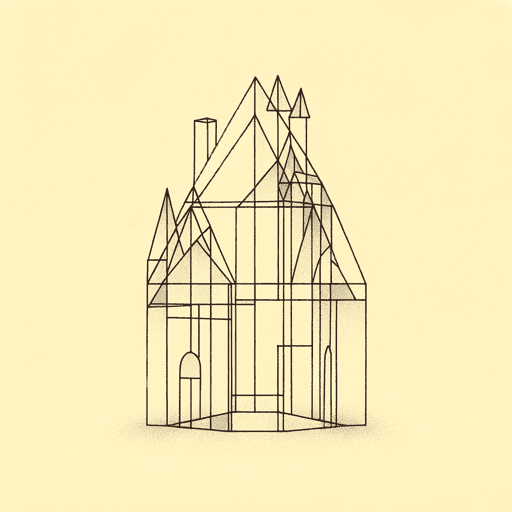
The title itself is the book’s final argument. Rex Walls spent years drawing blueprints for a solar-powered glass house he planned to build for his family in the desert, a project he called the Glass Castle. He never built it. What Walls asks readers to decide is what that means.
You could look at the Glass Castle as another one of my father’s drunken promises or as hope for the future. It is whatever you choose to make of it. [paraphrased from audio]
That interpretive freedom is not a dodge. It mirrors the central problem of the memoir itself: how a person takes the raw material of a life and decides what story it tells. Walls resolved that question for herself over five years of rewrites. She leaves it open for the reader on purpose.