The Hidden Staircase
The Hidden Staircase
A modern alternative to SparkNotes and CliffsNotes, SuperSummary offers high-quality Study Guides with detailed chapter summaries and analysis of major themes, characters, and more.
Summaries & Analyses
Quizzes
NEWReading Tools
Symbols & Motifs
Content Warning: This section of the guide includes discussion of physical abuse and emotional abuse.
The “Ghost”
The “ghost” is a recurring motif that appears throughout the novel in the form of seemingly supernatural events. Strange music echoes through empty rooms, a chandelier sways without explanation, a gorilla face appears at a window, and furniture seems to move on its own. Although each incident appears to be evidence of a haunting, Nancy gradually discovers that every occurrence has been carefully staged by Wharton at Gomber’s direction. The repeated hauntings maintain suspense while encouraging both Nancy and the reader to question whether the unexplained events are truly supernatural.
This recurring pattern of fake hauntings illustrates how fear can be weaponized for personal and financial gain. While Miss Flora and, at times, Helen react with genuine terror, Nancy consistently approaches each incident with skepticism, searching for a physical cause. Her deduction that the gorilla face was simply a mask held up to the window demonstrates her commitment to finding a worldly explanation. As she reasons, “Our ghost simply leaned across from the end of the porch and held a mask in front of the window” (48). Working back from physical evidence to a concrete conclusion, Nancy dismantles each manufactured scare in turn. By exposing the human causes behind each apparent haunting, the recurring ghost motif reinforces the theme of Rational Logic Versus Superstitious Fear, showing that careful observation and logical deduction can overcome even the most convincing deception.
The Hidden Passageways and Staircases
The network of secret tunnels and the titular hidden staircase symbolize the concealed motives and dark histories that operate just beneath the surface of everyday reality. Throughout the novel, Nancy suspects that someone is moving through the house by means of a secret entrance, but repeated searches of the grounds initially reveal nothing. When she finally discovers the hidden staircase connecting Twin Elms and Riverview Manor, it provides the long-sought rational explanation for the intruder’s seemingly impossible appearances and disappearances. Wharton explains that they “were used by the original Turnbulls in bad weather to get from one building to the other” (174), revealing that a feature originally built for convenience had been repurposed to facilitate deception and crime.
The hidden passageways also reinforce the theme of Rational Logic Versus Superstitious Fear by emphasizing how the truth often exists beneath misleading appearances and must be uncovered through careful investigation. Until Nancy discovers the staircase, every haunting seems to defy logical explanation. Once the concealed network is revealed, however, the supernatural mystery becomes an ordinary criminal scheme supported by hidden architecture. The staircase also serves as the setting for the novel’s climax, leading Nancy to Wharton, the imprisoned Carson, and the evidence needed to expose Gomber’s conspiracy. By physically uncovering what had been hidden beneath the houses all along, Nancy simultaneously uncovers the truth behind the mystery itself.
Twin Elms Mansion and Riverview Manor
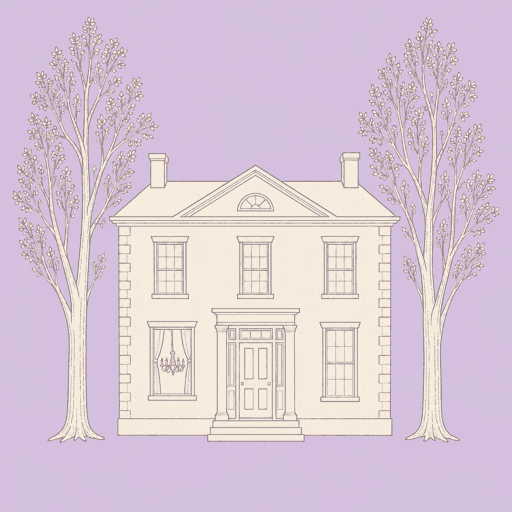
Twin Elms and Riverview Manor are contrasting symbols that represent two very different relationships with the past. The stately and historic Twin Elms mansion represents heritage, family legacy, and the preservation of tradition. Miss Flora’s lifelong attachment to the house reflects its importance as a repository of family history and personal memory. Helen captures the depth of that attachment when she tells Nancy, “I have urged her to leave Twin Elms, but she won’t. You see, Mother has lived there ever since she married my father” (7). That bond is precisely what Gomber’s scheme must overcome before he can acquire the property. Conversely, Riverview Manor symbolizes neglect, isolation, and the hidden dangers that can flourish when places are abandoned. Left vacant for years, it becomes the ideal base of operations for Gomber and Wharton, allowing them to conduct their scheme beyond the notice of the surrounding community.
The relationship between the two houses reinforces the novel’s central conflict. Although they appear to be separate properties, the hidden passageways ultimately reveal that they’re physically connected, just as the haunting and the railroad conspiracy are parts of the same mystery. Gomber’s plan depends on turning Twin Elms into a place of fear while exploiting Riverview Manor as a place of secrecy. These two settings emphasize the theme of The Way Greed Corrupts Social Trust, as Riverview’s decay and destruction reflect the criminal corruption that has become rooted there. Nancy’s investigation ultimately restores the proper roles of both houses by exposing the hidden connection between them and removing the criminals who have abused it. In doing so, the novel contrasts a home that deserves to be preserved with one whose neglect has allowed deception and exploitation to take root.

Unlock the meaning behind every key symbol & motif
See how recurring imagery, objects, and ideas shape the narrative.
- Explore how the author builds meaning through symbolism
- Understand what symbols & motifs represent in the text
- Connect recurring ideas to themes, characters, and events