The Possession of Alba Díaz
A modern alternative to SparkNotes and CliffsNotes, SuperSummary offers high-quality Study Guides with detailed chapter summaries and analysis of major themes, characters, and more.
Summaries & Analyses
Quizzes
NEWReading Tools
Chapter 34-EpilogueChapter Summaries & Analyses
Content Warning: This section of the guide includes discussion of graphic violence, illness or death, physical abuse, emotional abuse, and religious discrimination.
Chapter 34 Summary: “Alba”
Alba remembers the exact moment of Elías’s death, which she experiences as a physical sensation. After he dies, a sulfurous smoke rises from his chest, tells her, “You know what happens now” (338), and enters her throat. While she grieves, Padre Bartolomé stays by her bedside, falsely claiming that Elías, powered by his many deals with Satan, almost brained him with a sharp stone to the head. The people at Casa Calavera accept the priests’ story that Elías cursed Alba and that Bartolomé saved her, while Alba blames herself for Elías’s death. María Victoriana flits in and out with a face puffy and red from crying, unable to look at Alba. Alba reflects that Elías had briefly succeeded in freeing her from the demon before his death, remembering how whole she felt during that short period of freedom. Her parents talk of sending her to a convent in Guadalajara. Soon after, the Inquisition tears apart Mina San Gabriel, searching for a supposed shrine and people to punish. Although they fail to find the shrine, they find people to punish, whom Alba describes as “mere practice” for what the Inquisitors have planned for her.
Chapter 35 Summary: “Alba”
In the chapel at Mina San Gabriel, Padre Bartolomé begins what he declares will be Alba’s final exorcism. Alba is bound to a large wooden cross on the floor, feeling utterly abandoned by her mother and her fiancé, Carlos. During the ritual, Alba experiences the demon’s memory of using her body to kill Romero by holding him down in the slurry. The demon then claims the ambitious Bartolomé had summoned the Inquisition weeks earlier, planning to frame someone for witchcraft to build his own reputation. When Alba blames the demon for Elías’s death, it states that if she dies it will simply pass to someone else—perhaps Carlos. Alba realizes the demon knows nothing of the afterlife and likely came to the Americas with the clergy. Believing only Elías’s brand of sorcery was effective, she rejects the priests’ authority. She decides to bargain with the demon, demanding its help in thwarting Bartolomé. The demon’s assent rushes through her, her claws begin to emerge, ropes snap, and the demon levitates her; from above the crowd, Alba accepts the demon’s price for its collaboration: “Priestflesh” (349).
Chapter 36 Summary: “Alba”
Three months later in Zacatecas, Alba prepares for her wedding to Carlos. Publicly, the story is that Padre Bartolomé successfully exorcised the demon, and he is celebrated as a hero. Alba maintains a facade of a quiet and repentant survivor. In a private moment before a mirror, she sees her reflection as a skull with black pits for eyes, and she and the demon share a grin, confirming their alliance. At the wedding ceremony in the grand cathedral, she walks toward the altar where Carlos, the groom, and Bartolomé, standing before the altar, await. She has specifically requested the presence of every priest who attended her final exorcism. As she proceeds down the aisle, she focuses on her plan for revenge. Committing to her vengeance for Elías and herself, she consciously unleashes the demon, and claws burst from her fingernails before she relinquishes control of her body. The demon violently attacks the assembled priests as the congregation panics and flees.
During the attack, someone grabs Alba and commands her to stop. As her awareness returns, she recognizes a familiar gold earring, voice, and warmth that remind her of being led out of the mine. Believing at first that she may be hallucinating, Alba asks, “Elías [...] Are you here?” (354). Elías, whom she has believed dead for three months, looks down at her and grins.
Chapter 37 Summary: “Elías”
The narrative shifts to Elías, who recalls being stabbed and slipping into darkness and then being slapped back to consciousness by María Victoriana. He learns that he survived the stabbing and was secretly nursed back to health by a local curandera, Señora Flores, while everyone else believes he is dead and buried. María Victoriana tells him that Alba’s exorcism failed and appears to have worsened her possession. For weeks, Elías recovers in hiding, planning his next move; when he kneels at the grotto shrine, the only unholy revelation he receives is “Use quicksilver.” When he learns of the wedding, he rides to Zacatecas with a jar of mercury, leaving El Libro de San Cipriano in the rubble of his workshop—he has no need for it, bearing it burned into his hands. He arrives at the cathedral just as terrified guests are fleeing and finds Alba, possessed, attacking the priests. He confronts her and sings a lullaby to help her regain enough control to hold the demon still. He then anoints her with mercury, which acts as a conduit for the power of the goddess in the mountains to pass from him to her. The rite draws the demon from her body as black smoke, which Elías successfully traps in the jar. Alba returns to herself, and they embrace and kiss at the altar amidst the carnage.
Epilogue Summary
The epilogue presents two versions of what happened after the cathedral confrontation. The popular legend tells of a blood-soaked, demon-possessed Alba stumbling out alone. In this tale, she walks all the way back to Mina San Gabriel and vanishes into the mountain, where her presence is said to remain.
The faithful version, however, is narrated by Alba herself and reveals that Elías was alive and met Alba at the altar. Ignoring a groaning priest on the floor, Elías cast his sarape over her shoulders and spirited her away to a hotel. There, he wiped the blood from her face, cut her out of her silver-encrusted dress, and lowered her into a bath, making her feel that her body was her own again. Elías leaves the occult behind, and he and Alba use the bloodstained silver pried from her dress—the last they ever touch from Mina San Gabriel—to buy passage on a ship in Acapulco. They sailed west together to start a new life, leaving their past and the mine behind them forever.
Chapter 34-Epilogue Analysis
Alba’s decision to forge a pact with the demon during her final exorcism marks a turning point in her struggle for control over her own body. As she lies bound to a wooden cross, with her family offering no protection, she recognizes that Bartolomé’s intervention has brought her further suffering rather than freedom from possession. Having witnessed the failure of the priests’ exorcisms, she places greater faith in the sorcery Elías used to resist the demon. She also concludes that the entity likely arrived in the Americas with the clergy, further undermining her trust in the Church’s authority. By choosing to collaborate with the demon and agreeing to its price of “Priestflesh” (349), Alba turns the entity’s violence against Bartolomé. This choice illustrates The Cost of Autonomy: to resist the priest’s control, she must negotiate with the same entity that has repeatedly violated her bodily autonomy. The snapping ropes mark her escape from immediate physical restraint, but her continued dependence on the demon makes that freedom uncertain.
The contrast between Bartolomé’s public reputation and his treatment of Alba and Elías further develops Religious Authority as a Means of Control. Padre Bartolomé’s ambition to become “the exorcist of the Indies” (343) raises questions about his motives for pursuing Alba’s exorcism. The demon claims that Bartolomé summoned the Inquisition weeks earlier, intending to use accusations of witchcraft to advance his reputation. Meanwhile, the official account of Elías’s death portrays him as a dangerous sorcerer and Bartolomé as Alba’s protector, despite the priest’s violence against them. Three months later, Bartolomé is celebrated in Zacatecas for supposedly curing Alba, while she maintains the appearance of a quiet, repentant survivor. The contrast between his public reputation and Alba’s continued possession demonstrates how his religious authority allows him to define what others believe about her experience. Her apparent recovery reinforces his standing, concealing the failure of his exorcism.
Mercury (azogue) takes on a different function in the cathedral, where it becomes the means of freeing Alba from the demon. When Elías returns, he leaves behind El Libro de San Cipriano, whose knowledge is now burned into his hands, and instead brings a jar of mercury. He anoints Alba with the liquid metal, allowing the power of the mountain goddess to pass from him to her. The ritual draws the demon out of Alba, and Elías traps it in the jar, succeeding where the priests’ exorcisms have failed. Mercury’s changing role develops The Violence of Colonial Extraction: a substance associated with the dangerous conditions of silver mining becomes the means of containing the supernatural threat.
Alba’s wedding to Carlos becomes an opportunity to challenge the religious and social expectations that have governed her life. Three months after the failed exorcism, she maintains the appearance of a quiet, repentant woman preparing for marriage. Yet her reflection in the mirror, which shows a skull with “dark pits” for eyes, indicates that the demon remains within her and that their alliance continues. Alba deliberately requests the presence of every priest who attended her final exorcism, concealing her intentions beneath the preparations for a conventional wedding. As she approaches the altar, she consciously releases the demon to carry out her revenge. The ceremony that should publicly affirm her recovery and marriage instead becomes the setting for an attack on the priests who claimed to have saved her. Alba’s outward compliance allows her to act without arousing suspicion, although her decision to surrender control to the demon again demonstrates the danger involved in pursuing vengeance.
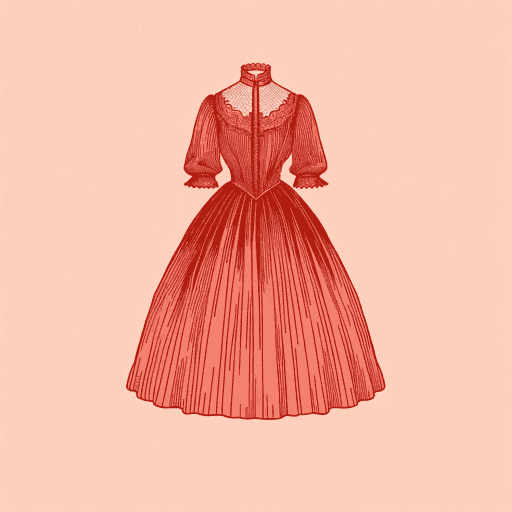
The Epilogue contrasts the popular legend of Alba’s fate with her own account, bringing The Cost of Autonomy to its conclusion. According to the legend, Alba emerges from the cathedral possessed and bloodied before disappearing into the mountain near Mina San Gabriel. Her account, however, establishes that Elías survives and that they escape together. The act of Elías cutting her from her bloodstained, silver-encrusted wedding dress is a key moment, as his care helps Alba feel that her body belongs to her again after months of possession and forced restraint. By prying the silver from the gown to fund their escape, they repurpose wealth associated with the mine and the marriage Alba had sought to avoid. Their departure allows them to leave behind the people and institutions that attempted to control their lives. By telling her own version of events, Alba also challenges the legend that confines her to the mountain as a monstrous figure, asserting a future beyond the fate others have assigned to her.

Get in-depth, chapter-by-chapter summaries and analysis from our literary experts.
- Grasp challenging concepts with clear, comprehensive explanations
- Revisit key plot points and ideas without rereading the book
- Share impressive insights in classes and book clubs
Related Titles
By Isabel Cañas