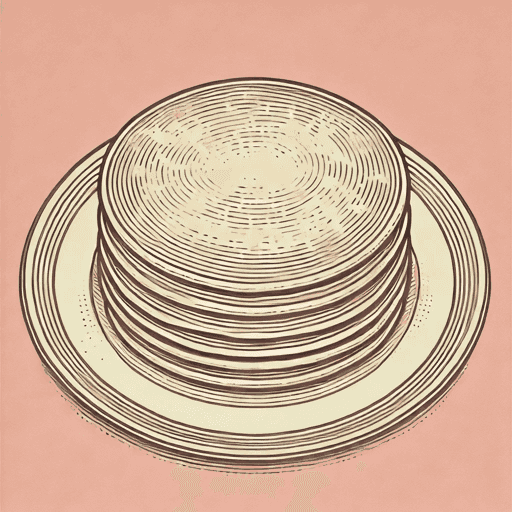
The Strawberry Patch Pancake House
The Strawberry Patch Pancake House
A modern alternative to SparkNotes and CliffsNotes, SuperSummary offers high-quality Study Guides with detailed chapter summaries and analysis of major themes, characters, and more.
Summaries & Analyses
Quizzes
NEWReading Tools
Symbols & Motifs
Pancakes
Pancakes function as the central symbol representing The Transformation From Ambition to Authentic Fulfillment. They embody Archer’s evolution from a career-focused chef pursuing perfectionism to a more rounded individual who cares about the needs of his family and community. Initially, pancakes represent Archer’s professional frustration and resistance to what he perceives as inferior cooking. As a Michelin-starred chef, he views the diner’s beloved pancake recipe as beneath his sophisticated training, leading to his stubborn attempts to “elevate” the humble dish with ricotta, lemon sauce, and other gourmet touches. The town’s rejection of these innovations forces Archer to confront his own culinary arrogance and connect to the community he now serves.
The evolution of Archer’s relationship with pancakes mirrors his personal growth throughout the novel. His late-night pancake experiments represent his struggle to balance professional pride with practical needs, while Iris’s suggestion to “try Bisquick” becomes a symbol of embracing simplicity over sophistication. When Archer finally accepts the box of Bisquick mix that Iris leaves him, it signals his willingness to abandon ego in favor of giving people what they actually want and need.
The ultimate success of the “Original” pancakes, made from a simple mix with vanilla and butter, represents Archer’s complete transformation. In telling his father that he’s a “proud pancake chef” (351), he embraces an identity that would have horrified his former self. The pancakes symbolize authentic connection to community, comfort, and the understanding that true fulfillment comes not from impressing critics but from nourishing the people one loves with food that brings them joy.
The Kitchen
The kitchen operates as a symbol of both professional identity and domestic intimacy, transforming from Archer’s domain of control into the emotional heart of his chosen family. Initially, the kitchen represents Archer’s expertise and authority; it is the one space where he feels competent amid the chaos of sudden fatherhood. His precise movements, professional-grade equipment, and culinary knowledge establish the kitchen as his sanctuary of mastery. However, this same space becomes the setting for his most vulnerable moments, particularly his midnight pancake experiments that reveal his professional crisis and personal uncertainty.
As Archer’s relationship with Iris develops, the kitchen evolves into a space of connection and intimacy. Their late-night conversations over pancake batter, the moments when Iris sits at the island watching him cook, and their eventual physical intimacy in this space demonstrate how the kitchen transcends its utilitarian function. The island counter becomes a symbolic barrier that gradually dissolves as emotional and physical distance between them diminishes. This can be seen when Iris questions his techniques or suggests using Bisquick, as the kitchen becomes a space where his professional pride must coexist with personal relationships.
By the novel’s conclusion, the kitchen has been fully transformed into the heart of family life. It is where Archer teaches Olive to cook, where they prepare meals together as a family unit, and where he finds genuine pride in feeding his loved ones. In these moments, the kitchen represents the synthesis of his professional skills with his personal values: “This food with these people. He didn’t need anything else” (345). The kitchen symbolizes how Archer’s identity as a chef has evolved from seeking external validation to creating nourishment and joy within his home.
Food Preparation and Sharing
The motif of food preparation and sharing serves as the novel’s primary language for expressing love, care, and belonging throughout the narrative. Gilmore consistently demonstrates how characters communicate their deepest emotions through culinary acts, establishing food as the fundamental medium through which relationships are built and maintained. Archer’s initial struggles with this motif reflect his isolation from authentic connection; his sophisticated cooking once served critics and colleagues, but simplified recipes are better for nurturing personal relationships.
The transformation of this motif parallels the development of Archer’s capacity for love and family. His elaborate dinners for Iris represent courtship through cuisine, while teaching Olive to cook becomes a bonding ritual that bridges their initial awkwardness. The progression from Archer cooking alone to preparing meals with Iris and including Olive in food preparation demonstrates the expansion of their family unit. When Olive helps season the steak or assists with strawberry shortcake, these moments become symbolic of her integration into their domestic life and Archer’s growing comfort with fatherhood.
The community’s constant delivery of casseroles and baked goods reinforces the motif’s broader significance in Dream Harbor culture. Food sharing represents the town’s method of expressing care and maintaining social bonds. Iris’s Pop-Tart breakfasts with Olive, Archer’s midnight cooking sessions, and the family’s shared meals all demonstrate how food preparation and sharing create emotional intimacy and security. The motif culminates in Archer’s recognition that cooking for his family provides deeper satisfaction than any professional achievement: His love is literally served on plates, transforming sustenance into an expression of devotion and commitment to their shared life.

Unlock the meaning behind every key symbol & motif
See how recurring imagery, objects, and ideas shape the narrative.
- Explore how the author builds meaning through symbolism
- Understand what symbols & motifs represent in the text
- Connect recurring ideas to themes, characters, and events