The Women on Platform Two
The Women on Platform Two
A modern alternative to SparkNotes and CliffsNotes, SuperSummary offers high-quality Study Guides with detailed chapter summaries and analysis of major themes, characters, and more.
Summaries & Analyses
Author Insights
Quizzes
NEWReading Tools
Background
Content Warning: This section of the guide includes discussion of gender discrimination, physical abuse, and emotional abuse.
Ideological Context: The Catholic Church and the Role of Women in 1970s Ireland
The legal and social landscape of 1970s Ireland was profoundly shaped by the doctrine of the Catholic Church. Its “special position,” formally recognized in the 1937 Irish Constitution until its removal in 1973, allowed its teachings to heavily influence legislation and social norms.
One example of this is the Irish ban on contraception, which lasted until 1979. The Catholic Church believes that the purpose of sexual intercourse should be the creation of human life and that intervening to stop sperm from reaching an ovum is contrary to God’s will. The Catholic Church has also historically viewed contraception as linked with sex outside of marriage and other sexual behavior its doctrine prohibits. Irish women and girls who became pregnant outside of marriage were shunned and sometimes institutionalized. V.S. Alexander’s novel The Magdalen Girls and Claire Keegan’s novella Small Things Like These both explore this aspect of Irish history. In the early 20th century, as other Christian denominations were relaxing their stand against contraception, the Catholic Church continued its prohibition. As condoms and diaphragms became more widely available in the 1920s, the Vatican declared in 1930 that the use of “artificial” means of birth control was a mortal sin and that people using such forms of birth control would be excommunicated (“The Catholic Church and Birth Control.” The American Experience, WGBH Educational Foundation).
Catholic doctrine also shaped the role of women in Irish society more generally. Historically, Catholic doctrine has viewed human beings as divided into two complementary genders, each with a different role to play in society. Men have been viewed as leaders whose role is to marry women and start families with them and then work outside the home to provide the income necessary to sustain the family. A woman’s role in this framework is to marry and then submit to her husband’s authority, focusing her energy on raising devout children and creating a clean, orderly, and comfortable home. The influence of this doctrine on Ireland’s laws and social norms is clear in the novel, which incorporates laws like the “marriage bar”—a prohibition on married women working outside the home—and social norms like the rejection and institutionalization of women and girls who became pregnant outside of marriage. Maura’s position as an abused spouse is made much more complex because of patriarchal norms that encourage people to value her husband’s reputation and perspective above hers and laws that make it impossible for her to earn her own money or secure a divorce from Christy. Other novels that explore this historical repression of Irish women are The Herbalist by Niamh Boyce and 1949 by Morgan Llywelyn.
Historical Context: The 1971 Contraceptive Train Protest
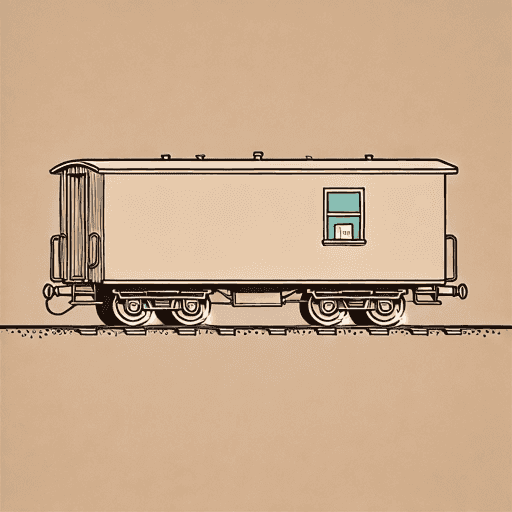
The climax of The Women on Platform Two is a fictionalized account of a real act of civil disobedience known as the “Contraceptive Train.” As the novel’s preface notes, the story is “based on a real-life event” (vii) that became a landmark moment in Irish feminism. On May 22, 1971, 47 members of the newly formed Irish Women’s Liberation Movement (IWLM), led by Nell McCafferty, traveled by train from Dublin to Belfast, Northern Ireland. Their goal was to openly challenge the Republic of Ireland’s ban on the importation and sale of contraceptives, a prohibition established by the Criminal Law Amendment Act of 1935. Seeking publicity for their cause, the women notified the press of their intentions, and many reporters and supporters gathered to see them off and await their return (Byrne, Cathal. “‘We Were Offering Sex’: Nell McCafferty on Contraceptive Trains and Women’s Liberation.” The University Times, 16 Mar. 2016).
In Belfast, where contraceptives were legal, the women purchased items such as condoms. They originally also meant to buy birth control pills, but found that these were not available without a prescription; some, to ensure a confrontation with authorities, bought aspirin and declared them as “the pill.” Upon their return to Connolly Station in Dublin, the women were met by customs officers who had been sent to the station from their usual posting at the docks in anticipation of the women’s arrival (“‘Condoms, What Are They?’: Customs Official Describes the Morning of the 1971 Contraceptive Train.” The Journal, 10 Apr. 2017). The women deliberately and publicly declared their purchases to customs officials, expecting to be arrested. The authorities, caught off guard by the media presence and crowd of supporters, ultimately allowed them to pass without confiscating the items. This event successfully generated widespread publicity and ignited a national conversation about reproductive rights. The discovery of a photograph dated “22 May 1971” (9) is the catalyst for the novel’s narrative, directly linking the fictional story of Maura and Bernie to this pivotal historical protest and emphasizing the real-world significance of their fight for bodily autonomy.

Get in-depth, chapter-by-chapter summaries and analysis from our literary experts.
- Grasp challenging concepts with clear, comprehensive explanations
- Revisit key plot points and ideas without rereading the book
- Share impressive insights in classes and book clubs