The Women on Platform Two
The Women on Platform Two
A modern alternative to SparkNotes and CliffsNotes, SuperSummary offers high-quality Study Guides with detailed chapter summaries and analysis of major themes, characters, and more.
Summaries & Analyses
Author Insights
Quizzes
NEWReading Tools
Preface-Chapter 13Chapter Summaries & Analyses
Content Warning: This section of the guide includes discussion of gender discrimination, physical abuse, emotional abuse, and child death.
Preface Summary
The narrative that follows is a work of fiction inspired by actual events in the Republic of Ireland and Northern Ireland during the early 1970s. Although the characters are invented, the story draws on the courage and resolve of real Irish women who fought to make contraception accessible and legal in Ireland.
Chapter 1 Summary: “Dublin City, 22 May 2023: Saoirse”
Saoirse, a hospital nurse in Dublin, takes a pregnancy test on May 22, 2023. The result is negative, and she feels overwhelming relief. Her fiancé, Miles, enters the bathroom and sees the test. Visibly disappointed, he says he had been certain she was pregnant. They begin arguing. Miles asks if wanting a baby is wrong; Saoirse insists she has repeatedly told him she is not ready.
Miles argues that she loves children, citing her devotion to her young patients. Saoirse counters that professional compassion is not the same as wanting her own child, and recounts the recent death of a seven-year-old patient and the mother’s devastation—an experience she never wants to share. Miles insists their child would likely be healthy, but Saoirse says the uncertainty terrifies her. The argument escalates when Miles claims all women love their babies, which Saoirse calls insulting and untrue. Frustrated, she grabs her cardigan and leaves the apartment.
Chapter 2 Summary: “Saoirse”
Saoirse walks aimlessly through Dublin in unseasonably cold weather, observing mothers with their children. She imagines being a mother herself and concludes that although she could do it, her instinct tells her she will never be ready. A thunderstorm drives her into Connolly Station for shelter. While waiting for the rain to stop, she notices an elegant elderly woman in a pink raincoat hurrying toward a train. After she passes, Saoirse finds an old black-and-white photograph on the ground showing two joyful young women at Connolly Station, dated May 22, 1971—exactly 52 years ago.
Feeling responsible for returning it, Saoirse jumps the turnstile and boards the train. She finds the elderly woman, Maura, who is deeply grateful, explaining the photo shows her and her late best friend, Bernie. The train begins moving before Saoirse can disembark. Maura reassures her that Drogheda is the first stop, invites her to sit, and reveals she first boarded this train on May 22, 1971, and that the journey changed her and Bernie’s lives. She tapes the photo back into her scrapbook and offers to tell the story over tea. Saoirse agrees.
Chapter 3 Summary: “Dublin, November 1968: Maura”
Maura Flynn works at Switzer’s department store in Dublin. One Saturday, a tall, well-dressed man enters, tells her she resembles Doris Day, and purchases an expensive fur coat for his mother without asking the price. He then invites Maura to the cinema that evening, introducing himself as Christy Davenport. She agrees to meet him.
After Christy leaves, Maura’s colleague Geraldine appears—five years younger, red-haired, and rebellious. Geraldine warns that dating leads to marriage, which will force Maura to leave her job, and asks her not to get married too soon and abandon her. Maura promises she will not.
Chapter 4 Summary: “Maura”
Maura enjoys her first date with Christy and learns he is a junior doctor. When she realizes how late it is, she panics. Christy drives her home, where her father waits angrily at the door—until he learns her date was a doctor, at which point his anger vanishes and he scolds Maura instead for not inviting him inside. Her mother calls Christy a good catch.
Over the next six months, Maura and Christy date constantly. On May 18, 1969, Christy joins Maura’s family for Sunday dinner. Afterward, he and her father retire to speak privately. In the kitchen, Maura’s mother tells her that Christy is asking for her hand in marriage. Maura is overjoyed.
Chapter 5 Summary: “May 1969: Maura”
At work, Geraldine shows Maura the engagement announcement in The Irish Times. Geraldine is sad that Maura must leave her job and warns her not to lose herself in marriage. The wedding is set for June 21, just five weeks away. Geraldine laments the marriage bar, noting that married women can work freely in England and America. Maura is unconcerned, saying she will be busy having a baby.
During their break, Geraldine secretly shows Maura the banned British tabloid News of the World and tells her about women in America burning their bras to protest inequality. Maura rejects these ideas, saying she wants a traditional life as a wife. Geraldine accepts this but offers to be there if Maura ever changes her mind.
Chapter 6 Summary: “2023: Saoirse”
The train arrives at Drogheda in 2023, interrupting Maura’s story. Saoirse reflects on her own six-year relationship with Miles—checking her phone for messages and finding none—and contrasts the pace of Maura’s courtship with her and Miles’s rare outings due to demanding shift work. The train departs. Saoirse checks her phone again and, feeling relief at the silence, decides to stay on. Maura declares it is time for wine, and Saoirse agrees.
Chapter 7 Summary: “14 June 1969: Maura”
On June 14, 1969, Maura works her last day at Switzer’s, a week before her wedding. She shares an emotional farewell with Geraldine and receives a formal letter from management acknowledging her departure upon marriage. Geraldine calls management hypocrites for wishing Maura well while forcing her out. Maura feels a sharp pang of regret about leaving the job she loved, but focuses on her future with Christy.
Chapter 8 Summary: “Maura”
The week before the wedding is filled with domestic preparation. Maura’s mother advises that a good wife runs a smart house, keeps a pretty face, gives her husband children, and stands behind her man. This makes Maura realize her parents are not equals, which saddens her.
On June 21, Maura marries Christy at Whitefriar Street Church. During the photo session afterward, the photographer tells her she looks like Doris Day. Christy jokingly warns him to keep his eyes off his wife, but his hand tightens painfully on Maura’s waist. She realizes she now belongs to Christy like a possession.
Chapter 9 Summary: “Maura”
After the wedding breakfast, Christy’s younger sister Agatha helps Maura change into her going-away outfit—a fashionable tan trouser suit with a mustard jumper. On the hotel steps, as their families gather to see them off, Christy slaps Maura hard across the face, orders her to stand up straight, then whispers a threat and shoves her into the car while waving cheerfully to their families. Maura wants to run to her mother but feels trapped. In the car, Christy explodes with anger, saying she embarrassed him by dressing “like a man” (45). Maura apologizes, frightened of her new husband.
Chapter 10 Summary: “Maura”
On the ferry to their honeymoon on the Isle of Man, Christy is tender, but Maura’s nausea is caused by fear of him. He apologizes for hurting her and tells her she must change how she dresses, as women in trousers do not push prams. The thought of having babies overrides her anger, and she lets him kiss her.
They arrive at a bed-and-breakfast. Alone in their room, Maura checks her face in the mirror and is surprised to see no mark. Their wedding night is painful for Maura, who endures it by thinking about the children she wants. She vows to raise any daughter she has with more knowledge about her own body.
Chapter 11 Summary: “Maura”
Maura wakes early after a sleepless night, hides her trouser suit at the bottom of her bag, and dresses to cover herself. At breakfast, Christy masks his irritation over small inconveniences with charm. When the landlady, Rita, comments on how quiet Maura is, Christy explains she is just tired from their wonderful wedding day.
Chapter 12 Summary: “Maura”
The rest of the honeymoon is pleasant, with Christy reverting to his charming self. They talk about having four or five children, and Maura finds their nights gradually less painful. On their last morning, Christy sharply orders her to tie her hair back so it will not attract stares from other men. Frightened, she complies, and he then kisses her passionately.
As they are leaving, their landlady Rita runs out screaming for a doctor—her husband Bert has collapsed with what Christy diagnoses as a likely angina attack. Christy handles the situation capably, and Rita tells Maura she is lucky to be married to such a wonderful man. In the car afterward, Christy blames Rita’s cooking for Bert’s condition.
Chapter 13 Summary: “Maura”
Maura and Christy return to Dublin and arrive at his mid-terrace house in Rathmines, which is now her home. Inside, they find milk crates containing Maura’s belongings, moved there by her father. Christy ignores the crates and leads Maura straight upstairs to the bedroom. Afterward, he falls asleep. Maura quietly goes downstairs and unpacks her belongings, integrating her things into his house.
Preface-Chapter 13 Analysis
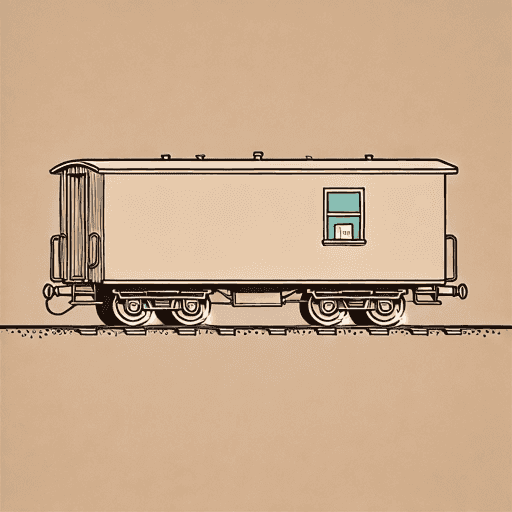
Anthony structures the narrative around a dual-timeline frame story, utilizing the train to bridge two distinct eras of women’s history and connect isolated individual conflicts to a collective legacy. The Belfast-bound train that Saoirse impulsively boards in 2023 is the site of both Maura’s historic 1971 journey and Maura’s opportunity to share this history with Saoirse. The train functions as literal transport and metaphorical vehicle for the transmission of memory. By physically removing Saoirse from her modern domestic dilemma and thrusting her into Maura’s historical narrative, the setting collapses the temporal distance between the two women. Saoirse’s presence on the train shifts her perspective from a private fear of childbearing to a broader understanding of historical struggle. This spatial and temporal convergence establishes the theme of The Generational Struggle for Bodily Autonomy, demonstrating how contemporary women inherit the fight for reproductive freedom, even as the specific cultural pressures surrounding motherhood evolve from legal mandates into interpersonal expectations over the decades.
The 1968-1969 timeline introduces the systemic erasure of female autonomy through state-sanctioned employment restrictions, illustrating how legislation such as the “marriage bar” formally reinforced male dominance. Days before her 1969 wedding, Maura receives a formal termination letter from the management of Switzer’s department store, enforcing her mandatory resignation simply because she is marrying. Although Maura regrets losing a job she genuinely loved and excelled at, she ultimately accepts the dismissal as a natural, expected step toward fulfilling her primary duty of bearing children. This bureaucratic severing of her career in a society that does not allow for divorce highlights the pervasive institutionalization of strict gender roles, wherein a woman’s identity is legally and economically reduced to her permanent status as a dependent wife. Maura’s sudden transition from a confident, independent sales assistant to a fully domesticated bride exposes the structural vulnerability of women built into Irish society at the time.
This section of the narrative also emphasizes Maura’s vulnerability by contrasting external respectability with domestic tyranny, introducing the theme of The Disparity Between Public Persona and Private Suffering. The characterization of Maura’s new husband, Christy Davenport, establishes him as the primary villain of the story. He curates an impeccable reputation as a charming, devoted junior doctor. He earns public admiration when he diagnoses a bed-and-breakfast owner’s angina attack on the Isle of Man, leading grateful bystanders to praise his character. Before Maura is inescapably tied to him through marriage, Christy courts her with generosity, kindness, and seeming respect. As soon as the two are married, however, Maura learns that behind closed doors, Christy is an entirely different person. Moments after smiling warmly for wedding photographs, he brutally slaps Maura for wearing a trouser suit as her going-away outfit, claiming she embarrassed him by dressing “like a man” (45). Christy successfully weaponizes his elevated social standing to enforce Maura’s submission and isolate her from potential allies. His gender, medical authority, and affable outward demeanor render him unimpeachable to outsiders, creating an invisible barrier around his domestic abuse. To protect herself, Maura quickly learns to hide the reality of her situation and help Christy maintain the illusion of a successful marriage. This structural dynamic exposes how communities that venerate male professional prestige shield abusers, leaving women trapped in silent compliance.
These chapters also introduce the idea that solidarity among women is key to counteracting the effects of patriarchy. Acts of communication between women connect them to the resources of knowledge, perspective, and emotional support. Saoirse’s communication with Maura aboard the train teaches her about the history of Irish women’s fight for bodily autonomy and creates a new context for her own struggles. Geraldine shares forbidden knowledge with Maura in the form of the banned British newspaper containing articles about American women protesting inequality. Geraldine’s smuggled newspaper plants the initial seeds of political consciousness by exposing Maura to radical ideas outside Irish censorship. While male authority dictates formal records, the female characters cultivate alternative, underground networks of truth. These exchanges establish Female Friendship as a Catalyst for Rebellion, suggesting that sharing hidden truths forms the necessary groundwork for collective resistance.

Get in-depth, chapter-by-chapter summaries and analysis from our literary experts.
- Grasp challenging concepts with clear, comprehensive explanations
- Revisit key plot points and ideas without rereading the book
- Share impressive insights in classes and book clubs