There Are Rivers in the Sky
There Are Rivers in the Sky
A modern alternative to SparkNotes and CliffsNotes, SuperSummary offers high-quality Study Guides with detailed chapter summaries and analysis of major themes, characters, and more.
Summaries & Analyses
Author Insights
Quizzes
NEWReading Tools
Elif Shafak on There Are Rivers in the Sky
In her own words: quotes and insights from the author.Why she wrote it
A single raindrop from a water-scarce landThe book’s sweeping scope, three timelines across ancient Mesopotamia, Victorian London, and the present day, can obscure how modestly it began. The seed was not an argument about empire or climate but a physical instinct rooted in where Shafak grew up: the Middle East, one of the most water-stressed regions on earth, where her grandmother talked to water.
This novel might seem like an epic, because it spans countries, centuries, cultures, but it started from something very small: a single raindrop. I didn’t want to take that raindrop for granted. I come from a region where water is scarce.
Once she had the raindrop, she needed a mechanism for moving it across centuries and continents without cutting between worlds arbitrarily. The hydrological cycle, the fact that water molecules recirculate through rivers, bodies, and clouds across millennia, became that mechanism, and it let her collapse the distance between a twenty-first-century reader and a Bronze Age king.
The Thames, Euphrates, Tigris and Mississippi are treated as different cultures, but actually it’s the same water. It’s the same drops that have been circulating in our rivers and in our bodies. So the tears that we shed might be the same drops that once fell on the head of King Ashurbanipal thousands of years ago.
A second question, more political than ecological, pulled the novel toward the British Museum’s Mesopotamian holdings: clay tablets and lamassus excavated from Nineveh and transported to London during the nineteenth century. Rather than settle the debate about who should hold those objects, Shafak wanted fiction to hold the tension that a policy argument cannot.
One of the questions the new book raises, in my opinion, relates to collective memory. Who owns the past?
The novel’s third major strand follows a contemporary Yazidi woman, and Shafak spent time interviewing community members directly to research it. That pull toward silenced histories is not purely intellectual for her. She has spoken elsewhere about the experience of being tried in Turkey after publishing ‘The Bastard of Istanbul’, and about growing up between cultures where belonging was never automatic.
I feel an emotional connection to people who have been pushed to the margins, silenced, othered. There is a part of me that always wants to explore the erased memories and the silences in mainstream narratives.
How she wrote it
Lost inside the text by designShafak did not plot the three timelines in advance. The structure grew from how she lives: as someone who has moved between Strasbourg, Ankara, Madrid, and London, and who thinks of nomadism not as a disadvantage but as an epistemological condition. At Barnes & Noble she described the diversity of the book’s characters as an organic consequence of that life rather than a deliberate architectural choice. What that felt like from the inside she described elsewhere.
I like the second way, in which you write with your intuition. You’re a little bit drunk. You don’t quite know what you’re doing. You take risks. You don’t know what that character is going to do in the next five chapters, or you allow a side character to take over, and you’re more lost inside the text. As an author, you’re not above the text.
The Victorian timeline required the most archival work. George Smith, the self-taught working-class Assyriologist who decoded cuneiform script at the British Museum and died in Syria searching for missing lines of the Flood Tablet, was largely unknown when Shafak came across him. At Barnes & Noble she described him as someone whose mind, if he were alive today, we would recognize as likely on the autism spectrum: a powerful visual memory, born into poverty, seen by almost no one in his own century as exceptional. Switching to English from Turkish gave her the angle she needed to write him.
[paraphrased from audio] Shafak described switching to English as giving her a cognitive distance she needed, like stepping back from a painting to see it better. It made things psychologically lighter, she said, and let her look more clearly at the land and culture she came from.
The Epic of Gilgamesh, the world’s oldest surviving poem and the source of the Flood Tablet that Smith spent his life decoding, gave the novel more than subject matter. At Barnes & Noble, Shafak described being drawn to Gilgamesh because he begins as a brute and returns from his journeys having achieved nothing except becoming a wiser human being: transformation through failure rather than triumph. That arc runs through each of her three main characters. Her reading process for projects like this refuses genre boundaries.
the mind is more nourished when we dare to leave our comfort zones, and when we engage in interdisciplinary conversations.
The personal thread
A nomad with one guideShafak has described her life as a sequence of displacements: born in Strasbourg, raised partly in Ankara and partly in Madrid by a diplomat mother and a grandmother who spoke to water, then exiled in effect from Turkey after the trial of ‘The Bastard of Istanbul’ in 2007. That biography runs through the architecture of this novel, which she frames not as a liability but as the condition that made it possible.
I am a commuter. I am a nomad. I am an immigrant. I am an exile. My work brings together different cities, continents and cultures… I have one guide and one guide only: Love. I love the ancient and universal art of storytelling.
On what’s at stake
When rivers go underground, so does everything elseBuried rivers, specifically the waterways that cities paved over during industrialization and that are now contributing to urban flooding, run through the novel as a recurring image. Shafak wants that image to keep working after the last page.
What else have we buried? What else have we silenced in our histories, in our societies, in ourselves? I’m drawn to silences. I always have been. And my heart goes to anyone who feels silenced. Because literature doesn’t shout, but it transforms.
The novel’s climate argument does not stop at ecology. In a speech at the Frankfurt Book Fair in October 2024, Shafak drew a chain of consequences that links water scarcity to gender violence to racial inequality, refusing the idea that any one of those issues can be addressed in isolation from the others.
As a novelist, I am deeply interested in ecofeminism, which aims to connect the dots between seemingly separate issues. For instance, today, of the most ten water-stressed nations in the world, seven are in the Middle East and North Africa. Our rivers are dying. Women, all around the world, are water carriers. When there is no source of water nearby, the distance that a young woman has to walk increases, unfortunately also increasing the potential for gender violence. So if we care about water scarcity we must care about gender inequality, if we care about gender inequality we must care about racial inequality, and so on. The literary mind cannot be isolationist.
Shafak has described the current moment as an age of angst, and she worries less about the angst itself than about what would replace it. The novel’s deepest bet is that literature can hold people inside difficult feeling long enough to prevent collapse into numbness.
I said this is an age of angst, but I think if it turns into an age of apathy, that’s when things get much darker.
What she wants us to sit with
Breath and words outlast monumentsThe novel’s argument about human beings and the natural world is not only about what we have extracted or polluted. It is about a categorical error in how we have positioned ourselves. Shafak wants readers to feel that error rather than merely understand it.
We have created a system in which we have turned ourselves into consumers of water, consumers of air, consumers of earth without realising that we are neither above nor outside nature. In truth, we are only a small part of a delicate and complex ecosystem.
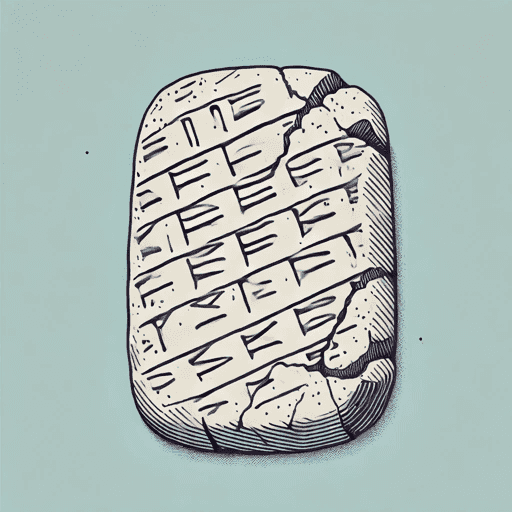
The Flood Tablet, the cuneiform fragment of the Epic of Gilgamesh that George Smith decoded at the British Museum in 1872 and that sits at the center of the book’s Victorian timeline, is also Shafak’s answer to the question of why literature matters at all in a crisis. Smith’s discovery showed that the story of a great flood predated the Bible by centuries. For Shafak, the poem’s survival is not a footnote to history but its own argument.
Think of The Epic of Gilgamesh. Thousands of years old. Passed down orally before it was ever written. So many kings, so many empires have come and gone, and they all thought they would last forever. Their monuments have turned to dust. But a poem — made of breath, made of words — has survived.
That is the wager the novel makes on its own behalf: that a story about water, memory, and erasure, told across three millennia, might outlast the political moment it was written inside.