There Will Come Soft Rains
There Will Come Soft Rains
A modern alternative to SparkNotes and CliffsNotes, SuperSummary offers high-quality Study Guides with detailed chapter summaries and analysis of major themes, characters, and more.
Character List
Meet the key characters, with insights into their roles, motivations, and relationships—spoiler-free.
Major Characters
The unidentified, ungendered voice of the poem acts as a prophet of the earth's future. The speaker offers a quiet, defiant vision of a post-human world, narrating the transition from a gentle morning to the realization of mass extinction. Operating without the traditional fear of death, the speaker views the end of human existence not as a tragedy, but as a necessary cleansing for the earth. The speaker meticulously notes the smell of the ground and the shimmering sounds of birds, contrasting these peaceful elements with the destructive machinery of human war.
Critic of Mankind
Admirer of Spring
Observer of Robins
Observer of Frogs
Observer of Swallows
Observer of Wild Plum Trees
Personified as a maternal, living entity, Spring represents the earth's heroic persistence and rebirth. Capitalized in the text to indicate her dominance, Spring arrives on schedule regardless of human events. She awakens to the dawn completely unaware of and indifferent to the absence of human beings. Operating by her own quiet laws of harmony, she ensures that the natural world continues to flourish despite the previous ravages of war.
Indifferent to Mankind
Symbol for The Speaker
Sustainer of Robins
Sustainer of Frogs
Sustainer of Swallows
Sustainer of Wild Plum Trees
The collective human race, which the poem paints as a violent, greedy, and selfish entity prone to self-destruction. Driven by a cannibalistic logic to wage increasingly destructive wars, humanity acts as a dangerous parasite. They leave behind traces of their existence, such as barbed wire fences and abandoned trenches, which nature quickly reclaims. Ultimately, the species perishes utterly, leaving the natural environment to recover in peace.
Judged by The Speaker
Opposed to Spring
Ignored by Robins
Replaced by Frogs
Ignored by Swallows
Outlived by Wild Plum Trees
Supporting Characters
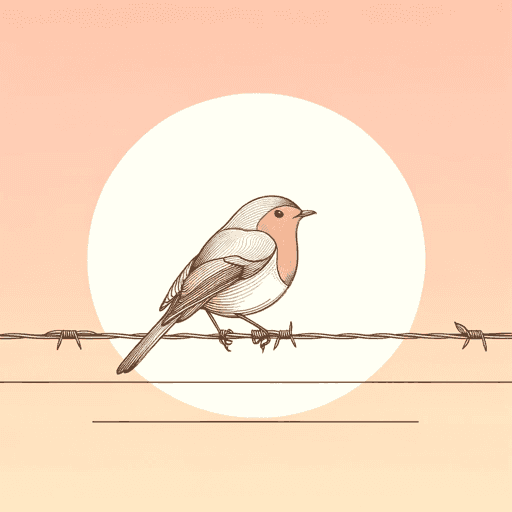
Red-breasted birds who wear a feathery fire while landing on fences. They represent the active, vibrant life that continues undisturbed by human conflict, reclaiming the boundaries created by humanity.
Reclaimer of Mankind
Part of Spring
Amphibians who sing from shallow pools of water. Their nocturnal songs provide a peaceful, natural soundtrack that replaces the noise of human warfare.
Voice of Spring
Observed by The Speaker
Birds that fly in circular patterns in the sky. Their shimmering sounds contribute to the sensuous, peaceful environment of the post-human earth.
Part of Spring
Observed by The Speaker
Trees that stand fully bloomed in white flowers. They represent the silent, stationary beauty of the natural world that outlives human civilization.
Blooms for Spring
Survivor of Mankind