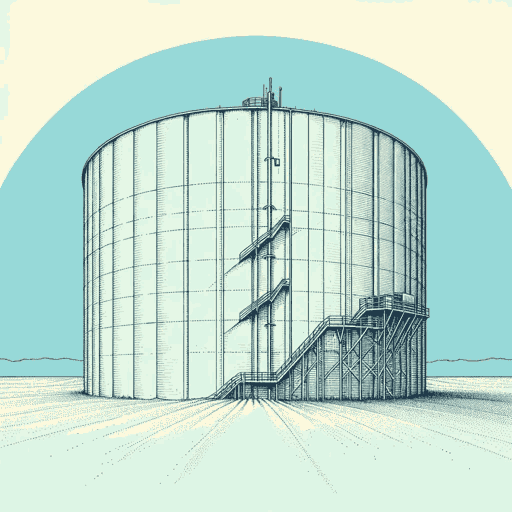
Wool
Wool
A modern alternative to SparkNotes and CliffsNotes, SuperSummary offers high-quality Study Guides with detailed chapter summaries and analysis of major themes, characters, and more.
Summaries & Analyses
Plot Summary
Chapter Summaries & Analyses
Part 1, Chapters 1-4
Part 1, Chapters 5-7
Part 2, Chapters 1-5
Part 2, Chapters 6-9
Part 3, Chapters 1-5
Part 3, Chapters 6-10
Part 3, Chapters 11-13
Part 4, Chapters 0-5
Part 4, Chapters 6-10
Part 4, Chapters 11-15
Part 4, Chapters 16-21
Part 5, Chapters 1-5
Part 5, Chapters 6-10
Part 5, Chapters 11-15
Part 5, Chapters 16-20
Part 5, Chapters 21-25
Part 5, Chapters 26-30
Epilogue
Character List
NEWCharacter Analysis
Themes
Symbols & Motifs
Important Quotes
Essay Topics
Author Insights
NEWQuizzes
NEWReading Tools
Hugh Howey on Wool
In him own words: quotes and insights from the author.Why he wrote it
From the Caribbean to a cave on a screenThe idea did not begin as a plot. It began as a personal disorientation. After years as a yacht captain sailing the Caribbean, Howey settled into domestic life in South Carolina and started relying on television and the internet to know what the world looked like. The gap between that picture and what he had actually seen on arrival in places like Cuba unsettled him more than any single event.
The idea came to me from moving from a career as a yacht captain, and traveling widely and seeing the world and living in it, to being domesticated by my lovely wife, living in one place and relying on TV, the Internet, and newspapers to know what the world was like, and it was terrifying to see how different the picture was painted because of the filters... what do you trust, what does it do to the people living inside the Silo? Do they become terrified to explore, what does it do to their sense of hope? That, to me, is the character in the story more than the Silo in that first short story, that wallscreen.
Working the floor of a university bookstore around 2009, he watched students arrive with their attention already captured by phones. He had recently taken a group of them to Harlem to volunteer at a soup kitchen, and what stayed with him was children playing freely in streets that American media had taught everyone to fear. Plato’s Allegory of the Cave, which kept surfacing in conversations with professors passing through the store, supplied the architecture he needed for what he was already thinking.
I realized that that cave analogy of Plato’s, around today, it would be a big screen instead. And that then the wall screen was born. [paraphrased from audio]
The immediate occasion for sitting down and writing was grief. His dog Jolie had just died, and he could not return to the young adult space opera he had been drafting. He needed a different kind of project, one with no commercial ambition attached to it.
I needed to write something cathartic and depressing that was very uncommercial that no one would ever read... I kind of cried my way through writing it. And it helped. [paraphrased from audio]
That emotional emergency is what produced the first Wool, a 12,500-word piece he published for 99 cents and expected to forget.
How he wrote it
Serial deaths and an engineered endingPublishing the five parts as separate installments rather than as chapters of a finished novel gave Howey a structural freedom he had not planned for. He could shift tone and point of view between installments without feeling bound to a contract he had made with the reader on page one. That freedom became the engine of the book’s most unsettling effect.
I would not have had the freedom to do that if I was writing one continuous novel. I would have felt like I had to stick with the same tone, even if I changed point of views. [paraphrased from audio]
The decision to kill both protagonists in parts one and two was not a provocation for its own sake. It was scaffolding. By the time Juliette arrived at the center of part three, the reader already believed no character was safe, which made investment in her both richer and more anxious. Howey had been thinking about how rarely fiction uses that tension honestly.
We’re so used to in our fiction, the invulnerability of our protagonist. And when I saw what worked well with that first story, I thought, okay, I can play this to my advantage. I can write something that as a reader, I wish we had more of. I don’t think a publisher would have read this. They would have said, you cannot do this. You just can’t get away with it. [paraphrased from audio]
He spelled out exactly what the serial killing of protagonists was meant to build toward. The goal was a reader who loved a character and was already braced to lose her, because that combination of attachment and dread was something he had not found often enough as a reader himself.
What I wanted to create was an eventual hero that readers would love and fully expect to lose... Killing the protagonists in 1 and 2 and then starting the 3rd book with her seemingly imminent death felt like the right thing to do. It felt unique. For an author to invest so much in a character and then for the reader to know that she will die at the end of the book, it helped create something new in Wool that I believe people are really finding compelling.
He had a specific failure mode in mind when he wrote part five. By the time he began it, he had already put down the ending, and he kept the destination visible throughout drafting. The television series Lost had shown him what happened when serialized storytelling invented its mythology on the fly.
I want to avoid what ‘Lost’ did, which was to make it up as they went along.
After the narrative concluded, he placed a fake Q&A with himself at the end of the Omnibus, writing every question as well as every answer. The sequence was designed to walk readers from frustration through relief, then catch them in a moment of lowered guard and ask for a review. He learned the result at a conference, from an Amazon employee who did not know who was sitting in the room.
I was trying to engineer what would have tickled me as a reader and thinking about that emotional rollercoaster and not being beholden.
That year, Wool was the most-reviewed item on Amazon’s platform.
The personal thread
The hero he assembled from his familyJuliette, the mechanic who becomes the Silo’s reluctant sheriff, is the emotional center of the book. When asked where she came from, Howey gave an answer that accounted for the character’s contradictions: her self-doubt, her competence under pressure, and the refusal to give up that the story depends on.
She’s a mix of myself (all the failings), my sister (the badass), and my mom (the unfailing hope).
The book’s opening image of the world outside the Silo as dangerous and gray, versus what Juliette eventually finds, traces back to a habit Howey developed over years of sailing: testing what screens said about a place against what he found when he arrived. That habit was not abstract. It shaped what he put on the first page.
The opening line of WOOL captures this dichotomy. And the story reflects my opinion that the world is best known through direct interaction, and we should dare to hope that it’s better than what we see on our screens.
On what the book is wrestling with
Two theories of human nature, neither one winningThe title carries more weight than it first appears. The cleaning pads the condemned carry to their deaths, scrubbing the lenses of the Silo’s external cameras, are literal wool. But the phrase that organizes the entire series is figurative, and Howey was using both registers at once.
WOOL? It’s from the saying of having wool pulled over one’s eyes. That’s the figurative sense. The literal sense is from the cleaning pads they scrub the lenses with. There are more meanings beyond these two, but they’re the main ones I had in mine.
 authorsinterviews.wordpress.com, “Our interview with Hugh Howey | authorsinterviews”
Wool is built around a political argument Howey has never resolved on the page, because he does not think it can be resolved. Mechanical, the department at the bottom of the Silo where Juliette was trained, represents a Rousseauian faith in human decency. IT, near the top, runs on a Hobbesian logic that without strong central control, civilization collapses. The novel puts both views under pressure without declaring a winner.
In my novel WOOL, you have a heroine who subscribes to the noble savage view, and you have a pretty bad dictator who subscribes to the leviathan view. A careful reading of the book will reveal the flaws and correctness of both viewpoints.
He pushed that structural ambiguity further in a later interview, framing it as the whole series’ animating question rather than one installment’s subplot. The conflict is not between Juliette and the Mayor. It is between two models of what people are.
The main point of this series is that we’re all victims of our beliefs in human nature. Roughly half of us see humanity as deeply good and worthy of being completely free. The other half sees humanity as deeply flawed and requiring restraint.
He has said the only position he finds genuinely honest sits between those poles, and in the Silo sequence that middle ground is where Lukas ends up.
Science fiction, for Howey, earns its place as the genre best equipped to run that kind of argument. He was explicit about why he reached for it rather than literary realism or thriller plotting when he wanted to think through questions about surveillance, hope, and what people do under conditions they did not choose.
To me, the beauty of the genre is its ability to [satirize] the human condition and really speak to what it means to be alive and to exist as a person. Of all the genres, science fiction gives you the best ability to exaggerate some feature of the human condition or some feature of our environment and see how your characters will respond to that.
What he wants us to sit with
Whether a safe, sad life is worth itHe has stated the book’s two central questions together, as a pair, in a way that makes clear they cannot be separated. The first is epistemological: how do you know the world when everything you know comes through a single filtered source? The second is existential and harder.
I want them to question whether we can know if the world is a good or bad place simply from accepting what a single screen in our home tells us. I want them to think about whether a sad life is worth living, or if it’s better to seek truth and happiness, even if it kills us.
authorsinterviews.wordpress.com, “Our interview with Hugh Howey | authorsinterviews”The dedication, four words, compresses everything else. Howey has explained what courage has to do with hope, and why he considers the characters who act on hope the actual heroes of the story rather than the ones who survive.
I dedicated WOOL to ‘Those who dare to hope.’ Hope takes courage. Those are the heroes of my story.
The characters who clean, who walk into the toxic air with a pad of wool in hand, who believe the cameras are lying: in Howey’s frame, they are not the victims of the story. They are its moral center.