A Fire Upon the Deep
A modern alternative to SparkNotes and CliffsNotes, SuperSummary offers high-quality Study Guides with detailed chapter summaries and analysis of major themes, characters, and more.
Summaries & Analyses
Quizzes
NEWReading Tools
Character Analysis
Content Warning: This section of the guide features depictions of graphic violence, death, and animal death.
Pham Nuwen
Pham Nuwen is a dynamic, round protagonist whose arc serves as an exploration of The Malleability of Identity. Initially presented as a reanimated human from the pre-spaceflight era of the Slow Zone, he embodies the archetype of a charismatic, swashbuckling hero. He introduces himself as a former prince and a seasoned interstellar trader from a lost civilization called the Qeng Ho, possessing a cocky self-assurance and a lifetime of experience. This entire persona, however, is a sophisticated fabrication created by the Power known as Old One to serve as its emissary. When this truth is revealed, Pham’s identity collapses. The foundation of his memories and skills is exposed as a lie, transforming him from a confident hero into a tragic figure, an artificial being grappling with an existential crisis. His self-perception is shattered, leaving him to question the very nature of his consciousness and agency.
The second major transformation occurs after Old One’s death. Pham becomes the unwilling inheritor of “godshatter,” fragmented memories and programs downloaded by the dying Power. This turns him into a vessel for Old One’s final, desperate plan against the Blight. He is no longer just a construct, but a living tool whose mind is a battleground between his own burgeoning awareness and the incomprehensible remnants of a transcendent being. He becomes withdrawn and volatile, driven by impulses he cannot understand, lost within the “dark statues with sharp edges, crowding” (193) his own mind. His journey from a confident, albeit fraudulent, hero to a shattered but ultimately pivotal figure culminates in his sacrifice. By interfacing with the Countermeasure, he fulfills Old One’s purpose, simultaneously avenging his creator and giving his own constructed existence a final, definitive meaning.
Ravna Bergsndot
Ravna Bergsndot is the primary protagonist, a human librarian from Sjandra Kei whose intellectual curiosity and moral compass drive the central rescue plot. Initially a scholar content to experience the galaxy through archives, she is thrust into a role of leadership after the catastrophic fall of Straumli Realm. Her character arc is one of transformation from a cautious academic into a determined and resourceful operative. Ravna’s motivations are rooted in empathy and a strong sense of duty, first toward the imperiled Olsndot children and later toward the Tines and the fate of the galaxy itself. She represents a modern, civilized human perspective, contrasting sharply with Pham Nuwen’s more archaic and cynical worldview. This contrast forms the core of their relationship, which evolves from professional collaboration to a deep personal bond that anchors Pham’s tenuous identity. Ravna’s role as a librarian proves critical, as she becomes the conduit for uplifting the Tines, using her dataset to translate complex technological concepts from the Beyond into achievable steps for their medieval society. Her efforts highlight the theme of The Double-Edged Sword of Technological Progress, as she provides the Tines with the means to defend themselves while also accelerating their capacity for warfare. Throughout the narrative, Ravna acts as the mission’s ethical center, consistently advocating for alliances and trust in a universe fraught with deception.
Peregrine Wickwrackrum/Wickwrackscar
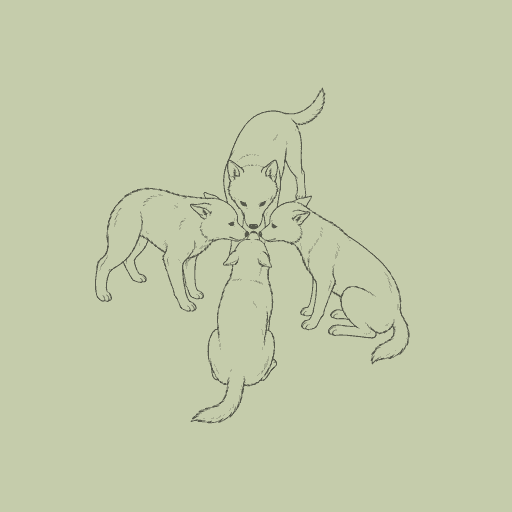
As the central protagonist of the Tines World plotline, Peregrine Wickwrackrum is a dynamic, round character who personifies both the adventurous spirit and the unique nature of Tinean consciousness. Introduced as a “pilgrim,” he is an ancient, well-traveled Tine whose pack consists of only four members, making him more vulnerable but also more adaptable than larger packs. His sociable and curious nature leads him to investigate the fallen starship, an act that results in his rescue of Johanna Olsndot and thrusts him into the conflict between Woodcarver’s domain and the Flenserists. Peregrine serves as the reader’s primary guide to Tine culture, his thoughts and actions illustrating the mechanics of a collective mind.
A pivotal moment in his development is his literal transformation in identity. After his member Rum is killed in a skirmish, his pack mind is broken and on the verge of dissolution. To survive, he accepts a traumatized soldier fragment, “Scar,” into his pack, becoming the new personage of Peregrine Wickwrackscar. This event is a direct illustration of the malleability of identity, showing how a Tine’s personality and memories can be fundamentally altered by the loss or addition of members. The new Wickwrackscar retains the core curiosity of Peregrine but is now augmented with the military knowledge and psychological scars of his new component, making him a more formidable and complex character. His journey from a good-natured traveler to a key military and political figure culminates in his union with Woodcarver, a symbolic merging that promises renewal and a new path forward for their society.
Lord Steel
Lord Steel is the primary antagonist on Tines World, a chilling product of Flenser’s ruthless ideology of soul-crafting. As a “crafted person” (53), he embodies disciplined ambition and a purely instrumental view of others. He is a round, static character; his motivations are complex, but his core drive for absolute power never wavers. Steel’s primary goal is to surpass his creator and expand the Flenserist movement, first across the world and then, with the acquisition of alien technology, to the stars. His intelligence is tactical and paranoid, focused on control, manipulation, and the elimination of threats. He views the captive Jefri Olsndot and the puppy pack Amdiranifani not as individuals but as invaluable tools, feigning affection and kindness to exploit their trust and extract information about the starship and its technology. His interactions with Tyrathect, the Flenser-fragment, reveal his deep-seated psychological conditioning and his simultaneous fear of and ambition to usurp his master. Steel’s entire regime, from his use of mind-numbed work teams to his secret laboratories, is a manifestation of Flenser’s philosophy, refined to a state of efficient, functional cruelty. He represents a dark potential within the Tine species, where the ability to shape identity is used not for growth but for the creation of perfect, unconflicted instruments of will.
Johanna Olsndot
Johanna Olsndot begins the novel as a child traumatized by the violent deaths of her parents and the destruction of her world, but she develops into a resilient and resourceful survivor. As the older of the two Olsndot siblings who crash on Tines World, she is initially a prisoner of Peregrine Wickwrackrum, her interactions with the Tines defined by fear and hostility. Her perspective provides a stark look at the alienness and physical threat the Tines represent. After being rescued and brought to Woodcarver’s domain, her role shifts dramatically from victim to invaluable ally. She and her dataset, the Pink Oliphaunt, become the catalyst for a technological revolution, providing the knowledge Woodcarver’s faction needs to create gunpowder and cannons to fight Lord Steel.
Johanna’s arc is one of hardening and adaptation. The trauma of the ambush leaves her with a fierce, vengeful anger, particularly directed at Peregrine’s scarred member, whom she holds responsible for her father’s death. Over time, however, her need for community and her growing understanding of Tine society temper this rage. She forms alliances with Woodcarver and, reluctantly, with Peregrine, learning to navigate their alien culture. By serving as their teacher and technical advisor, she carves out a position of power and importance, moving beyond her initial status as a helpless orphan. Her journey illustrates a capacity for survival and growth in the face of incomprehensible loss and profound alienness.
Jefri Olsndot
Jefri Olsndot is the younger of the two human children and serves as both a catalyst for the plot and an innocent lens through which the Flenserist regime is viewed. Captured by Lord Steel after the ambush, he is placed in what he believes is a Tine “kinderschool” (53) with a pack of puppies, Amdiranifani. As a naive eight-year-old, Jefri is highly susceptible to manipulation. He develops a deep, trusting affection for Lord Steel, viewing him as a heroic protector, and forms a genuine friendship with the puppy pack, whom he perceives as a single entity he calls “Amdi.” This bond becomes the primary tool of Steel’s deception, as Amdiranifani translates Jefri’s knowledge for the Tine lord. Jefri’s most crucial role is as the sole operator of the crashed ship’s ultrawave communicator, making him the only link to Ravna’s rescue mission. Through this channel, he unwittingly feeds Steel’s propaganda to the rescuers while also providing them with the intelligence they need to plan their mission. Jefri’s perspective highlights the stark contrast between childlike innocence and calculated political evil. He remains a largely static character, his trusting nature unchanging until the final moments when he is confronted with the truth of Steel’s betrayal.
Woodcarver
Woodcarver is the ancient, quasi-mythical ruler of the most progressive city-state on Tines World and serves as a mentor archetype. She represents an alternative to Flenser’s violent ideology, having spent centuries exploring the nature of the Tine soul through gentle experimentation and art rather than force. By the time Johanna arrives, however, Woodcarver is a tragic figure. Her 600-year effort to maintain her soul’s continuity through careful inbreeding has led to physical decay and a weariness of spirit. The arrival of the humans and the existential threat from Lord Steel forces her to confront her stagnation. Her decision to ally with Johanna and use the dataset to develop advanced weapons marks a turn from her philosophical nature toward pragmatism. Her most significant act of transformation is personal; she abandons her quest for immortal sameness by choosing to bear pups with an outsider, Peregrine Wickwrackscar. This decision to create a “newby” soul, blending her wisdom with Peregrine’s unpredictable vitality, is a profound acceptance of change and a symbolic rebirth for her and her society, representing hope against the rigid, death-driven ideology of the Flenserists.
Blueshell and Greenstalk
Blueshell and Greenstalk are a mated pair of Skroderider traders who become essential allies in the fight against the Blight. As a species, Skroderiders represent a unique form of symbiotic intelligence; they are sessile, plant-like beings who achieve mobility and short-term memory through their mechanical mounts, or “skrodes.” Blueshell is the more talkative and business-minded of the pair, while Greenstalk is quieter and more empathetic. They serve as the catalyst for the main plot, providing Ravna Bergsndot with the first clues about the countermeasure and the refugee ship. Despite their natural caution as traders, they agree to crew the dangerous rescue mission, demonstrating a deep-seated decency.
The most significant aspect of their characters is revealed late in the novel: The Skroderider race and their skrodes were created by an ancient precursor to the Blight to serve as a galaxy-spanning network of sleeper agents. This revelation adds a layer of tragic horror to their existence, as Greenstalk is briefly but completely “perverted” by this hidden programming. Their struggle with this horrifying truth, and their ultimate decision to continue aiding the mission, showcases their courage and commitment to their friends, making them more than just alien curiosities.
Scriber Jaqueramaphan
Scriber Jaqueramaphan is a Tine intellectual and self-proclaimed spy from the Long Lakes Republic who functions as a catalyst in the early part of the narrative. A foil to the more worldly Peregrine Wickwrackrum, Scriber is portrayed as a comically ambitious and somewhat naive dilettante, whose head is filled with knowledge from books rather than experience. Despite his buffoonish demeanor, he possesses genuine courage and a crucial streak of insight. It is Scriber who first recognizes the crashed cargo shell as an alien artifact and, driven by a sense of grand adventure, insists that he and Peregrine must rescue the surviving alien, Johanna. This pivotal decision sets the entire Woodcarver plotline in motion. His murder at the hands of Vendacious serves as a key plot point, confirming the existence of a high-level traitor within Woodcarver’s domain and demonstrating the lethal seriousness of the political intrigue Johanna has fallen into.
Tyrathect/Flenser
Flenser, the architect of the brutal Flenserist movement, survives his assassination as fragments grafted onto other Tines. The most prominent of these is Tyrathect, a newby pack that Peregrine Wickwrackrum encounters. This composite character serves as a secondary antagonist and a living symbol of the malleability of identity. Initially, the pack is dominated by the two ruthless Flenser members, who manipulate Lord Steel and scheme to reunite the full Flenser soul. However, the original personality of the “timid teacher” Tyrathect remains, creating a continuous internal battle for control of the pack’s consciousness.
This internal conflict makes Tyrathect a dynamic and unpredictable figure. At times, the ruthless Flenser persona is in command, offering cynical and brilliant advice to Steel. At other times, Tyrathect’s conscience emerges, compelling the pack to act against Steel’s interests, most notably by helping Jefri and Amdi escape. This struggle is not just psychological but physical, manifesting in nightmares and a fight for control over the pack’s gender identity and mannerisms. In the end, Flenser appears to win, subsuming Tyrathect’s personality entirely. However, the conflict has irrevocably changed him, a transformation that leads him to seek peace with Woodcarver rather than total domination, suggesting that even the most carefully crafted soul is vulnerable to unforeseen change.

Unlock analysis of every major character
Get a detailed breakdown of each character’s role, motivations, and development.
- Explore in-depth profiles for every important character
- Trace character arcs, turning points, and relationships
- Connect characters to key themes and plot points