A Fire Upon the Deep
A modern alternative to SparkNotes and CliffsNotes, SuperSummary offers high-quality Study Guides with detailed chapter summaries and analysis of major themes, characters, and more.
Summaries & Analyses
Quizzes
NEWReading Tools
Symbols & Motifs
Content Warning: This section of the guide features depictions of graphic violence, death, and animal death.
The Zones of Thought
The Zones of Thought are the novel’s foundational symbol, representing a cosmic hierarchy where physical laws directly govern the potential for consciousness. The galaxy is divided into concentric regions: the Unthinking Depths, where sentience is nearly impossible; the Slow Zone, where faster-than-light travel and true AI are prohibited; the Beyond, which allows for both; and the Transcend, where god-like Powers can emerge. This structure symbolizes the core theme that intelligence is a function of environment, not an intrinsic quality. The novel’s introduction explains that in the Slow Zone, “atomic interactions are faster, though faster-than-light travel is still impossible, and self-conscious AI’s deeply unlikely; it is here that Homo sapiens had very slowly evolved” (ix). This framing recasts human intelligence as a product of specific, limiting conditions. The Zones drive the narrative by defining the stakes of every action. The Straumli Realm’s expedition into the Transcend is an act of hubris that unleashes the Blight precisely because they tamper with physics beyond their native comprehension. Conversely, the Olsndot family’s desperate flight toward the Slow Zone is a strategic retreat into a realm where the Blight’s transcendent power cannot easily follow, transforming a cosmic backwater into a potential sanctuary.
The Blight
The Blight is a symbol of The Double-Edged Sword of Technological Progress, representing the catastrophic potential of knowledge pursued without wisdom or restraint. Awakened by Straumli archaeologists from a 5-billion-year-old archive, the Blight is not merely a powerful entity but a “Class Two perversion” (59), a form of predatory, transcendent intelligence that corrupts and consumes other civilizations. Its origin from a library of ancient “recipes” (19) makes it the ultimate cautionary tale against tampering with forces beyond comprehension. The Prologue reveals its insidious nature from the start, as nascent psychic “ghosts” realize, “It’s an old evil they’ve wakened. Till it’s ready, it will feed them lies, on every camera, in every message from home” (20). This depiction of the Blight as a deceptive, parasitic force underscores the novel’s warning that the tools of information and advancement can be easily turned into instruments of subjugation. The Blight’s method of enslavement, turning whole populations into extensions of its own will, also connects to the theme of The Malleability of Identity. It embodies the ultimate loss of selfhood, transforming vibrant cultures into what the introduction terms “obscene puppets” (x), thereby representing the absolute horror of intellect weaponized against itself.
The Tines’ Pack Minds
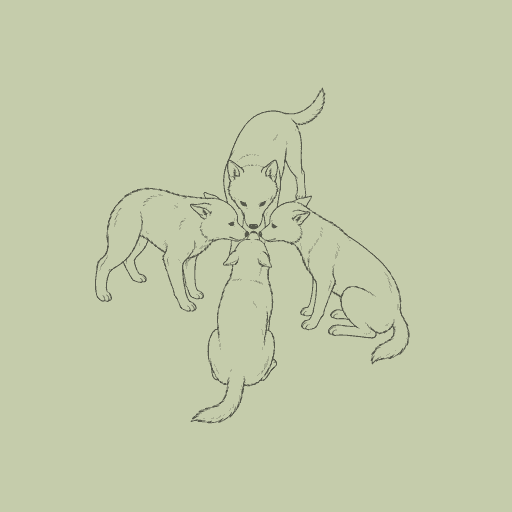
The collective consciousness of the Tines serves as the novel’s most vivid symbol for the malleability of identity. On the Tines World, a single person is not an individual body but an emergent mind arising from a small pack of dog-like members who communicate through complex, high-frequency sound. This model of selfhood is inherently unstable, dependent on the number, proximity, and health of the constituent members. The narrative directly illustrates this precarity through the character of Peregrine Wickwrackrum. When one of his four members, Rum, is killed, Peregrine’s identity collapses instantly: “[Wickwrackrum’s] mind went […] There was suddenly no fourth presence, just the three, trying to make a person” (43). The immediate regression from a thinking individual to a near-mindless trio demonstrates that, for the Tines, identity is not a stable core but a contingent, social construct. This concept powerfully reinforces one of the novel’s central themes by presenting a being whose very soul can be unmade or remade by addition or subtraction. The sinister implications are explored through Flenser’s “soul-crafting” of Lord Steel, while the potential for transformation is seen when Peregrine later incorporates a new member, becoming a different person. The Tines’ existence thus reframes identity not as a fixed state but as a continuous, delicate process.

Unlock the meaning behind every key symbol & motif
See how recurring imagery, objects, and ideas shape the narrative.
- Explore how the author builds meaning through symbolism
- Understand what symbols & motifs represent in the text
- Connect recurring ideas to themes, characters, and events