A Fire Upon the Deep
A modern alternative to SparkNotes and CliffsNotes, SuperSummary offers high-quality Study Guides with detailed chapter summaries and analysis of major themes, characters, and more.
Summaries & Analyses
Quizzes
NEWReading Tools
Themes
Content Warning: This section of the guide features depictions of graphic violence, death, and animal death.
Intelligence as a Function of Environment
In Vernor Vinge’s A Fire Upon the Deep, intelligence appears as a shifting quality shaped by each setting it grows in. The book strips away any single standard for cognition and shows how sentience relies on the physical rules and social structures of a given place. The Zones of Thought form the clearest expression of this idea, since these regions dictate whether complex minds can develop at all. The alien species that the novel introduces deepen this view, because their ways of thinking depend on their distinct biological parameters and their physical circumstances. Whether the author is describing characters in space or on Tines World, Vinge treats individual minds as adaptable constructs that shift, improve, or degrade depending on the specific changes in their environment.
In Vinge’s worldbuilding, the Zones of Thought represent different regions of cognitive potential in space; each zone carries different physical laws that either block or support advanced technological performance and neurological sophistication. In the Unthinking Depths at the galactic core, “sentience is almost impossible” (ix), and those who travel toward this region will gradually lose their intelligence and their technological capabilities. Outward from this region lies the Slow Zone or the Slowness, where humanity first evolved and where faster-than-light travel and truly sentient artificial intelligence cannot exist. The collapse of Pham Nuwen’s original Qeng Ho expedition, which lost its automation and the crew’s competence when it crossed into the Slow Zone and then the Unthinking Depths, shows how sharply the environment can strip away thought. With the exception of the chapters set on Tines World, most events in the novel unfold in the Beyond, a region that surpasses the Slowness and allows advanced technologies to form and progress. However, only the outermost region, the mysterious Transcend, allows civilizations to develop superintelligence that far outstrips the abilities of purely organic lifeforms.
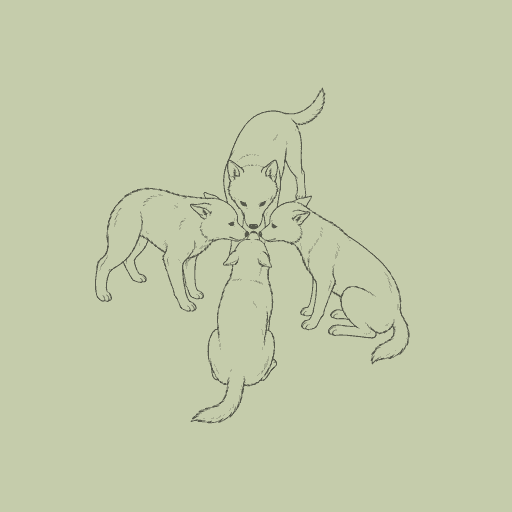
Crucially, the Tines complicate human ideas of intelligence by showing a species whose sentience depends on cooperation. A single Tine behaves like an ordinary animal, but a group of four to eight “members” forms a collective mind that communicates through high-frequency sound. Peregrine Wickwrackrum’s arc illustrates this fragility. After one of his four members dies, he briefly becomes a confused and unstable “trio” until he joins with Scar, a traumatized singleton, and gains a new identity as Peregrine Wickwrackscar. While his original memories persist, Scar’s own military past influences Peregrine’s new composite mind, and his talent for military-style endeavors abruptly increases, facilitating his and Scriber’s daring escape with the wounded Johanna.
The Skroderiders and the Powers of the Transcend push this idea even further. The Skroderiders, a sessile species, move and think clearly only because of their skrodes, the mechanical mounts that also supply them with a workable short-term memory. Their intelligence thus becomes a hybrid blend of biology and ancient machinery, and this state of existence is further complicated by the fact that they owe their mobility and sentience to innovations created by the original version of the Blight that existed millions of years ago. At the opposite end of the sentience spectrum, the superintelligent Powers that inhabit the Transcend are able to think at levels that remain beyond the reach of beings in the lower Zones. Yet even their abilities come directly from the laws of the Transcend, rendering their intellect a product of that environment, just like the denizens of the other Zones.
The Malleability of Identity
Selfhood takes an unstable shape in A Fire Upon the Deep, which portrays identity as something that can be fractured, reshaped, or overwritten. In both narrative threads, several different characters and species move through states where memory or consciousness no longer guarantee them a steady sense of self. For example, Pham Nuwen’s return to life shows how artificial a self can be. The Vrinimi Organization rebuilds him from 30,000-year-old fragments of several different human bodies, and his memories of the Qeng Ho are provided by Old One; while these memories are eventually proven to be authentic experiences, Pham spends much of the novel fearing that his very identity and backstory are nothing more than arbitrary creations drawn “from human cultural data in the archives” (86). Even so, he remains painfully aware that his mind does not belong fully to him, since Old One has engineered him as an avatar, an “Emissary Device” that the Old One uses directly and then programs to perform certain functions. As a result, Pham vacillates between the recreated version of his original personality and the detached, calculating version that Old One has programmed into him.
For the Tines, the very nature of the self depends upon the number and cohesion of the pack’s members. As Peregrine’s crisis illustrates, each pack-mind can easily shift or change character as members are gained or lost, since each member of a pack adds specific memories and personality traits that contribute to the quality of the whole. On a broader level, however, Flenser and Steel’s ruthless experimentation program perverts this unique quirk of biology, warping and twisting it for their own authoritarian aims. By surgically culling specific members and adding others, they deliberately hone a pack’s characteristics, creating tailor-made minds that are as vicious or as unthinkingly obedient as these tyrants need them to be. Their activities dramatize the age-old concept of brainwashing, taking the practice to an extreme that equates psychological manipulation with physical torture and deliberate maiming. The fragmentary “Tyrathect” shows another form of vulnerability, since her pack contains her original members and the two splinters of Flenser that pull her collective consciousness in competing directions. Thus, even Flenser (and Steel, whose creation was similarly traumatic) are themselves victims of the very practice that they perpetuate, and their own psyches prove to be as unstable and conflicted as the minds of those they manipulate through torture and fear.
However, the Blight represents an even more extreme example of an entity that treats personhood as something to reshape or consume for its own purposes. Intent upon dominating the entire galaxy, the Blight cruelly absorbs entire populations and turns them into “teleoperated devices”: extensions of its hostile will. This phenomenon is vividly illustrated when Øvn Nilsndot appears in a broadcast, acting as nothing more than a voice for “the Power that Helps” (168) now that the Blight has erased his identity. Taken together, all of these events present the self as a temporary arrangement that powerful beings can break apart or rebuild for their own aims.
The Double-Edged Sword of Technological Progress
Throughout the novel, Vinge creates multiple scenarios to deliver the same dire warning: that technological and intellectual progression carries threats that may transcend its improvements. Both in Vinge’s universe and in the real world, the same tools that let civilizations explore or connect can create disasters when people do not consider the full implications of the innovations they implement. This tension, exemplified by the misguided actions of the Straumli Realm researchers, creates the existential crisis that drives the plot to the apocalyptic act at its climax. At the High Lab, researchers hope to uncover information and technology that would enrich their world, so they take the risk of reviving the archive’s ancient data and allowing it access to their local systems. Despite their cursory caution, their half-joking aim of “making God” (51) does indeed create a superior intelligence: one that instinctively seeks their utter destruction. When the archive’s “recipes” evolve beyond the researchers’ control, the resulting Blight annihilates Straumli civilization and enslaves the people to its will, then goes on to threaten the entire galaxy. The novel’s dramatic opening suggests that the inquisitive urge to discover greater knowledge can also bear the seeds of society’s collapse when technological innovations break free of their creators’ control.
A similar pattern appears on the Tines world when new technology arrives in the middle of an existing conflict. As the crew of the Out of Band II shares instructions for making gunpowder, radios, and cannons, thinking to help Jefri’s allies, these tools give Steel’s forces more destructive power, but they do not stop the war. Instead, the new artillery results in far greater carnage than would otherwise be possible. Likewise, Flenser uses his innate genius to adapt the radios to Tine use, temporarily becoming a telepathic pack-mind whose awareness can span miles. This innovation grants him far-reaching control over Steel’s endeavors, shifting the Tines’ conflict into a far more violent form.
The novel’s climax brings the most extreme example of technological danger, given that the Blight’s ravages can only be halted by an equally apocalyptic technological force. When Pham Nuwen activates the long-sought countermeasure, a relic that originated in the High Lab, this high technology releases a “reverse surge” that expands the Slow Zone and traps the Blight’s fleet in this region indefinitely. However, it also engulfs a broad swath of the Beyond and sends millions of civilizations into permanent regression at best and utter destruction at worst. Thus, the very device that saves the galaxy also places entire regions in jeopardy, and the shattered Milky Way stands as a cosmic testament to the existential dangers of embracing progress without fully cataloguing its risks.

Unlock every key theme and why it matters
Get in-depth breakdowns of the book’s main ideas and how they connect and evolve.
- Explore how themes develop throughout the text
- Connect themes to characters, events, and symbols
- Support essays and discussions with thematic evidence