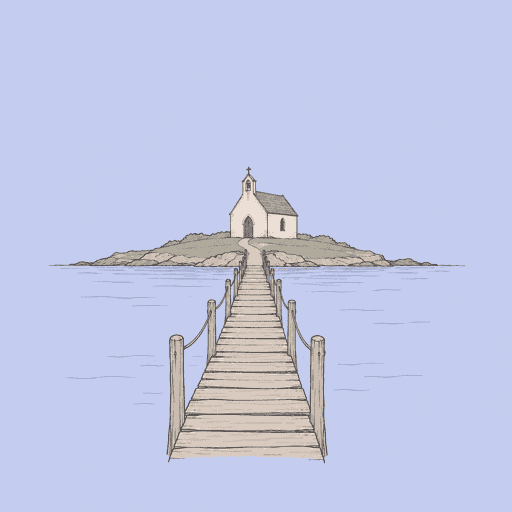
A Year of Marvelous Ways
A modern alternative to SparkNotes and CliffsNotes, SuperSummary offers high-quality Study Guides with detailed chapter summaries and analysis of major themes, characters, and more.
Summaries & Analyses
Quizzes
NEWReading Tools
Themes
Content Warning: This section of the guide includes discussion of death, death by suicide, suicidal ideation, rape, and mental illness.
Healing Through Storytelling
In A Year of Marvelous Ways, storytelling emerges as an essential, restorative act, capable of processing trauma and bridging the gaps created by grief and time. The novel proposes that sharing personal histories—whether factual or mythical—is a deep mechanism for healing. Characters like Marvelous and Drake find that by narrating their pasts, they can reframe painful memories, transform isolating experiences into shared narratives, and ultimately reconnect with the present. The book portrays storytelling as a form of self-creation, where the act of telling one’s life story allows for the integration of a fragmented self.
Marvelous’s life is proof of the power of narrative. She recounts her history to Drake over several nights, weaving together the mythical tale of her mermaid mother with the tangible grief of losing her parents and her great love, Jack Francis. These recollections form the architecture of her identity. By sharing the story of her father’s loss and eventual recovery, she explains how he learned that “coming back from the dead is not quite the same as coming back to life” (96), a truth that defines her own resilience. Marvelous’s stories are not always linear or verifiable, but their emotional truth provides a framework for understanding survival. This practice extends even to inanimate objects as she tells the story of the fishing boat Deliverance back to the broken boat itself. The ritualistic act suggests that narrative can bestow peace and closure upon both the teller and the world around them.
For Drake, storytelling is a more painful but equally necessary path to healing. Arriving at the creek haunted by unspoken wartime trauma and the suicide of his first love, Missy, he is unable to articulate these horrors. Instead, he is isolated by these memories and remains locked in a cycle of self-loathing and fear. It is only in the sanctuary of Marvelous’s company that he can finally confess the story of his complicity in a wartime atrocity and the crushing guilt that followed. This confession is a painful purge, but it marks the critical turning point in his recovery. By giving voice to the memories that have defined him as a broken man, he begins to loosen their grip. The act of sharing his story with Marvelous allows him to be seen and accepted, breaching the loneliness that has fueled his despair.
Ultimately, the novel shows that storytelling fosters connection that transcends the individuals who narrate them. When Dr. Arnold recounts his encounter with a young, grieving Marvelous, he provides Drake with a missing chapter of her life, deepening Drake’s understanding of the woman who saved him. This shared history links them together, demonstrating how stories can outlive their subjects and continue to shape the lives of others. In this way, personal histories become a collective legacy, a web of narratives that offers context, comfort, and a way to navigate the complexities of a life marked by both marvelous and tragic events.
The Lingering Trauma of War
In A Year of Marvelous Ways, the psychological wounds of war persist long after the fighting ends, leaving veterans haunted by guilt, grief, and a deep sense of alienation. The novel examines how combat trauma severs individuals from their communities and their former selves, making reintegration into a world at peace a difficult, and sometimes impossible, journey. Through the experiences of characters like Drake and Simeon Rundle, the narrative illustrates that the most lasting battles are often fought within the mind, far from any physical frontline. War is depicted as a fracturing force that leaves a permanent scar on individuals and the communities they return to.
The primary exploration of this theme is through Drake, a WWII veteran tormented by his actions—and inaction—in Normandy. Much of his trauma stems from witnessing and failing to stop a brutal rape committed by his fellow soldiers. This memory of complicity becomes the source of his deep self-loathing and emotional shutdown. His return to England marks a continuation of his exile rather than a homecoming, as he is plagued by physical tremors, an inability to connect with others, and a pervasive sense of being fundamentally broken. The war reshapes Drake’s identity, leaving him feeling like a “damaged soldier with a hole instead of a heart” (66). His desire to die alone in the Cornish woods is the culmination of this unresolved trauma, a desperate flight from a past that has rendered the present unbearable.
The novel provides a historical parallel through the story of Simeon Rundle, a WWI veteran whose psychological damage destabilizes an entire village. Simeon returns from the trenches a shattered man, eventually taking his own life in a public manner that horrifies his community. His suicide is portrayed as the direct result of the “whole heap of horror” (7) he carried back from the war. Yet rather than responding with compassion, the villagers stigmatize his death as shameful. The subsequent ostracization of the Rundle family exposes the community’s lack of understanding of combat trauma and its preference for heroic narratives of sacrifice over the painful reality of veterans’ psychological suffering. Simeon’s story emphasizes the long-term, communal consequences of war, demonstrating how one soldier’s trauma can become a wound that festers for decades.
The impact of war extends beyond individual soldiers to the very fabric of society. Marvelous reflects on how World War I drained St. Ophere of its men and vitality, freezing life in “perpetual wait” and causing the village to slowly die. The absence of men leads to the decay of the community’s social and economic structures, from which it never recovers. This collective loss mirrors the individual traumas of its soldiers, suggesting that a society cannot easily heal when its people are broken. The novel thus presents war as a destructive force whose repercussions ripple through generations, leaving behind ghosts, empty houses, and a silence where life used to be.
Nature as a Restorative Force
Winman’s novel portrays the natural world as a powerful, living entity with the capacity to cleanse, heal, and restore wounded souls. The Cornish landscape, and specifically Marvelous’s tidal creek, is depicted as a sanctuary where characters can retreat from the traumas of the outside world and reconnect with a more fundamental, cyclical rhythm of life. Immersion in nature, particularly in the purifying element of water, offers a path toward spiritual renewal and emotional balance. The author suggests that by attuning themselves to the patterns of the tides, the changing seasons, and the lives of wild creatures, individuals can begin to heal from even the deepest psychological injuries.
Marvelous Ways embodies this deep connection to the natural world. Her daily swims in the creek are a central ritual of her existence, an act of both physical and spiritual cleansing. For her, the tidal, saltwater river is the source of her identity, linking her to her mythical mermaid mother and the sea that provides the Cornish community with sustenance. Serving as her sanctuary and guide, the creek’s salty scent is “her favorite smell, the smell, she believed, of her blood” (12), and its tides dictate the rhythm of her life. This deep, instinctual bond with her environment is presented as the source of her wisdom and resilience. She draws strength from the land, demonstrating that a life lived in harmony with nature is inherently restorative.
For Francis Drake, who arrives in St. Ophere broken and terrified of water, the creek becomes the site of his gradual and deep healing. His journey is one of slowly learning to accept the restorative power he initially fears. His recovery culminates in a symbolic baptism after he confesses his wartime trauma to Marvelous. As he immerses himself completely in the ice-cold river, he washes away the metaphorical weight of his guilt and shame. By surrendering to the water, Drake is reborn, cleansed of the past that had nearly destroyed him and able to finally re-engage with life.
The novel reinforces this theme through moments where nature seems to operate in mystical alignment with human emotional events. The most striking example is the arrival of 2,000 starfish on the tide, which heralds the return of Paper Jack after a 15-year absence. This magical occurrence suggests that the natural world is an active participant in the characters’ lives, responding to and reflecting their deepest longings. The creek and its surrounding woods provide a haven where the rhythms of nature override the chaos of human history, offering a timeless space for healing, connection, and the slow, steady process of becoming whole again.

Unlock every key theme and why it matters
Get in-depth breakdowns of the book’s main ideas and how they connect and evolve.
- Explore how themes develop throughout the text
- Connect themes to characters, events, and symbols
- Support essays and discussions with thematic evidence
Related Titles
By Sarah Winman