This is a Plot Summary. A full Study Guide—with chapter summaries, themes, symbols, and more—isn't available yet. Request it, and our expert team will consider adding it to our library.
Plot Summary
Reading Tools
Plot Summary
In this personal essay, Haruki Murakami traces the life of his father, examining how war shaped an ordinary man and, through him, produced the person Murakami himself became. Part memoir and part family history, the essay weaves together childhood memories, wartime research, and reflections on accident and identity.
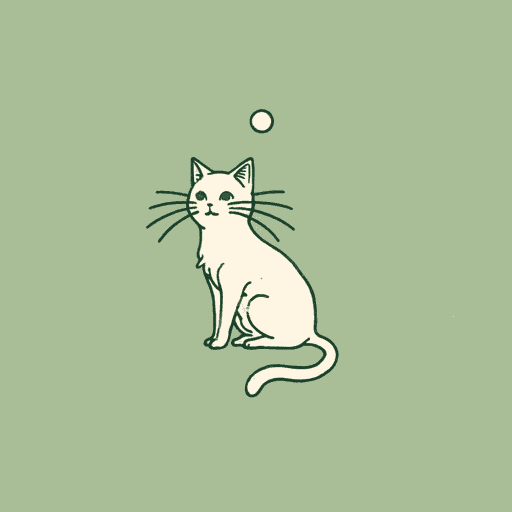
Murakami opens with a memory from around 1955 in Shukugawa, Nishinomiya City, in Japan's Hyogo Prefecture. One summer afternoon, he and his father bicycled to the beach at Koroen to abandon a cat they could no longer care for. When they arrived home, the cat was already there, greeting them with a meow. Murakami recalls his father's expression shifting from amazement to admiration to relief. The family kept the cat. An only child who grew up with cats and books as his closest companions, Murakami still cannot explain how the cat beat them home.
A second early memory centers on his father's morning ritual of reciting sutras, sacred Buddhist scriptures, before a carved bodhisattva statue, a figure representing Buddhist compassion. When young Murakami asked whom his father prayed for, his father answered that he prayed for those who died in the war, both Japanese soldiers and the Chinese who had been their enemies.
Murakami traces his family's priestly lineage. His grandfather, Benshiki Murakami, rose from a farming family in Aichi Prefecture to become head priest of Anyoji Temple in Kyoto, part of the Seizan branch of Jodo Buddhism. Benshiki had six sons and died in 1958, struck by a train during a typhoon. Murakami recalls the night the family learned the news: His nine-year-old self watched his mother cling to his father, begging him not to take over the temple.
Murakami's father was born on December 1, 1917, in Kyoto. His youth spanned the Taisho democracy era, the Great Depression, the Second Sino-Japanese War, and the Second World War. Three of the six brothers were drafted; all survived. After Benshiki's death, none volunteered to succeed him as head priest. Murakami suspects his father was the natural choice, given his sincere faith and priestly qualifications, but his father prioritized his family. The eldest brother, Shimei, eventually took over out of obligation.
Murakami reveals that his father was sent as a boy to apprentice at a temple in Nara, presumably to be adopted into the priest's family, but returned home unable to adjust. Murakami suspects this early separation left a deep emotional scar and connects it to his father's visible relief when the abandoned cat returned on its own.
After completing his secondary education in 1936, Murakami's father entered the School for Seizan Studies to train as a priest. Students typically received a military exemption, but his father neglected certain paperwork and was drafted in August 1938 at age 20. Murakami long feared his father had been involved in the Nanjing massacre of December 1937. He eventually discovered that his father belonged to the 16th Transport Regiment, drafted nearly a year after the massacre, which brought tremendous relief. His father died in 2008 without ever having been asked about Nanjing.
His father shipped out in October 1938, arrived in Shanghai, and served across China handling supplies and caring for military horses. Conditions were dire: Rations were scarce, disease was rampant, and transport troops, though not usually in direct combat, were lightly armed and vulnerable to attack. His father wrote haiku and mailed them to his school's journal. Murakami reflects that for a literature-loving trainee priest abruptly turned soldier, writing haiku was likely his sole consolation, a symbolic code for feelings that would not have passed military censors.
His father told Murakami the story of a wartime execution only once, when Murakami was young. His father's unit executed a captured Chinese soldier who sat quietly with his eyes closed, knowing he would be killed, and was decapitated with a sword. His father spoke with deep respect for the man's composure. Murakami notes that forcing new soldiers to execute prisoners was common practice during this period, a violation of international law. This story became inherited trauma, transferred from father to son.
His father's unit returned to Japan in August 1939. He resumed his studies, graduated with honors from the Seizan school in March 1941, and entered Kyoto Imperial University's literature department. In late September 1941, he received a second draft notice and was assigned to the 53rd Transport Regiment. On November 30, eight days before the attack on Pearl Harbor, he was unexpectedly released. As his father told it, a senior officer argued he would better serve the country by continuing his studies. However, university records show his father did not actually enroll until October 1944, contradicting this account and leaving a gap of roughly three years that Murakami cannot explain.
Murakami traces the catastrophic fates of the units his father narrowly avoided. The 53rd Division was sent to Burma in 1944 and nearly destroyed fighting the British. The 16th Division was sent to the Philippines, where it suffered devastating losses; on Leyte Island, most troops died of starvation or malaria, and only 580 of the original 18,000 men survived. Had his father remained with either division, he would have died, and Murakami would never have been born.
His father received a third draft notice in June 1945 and was assigned to a transport unit that remained in Japan. The war ended on August 15, and he was released in October at 27. After the war, he completed his university studies and entered graduate school. Murakami was born in January 1949 in Kyoto. His father left graduate school due to age and family responsibilities, taking a position teaching Japanese at Koyo Gakuin in Nishinomiya. According to Murakami's mother, unprocessed wartime trauma made his father volatile in his early teaching years, though he mellowed over time. Murakami's mother had also been shaped by the war: Her fiancé died in the conflict, and her father's store burned in a US bombing raid.
Father and son shared Sunday movies, baseball, and haiku outings, but a psychological disconnect grew between them. Murakami's father hoped his son would follow the scholarly path the war had denied him. Murakami found school repressive and preferred reading, music, and sports. His mediocre grades caused his father chronic dismay. When Murakami debuted as a novelist at 30, his father was pleased, but their relationship had already grown distant. After Murakami married and became a writer, they went over 20 years without seeing each other.
Shortly before his father's death in August 2008, Murakami, then nearly 60, visited him in a Kyoto hospital. His father, 90, was gaunt and barely recognizable from cancer and diabetes. In the final days, the two managed an awkward conversation and reached a sort of reconciliation. Murakami returns in memory to the cat at Koroen beach, reflecting that such small, accumulated moments have made him who he is.
Murakami shares a second cat memory: A white kitten climbed a tall pine tree in the family garden, unable to get back down. Despite its cries, neither he nor his father could rescue it, and by morning the kitten was silent and gone. Murakami draws a lesson: Going down is much harder than going up. He calls himself and his father ordinary people whose lives came about through accident and happenstance. He compares individuals to nameless raindrops, each discrete and replaceable, yet each carrying its own emotions, history, and duty to pass that history on. In an afterword, he notes that the cat memory provided an entry point for a story showing how deeply war transforms ordinary lives and passes its consequences to the next generation.
Related Titles
By Haruki Murakami