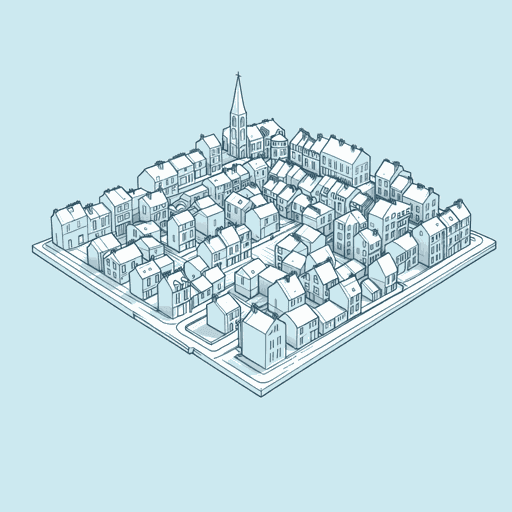
All the Light We Cannot See
All the Light We Cannot See
A modern alternative to SparkNotes and CliffsNotes, SuperSummary offers high-quality Study Guides with detailed chapter summaries and analysis of major themes, characters, and more. For select classroom titles, we also provide Teaching Guides with discussion and quiz questions to prompt student engagement.
Summaries & Analyses
Plot Summary
Background
Chapter Summaries & Analyses
Part 0, Chapters 1-8
Part 1, Chapters 9-31
Part 2, Chapters 32-36
Part 3, Chapters 37-61
Part 4, Chapters 62-67
Part 5, Chapters 68-95
Part 6, Chapters 96-100
Part 7, Chapters 101-120
Part 8, Chapters 121-128
Part 9, Chapters 129-147
Part 10, Chapters 148-165
Part 11, Chapters 166-167
Part 12, Chapters 168-177
Part 13, Chapter 178
Character List
NEWCharacter Analysis
Symbols & Motifs
Themes
Important Quotes
Essay Topics
Book Club Questions
Author Insights
Quizzes
NEWReading Tools
Anthony Doerr on All the Light We Cannot See
In his own words: quotes and insights from the author.Why he wrote it
A dropped call and a forgotten miracleThe book began with a stranger’s frustration on a commuter train from Princeton to Manhattan in 2004. Doerr had just finished his novel ‘About Grace’ and was carrying a notebook, looking for what came next. The man in front of him lost his cell signal underground and started cursing. What struck Doerr was not the man’s anger but what the anger revealed: that a genuine miracle had become so routine it produced only irritation when it briefly failed.
What he’s forgetting, what we’re all forgetting, is that what he was just doing is a miracle. He’s using two little radios — a receiver and a transmitter — crammed into something no bigger than a deck of cards to send and receive little packets of light between hundreds of radio towers, one after the next, miles apart, each connecting to the next at the speed of light, and he’s using this magic to have a conversation about Keanu Reeves. Because we’re habituated to it, we’ve stopped seeing the grandeur of this breathtaking act.
He wrote a title in his notebook that afternoon: ‘All the Light We Cannot See.’ That night, he began a piece of fiction in which a blind girl reads a story to a trapped boy over the radio.
The radio subject was not only philosophical. Growing up in Ohio as a Cleveland Indians fan, Doerr had a personal memory that went directly into Werner’s character: a small act of childhood disobedience that gave him his first, wordless sense that radio was something close to magic.
After my parents thought I was in bed, I would drag my little crystal radio from under my pillow and listen to the end of the games. Even back then — although maybe not consciously — I was in touch with the magic associated with the fact that the Indians could be in Kansas City or New York City and you could hear this game in real time in your bed in the dark.
The setting arrived about a year after the train ride, on a French book tour. Doerr had slipped away from a dinner and climbed the ramparts of Saint-Malo. He was charmed by the granite city without knowing its history. The revelation came the next morning.
The moon was out. It’s low tide. The sand is gleaming off to your right. To your left you’re maybe three stories up, you can see into the third-story windows of all these granite mansions. It’s beautiful, with old houses. The next day off, I got to walk around this whole city and started walking with my French editor and said, ‘Look how old everything is.’ He said, actually, this town was almost entirely destroyed by American bombers in 1944. That’s when I thought, OK, I’ve got a setting.
How he wrote it
Ten years, 300 chapters, one harrowing walk in BoiseThe alternating structure that readers experience as clean and purposeful was, for most of the book’s decade-long composition, the opposite. Doerr knew early that he wanted two narratives inclining toward each other, but the shape of their meeting took years. Once he committed to the A-B-A-B rhythm, he could articulate what the form was actually doing for readers.
I found that by suspending one narrative for a few pages and returning to the other, it generated some old-fashioned narrative momentum because a reader was left in suspense, wanting to know what was happening to the character we’d left.
Short chapters solved a problem specific to this book’s demands. Doerr’s prose is dense, and he was asking readers to hold two timelines and two young protagonists across a long novel. The brevity was a structural act of consideration.
I’m asking a reader to follow two adolescents here, through a lot of places and timelines, so I wanted her to be able to take a breath between chapters — to see some white space and be able to let down for a moment before falling back in.
Spending roughly 250 pages inside Marie-Laure’s perspective was a craft constraint Doerr had been building toward since ‘The Shell Collector,’ which also features a blind protagonist. His instinct runs toward visual description. Writing her chapters meant suppressing that instinct almost entirely and rebuilding scenes through what can be touched, heard, and smelled. He described the result to Idaho Public Television in terms of pleasure rather than deprivation.
It was really fun to try to rely on sound and smell and especially the tactile nature of the world, to try to deliver a reader into this, to transport the reader into her life. [paraphrased from audio]
Research was indispensable and, at the same time, a genuine occupational hazard. The historical record for World War II is vast enough that reading it could fill every hour he had. The pull was real enough that he named it plainly.
The problem with World War II is that there is so much out there to read that’s very interesting. So sometimes my research would become procrastination. I would just read all day instead of working on this book.
Von Rumpel, the SS Hauptsturmführer hunting the Sea of Flames diamond across occupied France, was not in the original design. He was added because Doerr identified a specific reader anxiety about a sympathetic German protagonist and needed a structural answer to it.
I was very, very worried in anticipating that people would say I was trying to make a Nazi sympathetic. That’s a lot of the reason I invented this much more static character named Von Rumpel, to give the reader a sense of a Nazi they’re more used to seeing. It’s a morally complicated situation. He has limited resources and had no parents. Would any of us have made different decisions than him? Would we have been more loyal to our sister? Would we have stood up and said, ‘This is wrong.’ I don’t know.
The personal thread
A son’s face in a difficult sceneFrederick, Werner’s gentle, bird-obsessed friend at the National Political Institute of Education, the novel’s brutal military academy, was built to mirror the moral cost of Werner’s choices. Every scene involving him required Doerr to write a kind of destruction that was not physical. Those were the scenes that cost him the most, and he was specific about why.
In terms of emotions, all the scenes involving Frederick were the most difficult because he reminds me of one of my sons.
The research took a psychological toll that went past the practical difficulty of working through sources in languages he could not read. Living inside survivor testimony long enough to write the novel meant asking himself a question he could not answer comfortably.
I was very, very worried in anticipating that people would say I was trying to make a Nazi sympathetic. That’s a lot of the reason I invented this much more static character named Von Rumpel, to give the reader a sense of a Nazi they’re more used to seeing. It’s a morally complicated situation. He has limited resources and had no parents. Would any of us have made different decisions than him? Would we have been more loyal to our sister? Would we have stood up and said, ‘This is wrong.’ I don’t know.
What he wants us to sit with
A miracle weaponized, and a warning that travelsThe title works on two registers simultaneously, one literal and one moral. Doerr laid both out in the Q&A on his own website, where he could be as precise about the physics as the metaphor.
It’s a reference first and foremost to all the light we literally cannot see: that is, the wavelengths of the electromagnetic spectrum that are beyond the ability of human eyes to detect (radio waves, of course, being the most relevant). It’s also a metaphorical suggestion that there are countless invisible stories still buried within the Second World War — that stories of ordinary children, for example, are a kind of light we do not typically see. Ultimately, the title is intended as a suggestion that we spend too much time focused on only a small slice of the spectrum of possibility.
In a Simon & Schuster video interview recorded around the book’s publication, Doerr described the double nature of radio that the novel was built to hold together: the same technology that made a stranger’s voice appearing in your living room feel like sorcery was also capable of something with no precedent in human history.
Doerr described wanting to conjure the time when a stranger’s voice in your home felt like actual sorcery, and then to show how that same technology could hammer nationalism into the heads of millions of people, especially children, at the speed of light — a capacity that had never existed in human history before radio arrived. [paraphrased from audio]
The warnings the novel embeds about propaganda were aimed past 1944. Speaking to ‘Ohio Magazine’ in 2015, Doerr connected the Nazi use of radio to recruit and inflame directly to the social-media recruitment tactics of radical organizations he was watching at the time he spoke. The technology had changed; the mechanism, he argued, had not.
We should never forget it because it was the most violent conflict in human memory. It’s easy to think that this was an aberration — that Hitler was a demon who will never come to earth again and that cult of personality can never arise again. But it’s important to pay attention to how he came to power and how technology was used to foment nationalism in a very dangerous way in Germany.
Werner’s trajectory through the novel is Doerr’s test case for that argument. He built the character so that readers would catch themselves rooting for Werner’s first success at tracking a resistance radio signal, then feel the shock of understanding what that success meant for the people on the other end of the transmission. That discomfort, and not a clean moral verdict, is what he wanted readers to carry out of the book.