Bitten
A modern alternative to SparkNotes and CliffsNotes, SuperSummary offers high-quality Study Guides with detailed chapter summaries and analysis of major themes, characters, and more.
Summaries & Analyses
Quizzes
NEWReading Tools
Background
Content Warning: This section of the guide includes discussion of child death.
Literary Context: Werewolf Mythology and the Human-Animal Divide
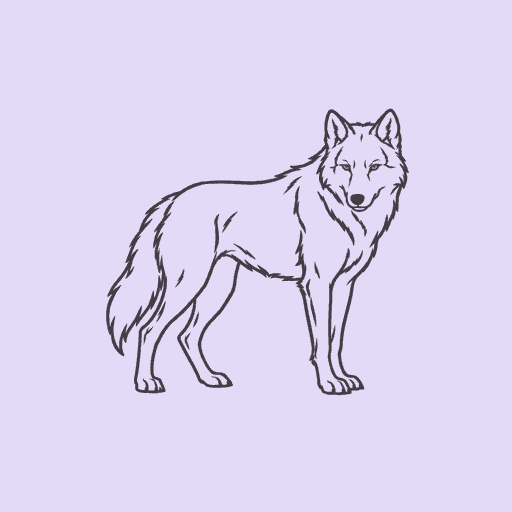
Werewolves have appeared in European folklore and literature for centuries, often embodying anxieties about the boundary between human civilization and animal instinct. The ancient Greek myth of Lycaon, a king transformed into a wolf after sacrificing a child, associates the transformation with punishment and the loss of humanity. Medieval European literature likewise frequently portrays werewolves as cursed or dangerous figures, although stories such as Marie de France’s 12th-century Bisclavret complicate this image by depicting a werewolf who retains his intelligence and moral character while inhabiting an animal body (Walker Bynum, Caroline. “Shape and Story: Metamorphosis in the Western Tradition.” National Endowment for the Humanities, 22 Mar. 1999). These contrasting traditions have established a longstanding tension in werewolf literature between physical transformation and moral character, allowing the creature to represent both animalistic violence and recognizable human virtues.
Modern supernatural fiction increasingly explores werewolves through pack relationships, inherited identity, and the struggle to control violent impulses. The werewolf’s dual nature offers a way to dramatize conflicts between individual desire and social obligation, while transformation can represent both the loss of bodily autonomy and the discovery of unfamiliar power. In Bitten, Vanessa’s involuntary transformation and the court’s treatment of Bitten humans draw on these longstanding associations. However, Gray complicates the traditional division between civilized humans and dangerous beasts by presenting a society in which supposedly sophisticated, aristocratic werewolves routinely practice coercion and cruelty. Sin’s observation that “[m]onsters aren’t born […] They’re made” captures this tension (122), suggesting that the novel’s most destructive forms of monstrosity arise from deliberate choices and institutionalized violence rather than supernatural instinct alone.
Genre Context: Young-Adult Paranormal Romance
Young-adult (YA) paranormal romance emerged as a distinct commercial category in the mid-2000s, though its roots reach back through Gothic fiction, Anne Rice’s The Vampire Chronicles (beginning in 1976 with Interview With the Vampire), L. J. Smith’s The Vampire Diaries (beginning in 1991 with The Awakening), and the television series Buffy the Vampire Slayer (1997-2003). The genre’s modern explosion, however, is inseparable from the 2005 publication of Stephenie Meyer’s Twilight, which sold over 100 million copies across its four-book arc and spawned a film franchise grossing more than $3.4 billion worldwide. In Twilight’s wake, publishers aggressively acquired manuscripts featuring supernatural love interests, and the late 2000s saw the rise of series including Richelle Mead’s Vampire Academy (2007), Cassandra Clare’s The Mortal Instruments (beginning in 2007 with City of Bones), Lauren Kate’s Fallen (2009), and Becca Fitzpatrick’s Hush, Hush (2009). This wave codified a durable set of tropes: an ordinary, teenage-girl protagonist, often narrating in first person; a brooding, centuries-old supernatural love interest with barely restrained hunger; a forbidden or dangerous attraction; love triangles frequently involving a rival suitor from a competing supernatural faction; hidden magical societies governed by strict laws; and the “masquerade” convention borrowed from World of Darkness tabletop games, in which supernatural beings must conceal their existence from humans.
Werewolves emerged as a particularly popular subject, both as romantic leads (Jacob Black in Twilight, Mercy Thompson in the series by Patricia Briggs) and as pack-based political societies with alpha hierarchies, hereditary bloodlines, and courtly intrigue drawn loosely from feudal European models. The genre experienced a market contraction in the mid-2010s as dystopian YA (The Hunger Games, Divergent) displaced it, but the 2020s have witnessed a resurgence driven by BookTok, the “romantasy” boom exemplified by Sarah J. Maas, and reader nostalgia for the tropes of the Twilight era. Contemporary entries increasingly foreground explicit romance, expanded world building, and morally complex protagonists while retaining the foundational architecture established 15 years earlier. Bitten operates squarely within this tradition, with cover praise noting that it “revels in its nostalgic evocations of classic paranormal YA” (iii). Its 17-year-old protagonist Vanessa, entanglement with a royal “promised to another” (ii), and foundational werewolf law of “Do not expose your wolf to humans” all draw directly from the genre’s established conventions (1).

Get in-depth, chapter-by-chapter summaries and analysis from our literary experts.
- Grasp challenging concepts with clear, comprehensive explanations
- Revisit key plot points and ideas without rereading the book
- Share impressive insights in classes and book clubs
Featured Collections
Appearance Versus Reality
View Collection
Books on Justice & Injustice
View Collection
Class
View Collection
Class
View Collection
Coming-of-Age Journeys
View Collection
Community
View Collection
Fate
View Collection
Fear
View Collection
Good & Evil
View Collection
Grief
View Collection
Guilt
View Collection
Hate & Anger
View Collection
Loyalty & Betrayal
View Collection
Memory
View Collection
Mortality & Death
View Collection
Mothers
View Collection
Pride Month Reads
View Collection
Revenge
View Collection
Romance
View Collection
Teams & Gangs
View Collection
Valentine's Day Reads: The Theme of Love
View Collection