Black House: A Novel
A modern alternative to SparkNotes and CliffsNotes, SuperSummary offers high-quality Study Guides with detailed chapter summaries and analysis of major themes, characters, and more.
Summaries & Analyses
Quizzes
NEWReading Tools
Part 1Chapter Summaries & Analyses
Content Warning: This section of the guide includes discussion of graphic violence, child death, child abuse, mental illness, physical abuse, and cursing.
Part 1: “Welcome to Coulee Country”
Part 1, Chapter 1 Summary
An omniscient narrator provides an aerial view of French Landing, Wisconsin, a town in the “Coulee Country” bordering the Mississippi River. The tour begins over Nailhouse Row, home to a group of brewery workers who are former university students. Though known locally as the “Thunder Five,” they call themselves “the Hegelian Scum” (6). They have posted signs mourning Amy St. Pierre and warning the Fisherman: “FISHERMAN, YOU BETTER PRAY TO YOUR STINKING GOD WE DON’T CATCH YOU FIRST! REMEMBER AMY!” (6).
At the French Landing Police Department, officers Bobby Dulac and Tom Lund receive the latest edition of the La Riviere Herald. The front-page story, by reporter Wendell Green, sensationalizes the town’s recent tragedies, naming the killer “the Fisherman.” The article describes growing public fear and suspicion following the murders of two children, Amy St. Pierre and Johnny Irkenham, whose remains were partially consumed, and the disappearance of a third child, Irma Freneau. It also reports two attacks on strangers in the surrounding area. Green criticizes Police Chief Dale Gilbertson for failing to catch the killer and describes the resulting vigilante violence as understandable. The previous night, Armand “Beezer” St. Pierre and the Thunder Five confronted the police, demanding progress in the investigation and offering their assistance. Angered by Green’s article, Bobby vows to catch the Fisherman himself. Lund suggests consulting “Hollywood,” a retired investigator who helped Gilbertson apprehend Thornberg Kinderling, but Bobby dismisses the idea.
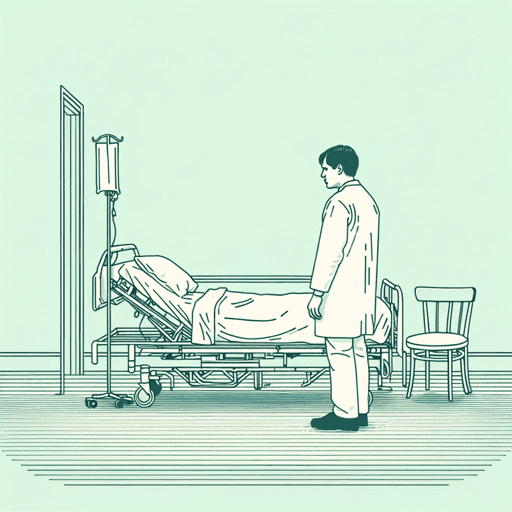
The perspective shifts to the Maxton Elder Care Facility, managed by the corrupt William “Chipper” Maxton, who embezzles funds with the help of Rebecca Vilas, his secretary and lover, whom he instructs to deposit the stolen money into a bank account under a fictitious name. A tour of the facility’s grim patient wing reveals neglected rooms and unsanitary conditions, contrasting with the attractive public areas. The chapter concludes with a description of the room of Charles “Burny” Burnside, an elderly resident whose sparsely furnished room is dirty and almost entirely devoid of personal belongings.
Part 1, Chapter 2 Summary
The narrator recounts Charles Burnside’s arrival at Maxton’s in 1996, following his admission to a hospital with symptoms of Alzheimer’s disease. His stay is mysteriously funded by checks from a person named Althea Burnside, who cannot be located through official records. After years of cognitive decline, Burnside unexpectedly regains some of his abilities and begins alternating between severe impairment and periods of alertness. The narrator then reveals that Charles Burnside’s real name is Carl Bierstone and that he conducted a secret rampage of wretched deeds in Chicago from his mid-twenties until age 46 before arriving at Maxton’s. His stay is mysteriously funded by checks from a person named Althea Burnside, who does not appear to exist. The perspective then shifts to an aerial view of a hidden, dilapidated house in the woods that was once painted black but has since faded to gray-black. The narrator introduces the concepts of “borderlands” and “slippage”—places where the familiar world appears distorted and unnatural.
In a ruined shack that was once a diner called Ed’s Eats & Dawgs, the narrator reveals the corpse of the Fisherman’s third victim, ten-year-old Irma Freneau. Her body has been mutilated: the Fisherman has severed her right leg and kept it, leaving behind her detached foot, which a stray dog is now chewing on. The narrator reveals that Police Chief Dale Gilbertson will discover her body a little over a day later.
Elsewhere in French Landing, a salesman named Fred Marshall reads a newspaper article detailing the discovery of Johnny Irkenham’s dismembered body, found hanging from the rafters of an old henhouse by chains, with the thighs, torso, and buttocks bitten. Fred worries about his wife, Judy Marshall, who has been exhibiting increasingly erratic and fearful behavior, including speaking gibberish in her sleep. During his morning run, Fred recalls how Judy once confronted an angry man threatening another driver with a tire iron, a memory that contrasts with her present fearfulness. The previous day, Fred had consulted Dr. Pat Skarda about her condition, describing it hypothetically; Skarda told him mental dysfunction is a process with signs. Meanwhile, Judy lies awake in her bedroom, troubled by visions of a red eye, a tower, and suffering children. She speaks about the “Crimson King” and scribbles a note identifying the “Black House” as a doorway to Abbalah and referring to the Tower, the Breakers, and the Crimson King, then chews and swallows the paper. As she falls back asleep, she mutters, “Burnside is not your name. Where is your hole?” (43) The narrator reveals that the Marshalls’ son, Tyler, will be the Fisherman’s fourth victim. The chapter concludes with Tyler waking to George Rathbun’s radio broadcast, which reassures listeners that the original Fisherman, Albert Fish, has long been dead.
Part 1, Chapter 3 Summary
The popular morning radio host George Rathbun is revealed to be the on-air persona of Henry Leyden, a slim, elegant, and blind man. At the KDCU-AM radio station, a summer intern named Morris Rosen approaches Henry shyly, revealing that he knows Henry is also the voice of the Wisconsin Rat, who hosts an evening program on KWLA-FM, a college station. Having learned the secret from an engineer named Howie Soule, Morris agrees to keep quiet after Henry warns him, and Henry tells Morris to put the Dirtysperm CD in his locker, saying he will pass it to the Rat if he sees him. The narrator notes that Henry also has another persona called “Henry Shake.”
Meanwhile, French Landing’s Chief of Police, Dale Gilbertson, is at home reviewing the Fisherman case file. He is disturbed by letters the killer sent to the victims’ families, which closely imitate passages from letters written by Albert Fish, a real-world cannibalistic child murderer from the 1920s. Feeling overwhelmed and out of his depth, Dale fears that further murders could cost him his job and endanger more children. He wishes he could enlist the help of his friend, a former LAPD detective the locals called “Hollywood,” who had assisted him years earlier in solving the Thornberg Kinderling murder case. Dale recalls Jack’s unique investigative talent: Jack had first heard a prostitute mention Kinderling’s distinctive nose-pinching habit, then listened to bartender Janna Massengale confirm the same gesture, which broke the case. Dale subsequently traced the murder weapon, strengthening the evidence against Kinderling. However, Jack has already refused to become involved in the new investigation, insisting that he is retired.
Part 1, Chapter 4 Summary
The narrative introduces Jack Sawyer, a wealthy former LAPD homicide lieutenant who retired to a remote farmhouse in Norway Valley three years ago. Dale Gilbertson sold him the property, formerly owned by Dale’s father, after Jack felt an immediate and inexplicable connection to the surrounding countryside. He is a close friend of his neighbor, Henry Leyden, who is the only person to have deduced that Jack’s mother was the famous actress Lily Cavanaugh Sawyer.
In his kitchen, Jack is deeply troubled. He feels responsible for the “Fisherman” media frenzy because it was pure, irresponsible malice that inspired him to tell reporter Wendell Green about Albert Fish. He is also haunted by the memory of a disturbing incident at a Santa Monica Pier crime scene where the sight of a murder victim beside a carousel provoked an overwhelming reaction. He resigned from the LAPD less than two months later and now struggles to suppress memories of the incident. Jack has been experiencing what he calls “waking dreams,” such as a hallucination of red feathers erupting from his ceiling, and he is so disoriented that, craving the comfort of his mother’s voice, he picks up the phone to call her before remembering she is dead. Earlier that morning, he also discovered a robin’s egg in his refrigerator and destroyed it in the garbage disposal.
Jack picks Henry up from the radio station, passing by Tyler Marshall on his bicycle. On the way home, Henry raises the topic of the Fisherman case once, gently, saying he will only say it once, urging Jack to help Dale. Jack angrily rebuffs him, and Henry drops the subject, saying “You’re the boss” (93). Henry then confesses that he fears he is losing his mind because he has been hearing the footsteps of his wife, Rhoda, who died six years ago. To comfort his friend, Jack explains the phenomenon of “waking dreams” caused by stress and grief. After dropping Henry off, however, Jack discovers another tiny, perfect robin’s egg in his truck’s ashtray—an occurrence that challenges his rational explanation for the earlier events. He smashes the egg with his foot and retreats into his house.
Part 1 Analysis
The novel’s opening establishes French Landing as a “borderland” (27), where the boundaries between ordinary reality and the supernatural are unstable. The narrator introduces the central motif of “slippage” through a pervasive sense that familiar surroundings have become unsettling, “the feeling that things in general have just gotten, or very shortly will get, worse” (29). This instability is suggested by the narrator’s descriptions of familiar places that seem subtly distorted, particularly the unnatural Black House hidden in the woods. The narrator’s aerial perspective, which moves freely through French Landing and reveals details unknown to its residents, reinforces the sense that the town conceals dangers beyond ordinary perception. The theme of The Thin Barrier Between Worlds also emerges through the psychic visions of Judy Marshall. Her disturbing visions and references to the “Crimson King,” the Tower, and “Abbalah” suggest that she perceives events beyond the familiar world, although those around her cannot understand the source of her distress. Her experiences connect the murders in French Landing to a wider supernatural conflict, foreshadowing dangers that the town’s residents and investigators have yet to recognize.
The Maxton Elder Care Facility illustrates how institutional neglect and financial exploitation leave vulnerable residents inadequately protected. William “Chipper” Maxton’s corruption—his embezzlement, his contemptuous nicknames for residents like “gummers” and “zombies” (16), and his use of the facility for personal gratification—reflects The Corrosive Apathy of Civic Institutions. The contrast between the facility’s attractive public areas and its dirty, neglected residential wings exposes the disparity between its appearance of care and the treatment residents receive. This lack of oversight also allows Charles “Burny” Burnside, whose real name is Carl Bierstone and who committed violent crimes in Chicago, to conceal his past. Although some staff members question his diagnosis of Alzheimer’s disease because of his unexplained periods of lucidity, they remain unaware of his criminal history. When a place becomes available for Burnside at a state hospital, Maxton chooses to keep him at the facility after receiving a check from the mysterious Althea Burnside, making Burnside’s continued residence financially advantageous (23). His decision demonstrates how financial self-interest influences the treatment and placement of residents, allowing Burnside to remain at Maxton’s without his true identity being discovered.
The crimes of the Fisherman reflect The Past’s Imprint on the Present, as the killer closely imitates the crimes and correspondence of an earlier murderer. When Police Chief Dale Gilbertson reviews the case file, he examines letters sent to the victims’ families that closely reproduce passages from correspondence written by Albert Fish, an American child murderer active in the early 20th century. The text juxtaposes the two, with Fish’s original letter stating, “Grace sat in my lap and kissed me. I made up my mind to eat her” (56) and the Fisherman’s version echoing, “Amy sat in my lap and hugged me. I made up my mind to eat her” (56). This close imitation links the murders in French Landing to Fish’s earlier crimes, while the substitution of Amy’s name for Grace’s shows how the killer adapts the historical letter to his own victim. The influence of the past also shapes the protagonist, Jack Sawyer, whose reluctance to assist Dale with the investigation is connected to his efforts to suppress memories of his extraordinary childhood experiences, recounted in The Talisman. While the Fisherman deliberately reproduces elements of an earlier murderer’s crimes, Jack attempts to distance himself from experiences that continue to disturb him. Their contrasting responses demonstrate how the past influences their actions in the present.
Jack Sawyer’s psychological state is characterized by his increasingly strained efforts to impose rational order on experiences he cannot explain. His explanation of “waking dreams” to both himself and his friend Henry Leyden allows him to dismiss unsettling experiences without questioning his understanding of reality. He attributes his vision of erupting red feathers and Henry’s experience of hearing his dead wife’s footsteps to psychological and neurological responses to stress and grief. However, the discovery of a tiny, perfect robin’s egg in his truck’s ashtray challenges this explanation, particularly because he had already discovered another egg in his refrigerator. Unlike the fleeting vision of feathers, the eggs are physical objects whose unexplained appearance Jack struggles to reconcile with his rational understanding of events. As part of the recurring bird motif, they suggest that the supernatural experiences associated with his past are beginning to intrude upon his present life. His reaction—dropping the egg onto the grass and crushing it with his foot—reveals his determination to destroy the evidence rather than confront its possible meaning. This avoidance parallels his refusal to assist Dale with the Fisherman investigation, suggesting that Jack’s resistance to confronting his past is also preventing him from responding to the danger facing French Landing.

Get in-depth, chapter-by-chapter summaries and analysis from our literary experts.
- Grasp challenging concepts with clear, comprehensive explanations
- Revisit key plot points and ideas without rereading the book
- Share impressive insights in classes and book clubs
Related Titles
By these authors