Black House: A Novel
A modern alternative to SparkNotes and CliffsNotes, SuperSummary offers high-quality Study Guides with detailed chapter summaries and analysis of major themes, characters, and more.
Summaries & Analyses
Quizzes
NEWReading Tools
Symbols & Motifs
Content Warning: This section of the guide includes discussion of child death, graphic violence, and mental illness.
Slippage
Slippage is one of the novel’s central motifs, describing a growing sense of disorder and instability that can accompany supernatural disturbances. It represents the intrusion of supernatural forces into the everyday world, manifesting as a pervasive sense of wrongness or unreality. The narrator introduces it as a characteristic of borderlands, defining “the central borderlands flavor” (28) as that of “slippage” (28). This motif signals the presence of otherworldly forces and illustrates the theme of The Thin Barrier Between Worlds. The characters often experience slippage through unsettling distortions of familiar surroundings. Jack Sawyer feels it in Los Angeles before he retires, experiencing a world that seems to be “liquefying under thermal pressure” (78). Judy Marshall’s increasing distress stems from her Twinner’s attempts to communicate with her across the boundary between worlds, which others mistake for signs of mental illness. The Black House itself, with its impossible and shifting architecture, is another physical manifestation of slippage. This recurring sense of destabilization reveals how supernatural forces disrupt the apparent stability of ordinary life, leaving characters uncertain about the boundaries of the world they inhabit.
The Black House
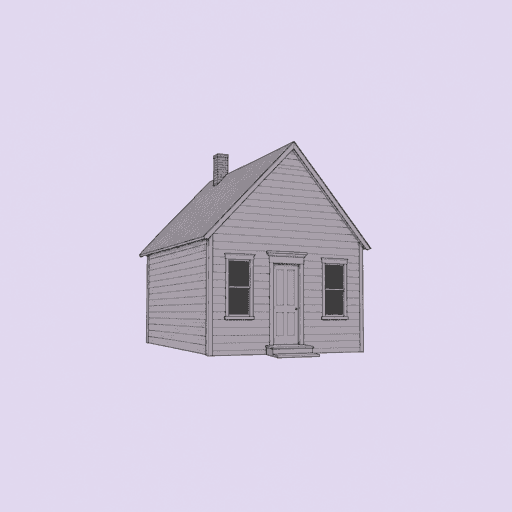
The Black House is the novel’s dominant symbol, a supernatural passageway between worlds through which otherworldly forces threaten French Landing. Its unsettling appearance—painted entirely black and possessing a shifting, unstable architecture that makes it seem larger on the inside than the outside—symbolizes the instability of physical space and the loss of security associated with familiar surroundings. The narrator explicitly states, “Inside, Black House is large. Black House is, in fact, almost infinite” (486). This impossible geography makes the house a physical expression of The Thin Barrier Between Worlds, a place where ordinary spatial boundaries no longer apply. Jack describes the house as a “wormhole” (418) that connects Wisconsin to the furnace-lands, where the Crimson King’s machinery operates. For Charles Burnside, a room within the house serves as a refuge, its furnishings and newspaper clippings reflecting his fascination with notorious murderers, although he mistakenly believes the entire house belongs to him. For Jack Sawyer, the house presents a dangerous manifestation of the slippage he must confront. Although most adults in French Landing remain unaware of its existence, the house offers none of the security ordinarily associated with a home. Its unnatural form also changes after the confrontation with Mr. Munshun: once the abbalah’s glammer departs, its shifting shape settles into that of an ordinary, neglected building. This change reveals that the house’s threatening appearance is sustained by the supernatural forces inhabiting it, although a passage between worlds remains open long enough for the rescued children to emerge.
Birds (Crows and Robins)
The motif of birds, particularly the contrast between Gorg the crow and the robin imagery associated with Speedy Parker, reveals how supernatural forces communicate with and influence characters. The crow, Gorg, is a direct agent of Mr. Munshun and the abbalah, acting as a messenger and a lure. Gorg tricks Tyler Marshall into the clutches of the Fisherman, attracting the boy’s attention by calling his name: “Gorg! Ty! Abbalah!” (105). Gorg also manipulates Tansy Freneau, influencing her to turn against Jack Sawyer. These encounters establish the crow as an instrument of deception and danger, while its name, which Judy Marshall associates with death, reinforces its threatening significance. In contrast, robin imagery is associated with Speedy Parker’s efforts to reach Jack and remind him of his connection to the Territories. Jack Sawyer experiences inexplicable appearances of red feathers and encounters mysterious robins’ eggs, which he initially attempts to dismiss as dreams or illusions. Speedy later confirms that he sent these signs to awaken Jack to the danger facing Tyler Marshall and his continuing responsibilities in the conflict involving the Territories. This imagery ties directly to the theme of The Past’s Imprint on the Present, as the feathers, eggs, and Speedy’s familiar robin song prompt Jack to confront memories of his childhood experiences in the Territories and recognize their continuing significance. The bird motif thus distinguishes Gorg’s use of supernatural communication to lure and manipulate others from Speedy’s attempts to guide Jack toward confronting the threat posed by the Crimson King’s forces.
The Fisherman
The “Fisherman” moniker is an important motif that connects the murders in French Landing to an earlier history of violence. The name, popularized by reporter Wendell Green after Jack Sawyer draws a comparison between the local murders and those committed by the real-world child murderer Albert Fish, establishes an association between the two killers. Charles Burnside’s crimes and correspondence echo those of Fish, a connection that becomes more significant when the novel reveals that the same supernatural entity was associated with both men. The correspondence provides particularly clear evidence of this resemblance: the letters Burnside sends to his victims’ parents borrow language from Fish’s correspondence. For example, the letter to Beezer St. Pierre echoes Fish’s confession regarding Grace Budd: “Amy sat in my lap and hugged me. I made up my mind to eat her” (56). The resemblance extends beyond imitation: the entity that Fish called the Monday Man is the same one Burnside knows as Mr. Munshun. This connection establishes that the violence associated with the Fisherman has persisted through different human hosts, linking the nickname to the theme of The Past’s Imprint on the Present. Furthermore, Wendell Green’s sensationalistic reporting and repeated use of the nickname connect the motif to The Corrosive Apathy of Civic Institutions. His sensationalistic coverage intensifies public fear and hostility toward the police, illustrating how irresponsible reporting can worsen the tensions surrounding an already troubled investigation.

Unlock the meaning behind every key symbol & motif
See how recurring imagery, objects, and ideas shape the narrative.
- Explore how the author builds meaning through symbolism
- Understand what symbols & motifs represent in the text
- Connect recurring ideas to themes, characters, and events
Related Titles
By these authors