Deception Point
A modern alternative to SparkNotes and CliffsNotes, SuperSummary offers high-quality Study Guides with detailed chapter summaries and analysis of major themes, characters, and more.
Summaries & Analyses
Quizzes
NEWReading Tools
Chapters 71-105Chapter Summaries & Analyses
Content Warning: This section of the guide includes discussion of death and substance use.
Chapter 71 Summary
Rachel shows the GPR printout to Pickering over video call and recounts the story of the attack and her escape. A visibly troubled Pickering believes her. He reveals that Tench had already called him, dismissing Rachel’s claims as a political stunt meant to help her father’s presidential campaign. However, Pickering knows that Tench is mistaken, as she failed to mention the presence of Tolland and Corky or the existence of the physical evidence.
Chapter 72 Summary
Pickering questions why anyone would go to the trouble of secretly inserting an authentic meteorite. He theorizes that the meteorite must be a counterfeit. Corky vehemently rejects this, citing overwhelming evidence of its authenticity. He even shows Pickering a sample he’s carrying. Pickering remains skeptical, concluding that if the meteorite is real, its careful placement was intended to falsely persuade observers of its authenticity, which is highly suspicious. He tells Rachel that he’s preparing to extract her group immediately because they’re not safe on the submarine any longer.
Chapter 73 Summary
In his apartment, Sexton drinks heavily while watching news reports detailing the catastrophic collapse of his presidential campaign. His anti-NASA platform has been decimated by the meteorite discovery, and he feels set up by Tench and betrayed by Gabrielle. He’s inundated with calls from reporters seeking comment.
At the ABC studio, a numb Gabrielle is consoled by her friend Yolanda. Yolanda believes that President Herney will no longer need to use a sex scandal against Sexton and that Tench was likely bluffing about having evidence of Sexton’s illegal campaign financing. Yolanda praises the White House’s brilliant political maneuvering, which Gabrielle feels responsible for enabling.
Chapter 74 Summary
Under radio silence, a Navy SeaHawk helicopter meets the USS Charlotte in the stormy ocean. Corky, Rachel, and Tolland are winched from the submarine into the chopper. The submarine submerges and disappears, and the helicopter flies the three survivors toward Thule Air Force Base in Greenland for transport back to the US.
Chapter 75 Summary
At the Milne Ice Shelf habisphere, Ekstrom tries to remain calm amid a raging storm and growing concerns about the missing civilian scientists. He reflects on the 1947 Roswell incident, which he knows from his Pentagon days was a crashed US spy balloon, not an alien spacecraft. A technician startles him with news that their radar detected an unauthorized submarine and helicopter rendezvous just off the coast. Ekstrom is shocked and denies any knowledge of it. He then receives a secure call from Tench, who informs him that there’s a problem concerning Rachel.
Chapter 76 Summary
Sexton receives a visit from the head of the SFF, who suggests that their fight isn’t over. He shows Sexton a video of two press conferences given by Chris Harper, the director of NASA’s PODS satellite mission. In the first, a confident Harper announces a software failure; in the second, a visibly uncomfortable Harper announces a supposed software “work-around.” The SFF head argues that Harper was lying about the fix and questions how NASA could have found the meteorite if the satellite’s anomaly-detection software was still broken. Reinvigorated, Sexton resolves to have Gabrielle investigate the lie.
Chapter 77 Summary
Aboard the military G4 jet, Rachel contemplates two pieces of information from Pickering: Tench possesses a video of Rachel’s White House deposition and has threatened to use it against her, and Tench successfully baited Senator Sexton into making a politically disastrous anti-NASA statement before the announcement. Realizing that the White House deliberately trapped her father, Rachel begins a “null start”—a fresh analysis of the evidence—with Tolland, starting with Corky’s meteorite sample. Elsewhere, the Delta Force team receives new orders from their furious controller to eliminate the three escaped targets.
Chapter 78 Summary
Sexton walks toward the elevator to his apartment, reflecting on the fresh ray of hope that has just appeared for him. Just then, his bodyguard asks him if he did the right by letting in Gabrielle earlier. Sexton realizes that Gabrielle was inside the apartment and probably overheard his meeting with the SFF. Sexton knows that he must regain Gabrielle’s trust and cooperation, now more than ever.
Chapter 79 Summary
At the ABC studio, Gabrielle receives a call from Sexton. He calmly admits to his meeting with private space companies, describing the donations as perfectly legal and under the $2,000 cap. Disarmed by his apparent honesty, Gabrielle feels ashamed of her earlier suspicions. When Sexton asks her to use her NASA informant to get information on the PODS software fix, she readily agrees, eager to redeem herself. Since her informant was Tench, she knows she must find another way to get the information.
Chapter 80 Summary
In his NRO office, Pickering recalls the death of his daughter, Diana, a navigator-in-training. Diana had been deployed in a navy escort ship at a harbor off the Red Sea when she was killed in a terrorist attack. The attack was traced to terrorist cells that the CIA had been monitoring for years. It turned out that the CIA was ready to move against the cells months before the attack but was held up by NASA’s delay in procuring satellite photos of the cell’s exact location.
Pickering knows that NASA didn’t directly cause Diana’s death, but his heart can never forgive the agency. His thoughts are interrupted by an irate call from Tench, who demands to know Rachel’s location. Pickering refuses to tell her and reveals that he has “absolute proof” that NASA and the White House have lied. A cornered Tench agrees to meet Pickering in one hour at the Franklin D. Roosevelt (FDR) Memorial. Immediately after, Tench calls Ekstrom to warn him that Pickering could be a problem.
Chapter 81 Summary
Gabrielle looks up PODS manager Chris Harper as a new informant. She calls his home and learns from his wife that he has gone to the NASA E Street complex to celebrate the meteorite announcement. Gabrielle then informs Yolanda that she’s going to NASA headquarters to check on the senator’s theory. Yolanda warns her against the visit, but Gabrielle resolves to go anyway.
Chapter 82 Summary
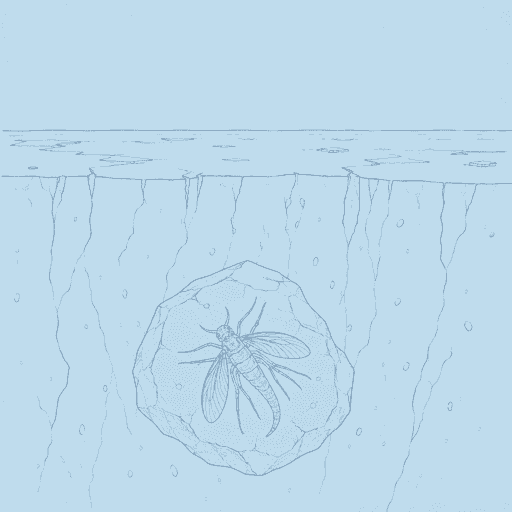
On the G4 jet, Tolland re-evaluates the meteorite fossils without preconceptions, as Rachel has suggested. If he weren’t told that the rock was a meteorite, he would be forced to find another explanation for the fossilized bug’s larger size. Tolland realizes that the creature’s large size, while impossible on land, could have evolved in the low-gravity environment of the ocean. He argues that the fossilized creature is an arthropod, much like a lobster or crab, which are essentially giant sea bugs. While Corky dismisses this, Rachel presses Corky about the meteorite’s nickel content. Corky admits that the levels were slightly outside the pre-established range for meteorites, weakening a key piece of evidence. With the location and nickel content now in question, only the fusion crust and chondrules remain as definitive proof of the rock being a meteorite.
Chapter 83 Summary
At NASA headquarters, Gabrielle bypasses security by tailgating an employee onto an elevator. She uses a quick-witted bluff, pretending to be the programmer responsible for the PODS software failure, to get to the fourth floor. She locates the locked office for the PODS project.
Chapter 84 Summary
In the Roosevelt Room of the White House, Herney and his staff celebrate the NASA announcement by drinking champagne and watching news recaps. The media coverage highlights the immense political victory that the discovery represents for the president, while simultaneously noting that it’s a disaster for Sexton’s campaign. A news report replays a clip from a recent debate in which Sexton arrogantly dismissed the possibility of finding extraterrestrial life, declaring that he would “eat [his] hat” if he were proven wrong (286). Herney and his staff laugh as they watch the clip, recognizing how Tench’s questioning had successfully cornered the senator.
Chapter 85 Summary
Ekstrom, alone in his office on the ice shelf, worries about Pickering’s involvement. He reflects on their long-running antagonism, fueled by major NASA failures that directly impacted the NRO, including a costly satellite launch explosion and the abandonment of the X-33 space plane.
Chapter 86 Summary
Aboard the plane, Rachel asks Corky if the meteorite’s fusion crust was dated. He explains that dating a burn is impossible. He insists that the crust’s clean composition and striations prove that it was formed by atmospheric entry. When pressed, however, Corky admits that analysis of the crust revealed an unusually high concentration of ionized hydrogen. He attributes this to the meteorite falling near the North Pole, but a skeptical Rachel tells him that she has another explanation.
Chapter 87 Summary
Gabrielle gains entry to the PODS lab and confronts mission director Chris Harper. Using a bluff she calls “overshooting,” she accuses him of not only lying about the software fix but also embezzling NASA funds with a high-level partner. Terrified, Harper vehemently denies the embezzlement but, in doing so, is trapped into admitting that he lied about the software. Gabrielle offers him Sexton’s protection in exchange for his testimony. Harper confesses that Ekstrom hates him and was the one who forced him to lie in the press conference.
Chapter 88 Summary
The Delta Force team speeds toward the US eastern seaboard in a top-secret aircraft called the Aurora, traveling at three times the speed of sound. They’re taking a long route over the ocean to intercept their target. Following their controller’s orders, they will not shoot the target plane down but will instead wait for it to land before moving in, expecting to arrive two hours ahead of their quarry.
Chapter 89 Summary
Rachel reveals her theory for the fusion crust. Citing classified NRO information, she explains that NASA has been testing a new, clean-burning “slush-hydrogen” engine whose exhaust is incredibly hot and hydrogen rich. She posits that blasting a rock with this engine would create a “fusion crust” with high hydrogen levels and directional striations, perfectly mimicking atmospheric entry. Corky objects, arguing that this doesn’t explain the chondrules, which require the extreme temperature shifts of space to form and were dated to 190 million years old.
Chapter 90 Summary
With the insertion shaft, nickel content, fossils, and fusion crust all now questionable, Tolland realizes that the 190-million-year-old chondrules are the only remaining proof of the meteorite’s authenticity. The three discuss Corky’s admission that the nickel content fell slightly outside the pre-established meteorite window, and Rachel presses that two of the three key proofs have collapsed. Corky insists that the chondrules are conclusive, leaving the group at an impasse as the plane continues south.
Chapter 91 Summary
Tolland calls his research ship, the Goya, to let his crew know that he’ll be delayed, but he gets directed to voice mail. He learns that the crew has gone ashore to celebrate and that marine geologist Xavia has stayed behind to watch the ship. Xavia has left a message teasing Tolland about a small error in his documentary related to meteorite petrology. Xavia’s joke leaves Tolland with a sense of unease. He brings up the supposed error with Rachel, wondering if the mistake could concern the chondrules. Rachel agrees, and Tolland resolve to speak with Xavia before meeting Pickering.
Chapter 92 Summary
The Aurora has landed well ahead of their quarry, so much so that they have time to make a detour for an additional mark. The Delta team’s controller has arranged for a Kiowa Warrior helicopter for their new mission. Delta-One heads southwest, noting that he has seen the FDR Memorial twice but never from the air.
Chapter 93 Summary
Meanwhile, Harper tells Gabrielle that the meteorite was actually discovered by a Canadian geologist, Charles Brophy. Brophy had transmitted the meteorite’s coordinates in a distress call intercepted only by a NASA listening post. A NASA rescue plane later found Brophy dead at the bottom of a crevasse, apparently having gone off course in a storm. With the original discoverer gone, the White House and NASA proceeded with their plan to have PODS take credit for the find. Harper, who was unaware that the meteorite contained fossils until the public announcement, is now hailed as a hero.
Gabrielle urges Harper to testify, promising him Sexton’s protection. To convince the frightened programmer, Gabrielle points out the suspicious coincidences surrounding the Canadian geologist’s death, implying that he may have been murdered so that NASA could claim the monumental find. She leaves Harper to deliver the momentous news to the senator.
Chapter 94 Summary
Rachel calls Pickering, who agrees to a change in plans. He arranges for them to land at a Coast Guard air station in Atlantic City and take a helicopter to Tolland’s ship. Pickering warns her that they have powerful enemies and reveals that he’s on his way to meet with Tench.
Chapter 95 Summary
As Pickering drives to the FDR Memorial to meet Tench, he recalls a recent National Security Council meeting in which he clashed with Herney over NASA’s recurring security failures, arguing that the agency should be incorporated into the intelligence community, keeping its discoveries covert. Herney flatly refused, defending NASA’s mission of science and international cooperation.
Chapter 96 Summary
From their Kiowa helicopter, the Delta Force team watches a sedan arrive at the deserted FDR Memorial. After confirming the target’s identity, they use a laser designator to guide a Hellfire missile to the car. The vehicle explodes violently. Two miles away at the White House, President Herney is undisturbed by the blast.
Chapter 97 Summary
Rachel, Tolland, and Corky arrive in Atlantic City and board a Coast Guard helicopter. The pilot, a fan of Tolland’s show, recognizes the coordinates for the Goya. As they fly out over the dark ocean, Tolland tries to calm a visibly nervous Rachel.
Chapter 98 Summary
Gabrielle’s taxi is stopped by a roadblock near the FDR Memorial, where she sees emergency vehicles and flames. Radio reports suggest that a car bomb may have killed a high-level government official. She’s anxious to get to Sexton with the explosive information she learned from Harper.
Chapter 99 Summary
The unnamed “controller” of the Delta Force reflects on the mission. The original plan was for the PODS satellite to discover the planted meteorite, but when its software failed, the controller had to improvise by arranging for a Canadian geologist in the area to transmit news of the discovery and then had the geologist killed to prevent him from revealing it. With the death toll rising, the controller feels a growing remorse but remains convinced that the mission’s objective is too important to abandon.
Chapter 100 Summary
Aboard the helicopter, Tolland uses the aircraft’s thermal-imaging system to reveal a massive, half-mile-wide vortex of warm water in the ocean below. He explains that it’s a “megaplume” caused by an underwater magma dome. The pilot notes that the Goya is anchored directly over the powerful current. Tolland adds that the warm water has attracted hundreds of great hammerhead sharks.
Chapter 101 Summary
The helicopter lands on the Goya, an unusual-looking SWATH vessel. Rachel is unnerved by the powerful currents straining against the ship. Tolland turns on underwater lights, revealing the sea swarming with hammerhead sharks. He tosses a bloody fish overboard, triggering a feeding frenzy, but a second, unbloodied fish is ignored. He explains that the sharks attack only by scent.
Chapter 102 Summary
Gabrielle goes to her Senate office to retrieve her file on the PODS project. Yolanda calls to warn her that two ABC reporters are independently investigating a story that Senator Sexton is secretly taking illegal SFF money and may be bankrupt. Shaken, Gabrielle calls Sexton’s bodyguard, who casually reveals that the senator knew she had been in his apartment during the SFF meeting. Gabrielle realizes that Sexton deliberately concealed this knowledge from her, and all her previous suspicions about his integrity come flooding back.
Chapter 103 Summary
Aboard the Goya, Rachel attempts to call Pickering from the ship’s bridge. He doesn’t answer. On her second try, the line connects to silence, followed by a series of electronic tones. Recognizing the sound of a “pulse-snitch”—a device used to trace a call’s location—she quickly hangs up.
Chapter 104 Summary
In the ship’s hydrolab, Rachel tells the others about the attempted trace on her call. They observe a frightening real-time display of the megaplume vortex swirling directly beneath them. As Xavia returns with her research papers, the Coast Guard pilot on deck continues to monitor his radar, which shows nothing unusual in the area.
Chapter 105 Summary
Xavia pinpoints the error in Tolland’s documentary: stating that chondrules were exclusive features of meteorites. Xavia found notes from a geologist who discovered a rock in the Mariana Trench containing chondrule-like features formed by extreme geologic pressure. This deep-sea rock also had midrange nickel content very similar to a meteorite. The one definitive difference was its titanium/zirconium ratio: The ocean rock had almost no zirconium, while meteorites have extremely high levels. Tolland asks Xavia to run this specific test on their sample.
Chapters 71-105 Analysis
The motif of classified technology permeates these chapters, functioning as both a tool of deception and a weapon of enforcement. Technologies, such as the Aurora aircraft and the silent Kiowa Warrior, which were developed for clandestine state purposes, are turned inward against American civilians, demonstrating how instruments of power can be repurposed for illicit ends. This subversion of technology extends to the core of the scientific fraud: It’s the experimental “slush-hydrogen” engine that the NRO developed for NASA that was used to fabricate evidence. This pervasive sense of technological menace reinforces The Illusion of Objective Truth, suggesting that in a world of secret planes, untraceable weapons, and surveillance tools, empirical reality is dangerously malleable and easily controlled by those with access to the shadows.
Rachel’s decision to perform a “null start” analysis of the evidence provides a counter to manufactured truths. This scientific, critical process dismantles the seemingly objective facts presented by NASA. Rachel observes that “hierarchical evidence is a house of cards” and that pulling out the primary assumption—the meteorite’s natural discovery—“makes everything shaky” (304).
While Rachel pursues scientific truth, Gabrielle uncovers the political machinations behind The Weaponization of Scientific Discovery. Gabrielle’s meeting with Chris Harper shows how the deception of the meteorite is a premeditated conspiracy orchestrated by NASA leadership and elements within the White House. Harper admits that Tench and Ekstrom forced him to lie and say that the PODS software was fixed, desperate to connect the “discovery” of the meteorite with a NASA mission. The narrative suggests that Tench and Ekstrom were so eager to weaponize the “discovery” of the meteorite that they failed to verify its authenticity.
The intense pressures of the presidential race expose the ethical compromises that fuel The Cost of Political Ambition. Senator Sexton continues in his pragmatic quest for power, often treating the women around him as pawns. After his bodyguard reveals that Gabrielle was in his apartment, Sexton coolly feigns transparency with her about his SFF funding, disarming her with a partial truth to secure her help. Sexton’s actions are shown to be guided not by a search for truth but by a desperate need to find a political lifeline.

Get in-depth, chapter-by-chapter summaries and analysis from our literary experts.
- Grasp challenging concepts with clear, comprehensive explanations
- Revisit key plot points and ideas without rereading the book
- Share impressive insights in classes and book clubs
Related Titles
By Dan Brown