Deception Point
A modern alternative to SparkNotes and CliffsNotes, SuperSummary offers high-quality Study Guides with detailed chapter summaries and analysis of major themes, characters, and more.
Summaries & Analyses
Quizzes
NEWReading Tools
Prologue-Chapter 35Chapter Summaries & Analyses
Content Warning: This section of the guide includes discussion of death, emotional abuse, mental illness, and substance use.
Prologue Summary
While working on the Arctic tundra, Canadian geologist Charles Brophy is confronted by two armed men who arrive in a military-style helicopter. At gunpoint, they force him to transmit a false emergency message over his radio at an unreceivable low frequency. Brophy, his sled, and his four huskies are then forced aboard the aircraft. Once airborne, the men push the sled, with the howling dogs still attached, out of the open door. Moments later, they throw the screaming Brophy from the helicopter to his death in the ice chasms below.
Chapter 1 Summary
Rachel Sexton, an intelligence analyst for the National Reconnaissance Office (NRO), arrives late for a breakfast meeting at Toulos Restaurant in Washington, DC, with her father, Senator Sedgewick Sexton. The senator, a leading presidential candidate, pressures Rachel to quit her job, arguing that her employment under the current president—his political rival—reflects poorly on his campaign. Their tense conversation is interrupted by a reporter who asks the senator a series of scripted questions designed to flatter him. The reporter then asks Rachel if she plans to join her father’s campaign, a question that she realizes was prearranged by her father. Angered by the manipulation, Rachel gives a curt, hostile denial. As the meeting ends, she receives an urgent page demanding that she “RPRT DIRNRO STAT” (8)—report to the director of the NRO immediately.
Chapter 2 Summary
In a storm tent pitched in a desolate, icy landscape, three men from a covert military team conduct surveillance. The team leader, code-named Delta-One, and his partners have been monitoring a large, mysterious structure for 10 days. As another 30-minute interval passes, it’s time for them to perform another check.
Chapter 3 Summary
Rachel drives to the NRO, a massive, secret complex in Virginia. She reflects that the NRO, an intelligence agency, supplies cutting-edge information and spy technologies to government bodies such as the Central Intelligence Agency (CIA) and the US army. Unlike other high-profile agencies, the NRO works in complete secrecy. Rachel’s job at the NRO is a “gister,” analyzing and verifying complex data into simple “gists.” After passing an armed sentry and a high-tech security checkpoint that verifies her identity using a DNA swab of her saliva, Rachel enters the NRO facility, wondering what urgent matter has caused the summons.
Chapter 4 Summary
Rachel goes directly to see her boss, NRO Director William Pickering. Known as “the Quaker” for his quiet diligence, Pickering informs her that President Zachary Herney has requested an immediate, in-person meeting with her but has refused to state the reason. Pickering is deeply suspicious of Herney, worrying that the president intends to use Rachel as a political pawn against her father. He warns her to be cautious and promises to intervene if he believes the president is playing political hardball. He then reveals that the president has sent an MH-60G PaveHawk helicopter to transport her.
Chapter 5 Summary
In their tent, the Delta Force team uses a high-tech surveillance tool: a mosquito-sized flying microbot. Piloted by Delta-Two via joystick, the device transmits live audio and video from inside the structure they’re monitoring. The team listens in on a conversation between two scientists, confirming that everything inside is proceeding as expected. The microbot is then parked near a generator to recharge.
Chapter 6 Summary
Aboard the PaveHawk helicopter, Rachel is alarmed when she realizes that they’re flying away from Washington, DC. The pilot evasively informs her that the president isn’t at the White House. They land at NASA’s Wallops Island flight facility, where Rachel sees Air Force One waiting on the runway. She is escorted onto the presidential plane to meet President Herney.
Chapter 7 Summary
In his limousine, Senator Sexton confers with his personal assistant, Gabrielle Ashe. He reflects privately on their brief affair and Gabrielle’s subsequent decision to keep a strict professional distance from him. Gabrielle preps Sexton for an upcoming CNN debate, and he dismisses her concerns about his overconfidence. She shares what she describes as a rumor from an insider contact inside the White House: that the president’s recent strange behavior—Herney has been uncharacteristically withdrawn—began after an emergency private briefing with the NASA administrator. This news pleases Sexton, as he assumes that the president’s reticence is linked with his campaign’s recent surge in the polls and Gabrielle’s strategy of attacking NASA’s budget overruns and failures.
Chapter 8 Summary
Rachel meets President Herney aboard Air Force One. He is casually dressed, warm, and disarming, immediately putting her at ease. He leads her through the plane toward his private office, explaining that he chose this secure location to avoid creating a political scandal by meeting with his rival’s daughter at the White House.
Chapter 9 Summar
Gabrielle rides in the limousine, reflecting on her growing disillusionment with Senator Sexton. She once idolized him and was even swept off her feet when he wooed her. However, she immediately regretted her day-long affair with him and now questions his character, particularly after witnessing how easily he lied to the media to deny their affair when the White House attempted to leak the story. Though Gabrielle still believes in Sexton’s political message, she’s beginning to doubt the man delivering it.
Chapter 10 Summary
President Herney tells Rachel that he has requested her presence in a secret location because he will share with her information classified as “UMBRA,” far above her security clearance. He reveals that NASA’s Earth Observation System has made a discovery of monumental importance, one that he has ordered NASA to keep secret from the public.
Chapter 11 Summary
Rachel voices skepticism about the convenient timing of a major NASA discovery, given the political pressure on both the agency and the president. Herney reveals that the discovery is authentic. To ensure their legitimacy, he had the findings independently verified by four renowned civilian scientists. He wants Rachel to meet the scientists and grant her seal of approval to the discovery—the approval of the daughter of his political opponent will seal the president’s case. Rachel asks Herney if he’s using her, just as Pickering had warned. Herney denies the suggestion; he wants Rachel to probe the discovery also because of her superior investigative skills.
Once Rachel has seen the discovery, Herney plans to announce the finding to the world in a press conference that evening. Asking Rachel to trust him, he takes away her cellphone, completely isolating her, and directs her into a hangar to be briefed by the NASA administrator.
Chapter 12 Summary
Inside the hangar, a NASA pilot informs Rachel that he will fly her to the administrator’s location. Her transport is a ferocious-looking F-14 Tomcat Split-tail fighter jet. After awkwardly donning a flight suit and helmet, Rachel is strapped into the jet’s rear cockpit, and they take off.
Chapter 13 Summary
Senator Sexton takes a cab to a hotel parking garage for a clandestine meeting with a man representing a group of wealthy, anonymous donors who are illegally funding his campaign. The man tells Sexton that he has already persuaded six more powerful men to meet with him that night and hands Sexton a folder with their information, instructing him to meet them at his private residence. He warns the senator that getting him elected is only the first step in achieving their shared, undisclosed goal.
Chapter 14 Summary
President Herney returns to a tense White House, where his staff is on the verge of mutiny over his recent inaction and falling poll numbers. Unbeknownst to them, his absence has been due to the NASA discovery. He instructs his secretary to arrange a four o’clock meeting for his entire staff inside the Oval Office, where he intends to reveal the secret and restore their confidence.
Chapter 15 Summary
The narrative details the nature of the US Delta Force, an elite military unit operating with presidential immunity. In their Arctic tent, Delta-One receives a secure call from his faceless controller. The controller confirms that the discovery will be announced publicly at eight o’clock Eastern time that evening. He adds that a “new player”—identified as a woman—has arrived and must be monitored closely. When asked what to do if there’s trouble, the controller states that Delta-One’s standing orders remain in effect.
Chapter 16 Summary
As the F-14 flies north over the Atlantic, the sight of icebergs triggers Rachel’s memory of nearly drowning as a child, an event that left her with a persistent fear of water. She also recalls her mother’s subsequent death in a car accident, which occurred after her father had callously abandoned his wife on Thanksgiving—Rachel suspected that he was with another woman, though he claimed exhaustion and work. Upon arriving in the Arctic darkness, the jet lands on a bizarre runway carved into an ice shelf. A large, treaded snow tractor approaches to meet them.
Chapter 17 Summary
President Herney meets with his senior adviser, Marjorie Tench, a politically brilliant woman known for her gaunt appearance. Tench insists on personally debating Senator Sexton on CNN that afternoon. She explains that her presence, which will make the White House appear desperate, is an important part of a larger, deceptive strategy. Herney marvels at her cunning.
Chapter 18 Summary
Rachel learns that she’s on the Milne Ice Shelf, far above the Arctic Circle. She boards the snow tractor, called an IceRover, and is driven across the glacier toward a large, dome-shaped inflatable structure. The driver explains that it’s a NASA prototype for a Mars habitat, nicknamed the “habisphere.”
Chapter 19 Summary
At the habisphere, Rachel is met by NASA Administrator Lawrence Ekstrom. He’s gruff and openly hostile, resenting her presence as both an NRO agent and the daughter of his chief political antagonist. He explains that a NASA satellite called the Polar Orbiting Density Scanner (PODS) detected an anomaly 200 feet beneath the ice: an eight-ton rock denser than any type of rock found within a 400-mile radius. Ekstrom reveals that the rock is a meteorite.
Chapter 20 Summary
Sexton and Gabrielle arrive at the CNN studio for his debate and are stunned to learn that his opponent is Tench. While Gabrielle feels uneasy about the unexpected development, Sexton is overconfident, viewing Tench’s presence as a sign of the White House’s desperation. He looks forward to an easy victory against the notoriously media-unfriendly adviser.
Chapter 21 Summary
Inside the habisphere’s main chamber, a vast, bustling workspace, Rachel feels the animosity from the NASA staff. Administrator Ekstrom introduces her to Michael Tolland, a charismatic oceanographer and popular television science personality. Tolland explains that President Herney recruited him to film a documentary about the discovery. His involvement is intended to lend mainstream credibility to NASA’s announcement during the president’s press conference that night. Rachel finds Tolland attractive, while Tolland is moved by Rachel’s beauty and poise.
Chapter 22 Summary
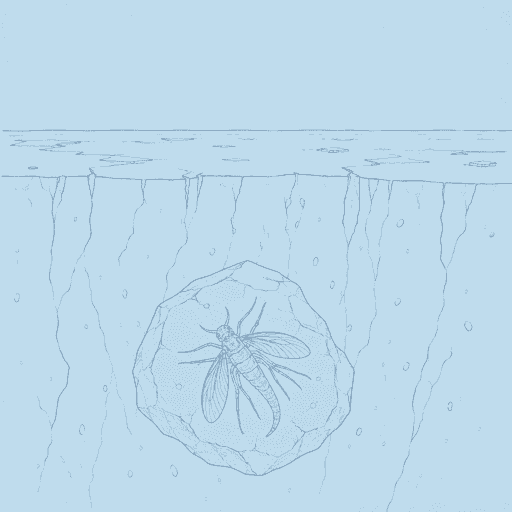
Tolland introduces Rachel to Dr. Corky Marlinson, a brilliant and eccentric astrophysicist. Corky provides Rachel with a quick lesson on identifying meteorites, explaining the three definitive markers: a charred “fusion crust” from atmospheric entry, small metallic globules called “chondrules,” and a midrange nickel content unlike that of any terrestrial rocks. He then hands her a core sample taken from the meteorite found in the ice. When Rachel turns the sample over, she’s stunned to see the perfectly preserved fossil of a large, insect-like creature embedded within it.
Chapter 23 Summary
During the CNN debate, Tench skillfully baits Sexton into a full-scale attack on NASA. He aggressively denounces the agency as a waste of money and declares that, if forced to choose, he would abolish the space program to fund education. When Tench mentions a program called the Search for Extraterrestrial Intelligence, Sexton seizes on it, calling it an embarrassing waste of resources and declaring that after 35 years of searching, it’s obvious that alien life will not be found. He vows to “eat [his] hat” if he’s wrong (88). Tench smiles, her trap successfully sprung. In the Oval Office, President Herney is delighted.
Chapter 24 Summary
Rachel stares at the fossil, awestruck. The presence of a fossilized animal in a meteorite from outer space confirms extraterrestrial or alien life. Corky identifies the creature as an isopod, a relative of the louse. They’re joined by Dr. Wailee Ming, a paleontologist, who’s another of the civilian experts. Ming explains that the creature fits perfectly within Earth’s existing taxonomic system. Ming explains that it’s likely for alien life to be similar to life forms on Earth. He then reveals that the meteorite contains dozens of additional fossils, including one of an isopod nearly two feet long—an insect this large would be impossible on Earth because the high surface gravity keeps the exoskeleton in check. The scientists explain that this finding is powerful evidence for the theory of panspermia—the idea that life on Earth was originally seeded by microbes arriving from space on a meteorite.
Chapter 25 Summary
Rachel processes the staggering implications of the discovery. This is irrefutable proof of extraterrestrial life, a finding that will vindicate NASA and utterly destroy her father’s presidential campaign. She, Tolland, and the other scientists then head toward the center of the habisphere to witness the extraction of the entire eight-ton meteorite from the ice.
Chapter 26 Summary
On the ride back from the CNN studio, Gabrielle is unsettled by Tench’s smug demeanor after the debate. Senator Sexton takes a call on his private phone and arranges a six o’clock meeting at his apartment with an important, unnamed individual. Gabrielle finds it suspicious, as the senator had already blocked out the evening in his planner for personal time.
Chapter 27 Summary
At the extraction site, Rachel meets Dr. Norah Mangor, a tough, brilliant glaciologist and the fourth civilian scientist. Norah explains her ingenious method for retrieving the meteorite: A laser heats the rock from above, allowing it to melt its own path as a team of workers slowly winches it up through 200 feet of ice. Norah also confirms, through ice-core dating, that the meteorite landed in 1716, a date that matches historical records of a meteor sighting known as the Jungersol Fall.
Chapter 28 Summary
Before an amazed crowd of scientists, the enormous, eight-ton meteorite is successfully hoisted from the ice. As it hangs dripping from the scaffolding, the team erupts in celebration. The 200-foot-deep extraction shaft is now a pool of water. Administrator Ekstrom congratulates Norah and then leads Rachel to a Portable Secure Comm (PSC) trailer, a military-grade communications booth, so that she can speak with the president.
Chapter 29 Summary
In her office, Gabrielle receives another anonymous email from her White House informant. The source, who has been feeding her anti-NASA intelligence for weeks, now requests an in-person meeting that afternoon at the East Appointment Gate of the White House. Though nervous about the public location and the request for a face-to-face meeting, Gabrielle decides to go.
Chapter 30 Summary
Ekstrom finds Tolland putting the finishing touches on his documentary. He tells Tolland to bring the completed video to the press area to be uploaded to the White House. Ekstrom then distributes beers to his celebrating staff. In preparation for the live broadcast, the main work lights in the habisphere are turned off and the powerful media lights are switched on, leaving most of the vast dome in darkness.
Chapter 31 Summary
Unaware of any looming danger, Ekstrom watches with satisfaction as his team celebrates around the meteorite. Elsewhere, a Delta Force team takes shelter from a worsening storm. While observing the habisphere via a microbot’s live video feed, Delta-Two notices something alarming. He directs his partner, Delta-One, to look past the television lighting tests and focus on the dark, water-filled hole where the meteorite was extracted. As the microbot provides a closer view, Delta-One is shocked by what he sees in the water.
Chapter 32 Summary
Herney calls Rachel in the PSC trailer and asks for her official endorsement of the discovery. Rachel angrily refuses, assuming that he wants her to publicly humiliate her father during the press conference. Herney laughs and clarifies his true request: He wants her to brief his own staff immediately via video conference. He explains that his staff is on the brink of mutiny over his steadfast support of NASA, and a validation of the discovery from a trusted intelligence analyst—who’s also his opponent’s daughter—is the only way to quell their dissent and restore their faith. Feeling like she has no choice, Rachel reluctantly agrees.
Chapter 33 Summary
Paleontologist Ming is alone in the habisphere, choosing to stay away from the hullaballoo of the press conference. He feels a distant vibration from ice calving, a common enough occurrence. He wanders over to the extraction pit and observes something strange in the water—an anomaly only visible now that the bright overhead lights are off. He has a sudden, startling insight about what he’s seeing, though the nature of the anomaly is left unrevealed.
Chapter 34 Summary
After his epiphany, Ming rushes to find a beaker to collect a water sample. Simultaneously, in a nearby trailer, Rachel nervously begins a video briefing for the White House staff. Feeling unprepared, she abandons her formal remarks and instead speaks candidly about her nervousness and the sudden nature of the briefing, which elicits laughter from her audience in the Oval Office.
Chapter 35 Summary
Rachel confirms the authenticity and monumental importance of NASA’s discovery of extraterrestrial life to the assembled staff of the White House.
Prologue-Chapter 35 Analysis
The novel’s structure relies on rapidly alternating perspectives and settings to build suspense and weave together disparate threads of conspiracy. The narrative constantly cuts between the political intrigue of Washington, DC, and the isolated, high-tech operation in the Arctic, creating a sense of a vast, interconnected plot that no single character fully grasps. This fragmented structure heightens the theme of The Illusion of Objective Truth, as the reader is made aware of multiple secrets—Sexton’s illicit funding, the Delta Force’s covert surveillance, Gabrielle’s anonymous source—that remain hidden from the main characters.
The motif of classified technology is central to this fragmentation. The Delta Force’s mosquito-sized microbot allows them to see and hear without being present, while the NRO’s DNA scanners and NASA’s secure communication trailer emphasize a world where information is simultaneously hyper-accessible and strictly controlled. This juxtaposition of total surveillance and total secrecy creates an environment where “truth” is a contested territory, dependent on who has access to the most advanced tools of observation and control.
At the heart of the political and scientific conflict lies the symbol of the meteorite. For President Herney, the meteorite is the ultimate vindication of his pro-NASA stance, a “panacea” for his failing campaign that can restore public faith and secure his reelection. For Senator Sexton, whose entire platform is built on attacking NASA, the meteorite shows a political catastrophe. The struggle to control the meteorite’s meaning demonstrates the theme of The Weaponization of Scientific Discovery. The rock and its fossil are less a source of knowledge than a strategic asset to be deployed in a high-stakes presidential race. The narrative’s grounding in the real-world controversy surrounding the ALH84001 meteorite—a 1996 discovery that also involved claims of extraterrestrial life, a presidential announcement, and intense scientific debate—lends authenticity to this fictional conflict, showing how easily scientific “proof” can become entangled with political manipulation.
These initial chapters establish the politics of Washington as fraught with ruthless ambition, compromised ethics, and murkiness. In the case of Senator Sexton, the ruthlessness extends even to his daughter. Sexton’s casual cruelty toward his daughter during their breakfast meeting—pressuring her to quit her job, reminding her that she’s “not that young anymore” (5), and orchestrating a public ambush with a reporter—reveals that she is expedient for him, yet another object to be manipulated for his presidential quest. Sexton’s obsession with power ties into the larger theme of The Cost of Political Ambition. His treatment of Rachel also highlights the deep disconnect between his public image and his private character. While his campaign slogan is “Stop spending. Start mending” (3), in his personal life, Sexton breaks rather than mends his most important relationships. His characterization as a man for whom everyone is political fodder is reinforced through the parallel perspective of Gabrielle, who recognizes the moral vacuum in the man she once idolized.
Within this context, the White House and political arenas are introduced as spaces where duplicity is the currency of power, from a rigged interview at a DC hotspot to clandestine funding meetings in a parking garage. The parallel scenes of political entrapment involving Tench and Herney reveal that political victory is achieved through deception rather than honest debate. In the CNN studio, Tench masterfully creates a scenario where Senator Sexton’s arrogance becomes his undoing. Similarly, President Herney uses his affable charm and the weight of his office to corner Rachel. He appeals to her professional duty while leveraging her unique position as his opponent’s daughter to lend “credibility on two accounts” to his impending announcement (117). Herney leaves Rachel little choice about going to the Arctic, effectively having her whisked away. Thus, in his own way, even Herney treats Rachel as an object to be manipulated.
While the danger of the White House is hidden behind the charm and polish of politicians, the desolate Arctic landscape of the Milne Ice Shelf lays bare reality and exposes the mortal threat to characters. The ice and water of this landscape act as a symbol of truth in the narrative, showing the bitter reality that the murky world of politics tries to occlude. This can be seen in how the story itself opens with Brophy’s murder in the ice chasms and in the Delta Force team ominously watching Rachel’s group in the first section. The violence of human beings is reflected in the physical danger of the environment—the harsh katabatic (downslope) wind, the slippery ice, and the freezing ocean. Rachel’s journey north also triggers her hydrophobia, a deep-seated fear rooted in a near-drowning experience.
Yet the Arctic habitat has a duality, its hazards matched by the discoveries it offers. Unlike Washington, where facts are hidden, the ice ends up revealing the secrets of the deception. Although Rachel fears the environment, the text suggests that surviving her fear may lead her to evolution and growth.

Get in-depth, chapter-by-chapter summaries and analysis from our literary experts.
- Grasp challenging concepts with clear, comprehensive explanations
- Revisit key plot points and ideas without rereading the book
- Share impressive insights in classes and book clubs
Related Titles
By Dan Brown