Summaries & Analyses
Author Insights
Quizzes
NEWReading Tools
Symbols & Motifs
Content Warning: This section of the guide includes discussion of death by suicide and cursing.
The Israeli Counter-Intelligence List
The Israeli counter-intelligence list is a recurring motif representing the tension between systematic analysis and the unpredictability of human desperation. For Reacher, the 12-point checklist for identifying suicide bombers is a tool of rational observation, a product of “pragmatic observation and psychological insight” (1) that promises to make sense of irrational violence. His initial confidence in the list establishes his reliance on established systems and his own formidable analytical skills. However, the list’s ultimate failure to correctly predict Susan Mark’s intentions, classifying her as a suicide bomber when she is, in fact, a woman driven to violence to avenge her son, serves as the novel’s inciting incident and introduces a core idea: things are rarely what they appear to be. This failure emphasizes the limits of profiling and institutional knowledge when faced with complex, secret motivations.
The list’s misapplication demonstrates how easily observable behaviors can be misinterpreted, mirroring the broader theme of Deception as a Shield for Power Structures. While Susan is not intentionally deceiving Reacher, her state of terror produces the same telltale signs as a terrorist’s, creating a false positive that leads to tragedy. This initial, fatal misreading sets the stage for a narrative filled with deceptive identities and hidden agendas, from Lila Hoth’s fabricated persona to John Sansom’s curated political history. The motif reinforces that even for an expert like Reacher, structured analysis can be a flawed guide in a world of deep secrets and emotional turmoil.
The Memory Stick
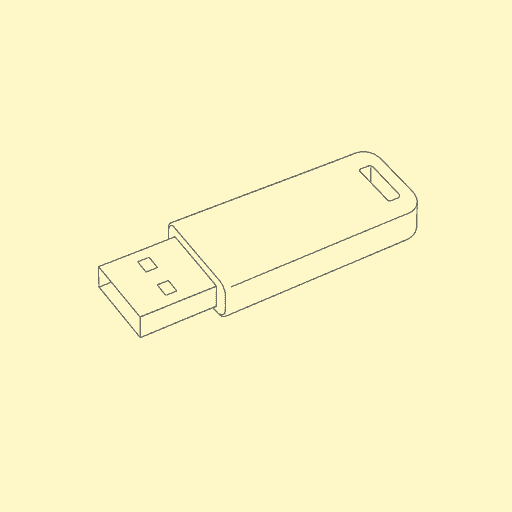
The USB memory stick is the novel’s central symbol, representing how information in the digital age becomes a portable, dangerous, and fragile commodity. As the physical container for the damning photograph of Sansom and bin Laden, the memory stick is the story’s MacGuffin, the object that propels the plot by being desired and hunted by every faction. Its journey from a secure Pentagon archive to the highway median where it is destroyed, illustrates the chaotic and unpredictable path a secret travels once it escapes containment. The stick embodies the modern reality that the most explosive secrets can be copied, stolen, and transported in a pocket, making them both more accessible and more vulnerable. Even when Reacher purchases a decoy memory stick, the people pursuing the stick takes his bluff at face value, highlighting its perceived power. This obsession emphasizes the stick’s value as a weapon in the hands of its wielder.
The object’s ultimate destruction on the highway resolves the central conflict while reinforcing its symbolism. The very technology that makes the secret portable also makes it destructible. The novel ends with the implication that the authorities who find the stick at Reacher’s direction are also the ones who destroy it, complicating the theme of The Long-Term Consequences of Political Expediency. Some institutions will go to extraordinary lengths to protect a damaging secret, leaving history contested and its most dangerous truths buried.
The Photograph of Sansom and Bin Laden
The photograph of a young John Sansom meeting with Osama bin Laden in Afghanistan is one of the novel’s major symbols, embodying the core theme of The Long-Term Consequences of Political Expediency as it represents a covert US alliance with the mujahideen against the Soviets. This single image represents the concept of “blowback,” where a strategic success from a past era transforms into a catastrophic political and personal liability in the modern, post-9/11 world. For Sansom, the photograph is a toxic secret that threatens to erase his entire life’s work, reducing him to a single, damning association. He laments, “My whole life counts for nothing now, except I’m the guy who kissed Osama bin Laden’s ass. That’s all anyone will ever remember” (422). His deep fear reveals the photo’s symbolic power to redefine truth and legacy.
The photograph is also a weapon. For Al Qaeda, its capture is a mission aimed at either humiliating the United States or, as Reacher later deduces, suppressing an element within the photo that is damaging to bin Laden himself. For the US government, its containment is a matter of national security, a desperate attempt to bury an embarrassing chapter of foreign policy. The fight over the image is a fight to control the historical narrative, demonstrating how a single moment, captured and preserved, can become a battleground for nations and ideologies decades after the fact.
Subway Trains
The New York City subway system is an important motif, establishing a world of urban anonymity, shared vulnerability, and sudden violence. The novel opens in a subway car, a setting Reacher immediately frames as a potential terrorist target where he must be hyper-vigilant. This introduction establishes the subway as a microcosm of the post-9/11 city, a space where the mundane act of commuting is shadowed by the threat of extreme violence. It is here that Susan Mark’s personal tragedy unfolds, her death made starkly public in the impersonal, transient environment of the train car. The subway is a place where private struggle collides with public space, and where individual lives can reach their end unnoticed by the city’s relentless momentum.
Beyond being a stage for violence, the subway is also a labyrinth for Reacher, a network he exploits for escape. His daredevil “subway surfing” moves and his tactical use of train schedules to evade federal agents transform the system from a site of vulnerability into an instrument of his own vigilante justice. This duality reinforces the motif’s meaning: The subway is an impartial urban system, a network that both enables threats and provides avenues of escape. It is the quintessential urban battlefield for Reacher, a place where he can use the anonymity of the crowd and the complexity of the infrastructure to wage his one-man war against forces that operate in the shadows.

Unlock the meaning behind every key symbol & motif
See how recurring imagery, objects, and ideas shape the narrative.
- Explore how the author builds meaning through symbolism
- Understand what symbols & motifs represent in the text
- Connect recurring ideas to themes, characters, and events