Half City
A modern alternative to SparkNotes and CliffsNotes, SuperSummary offers high-quality Study Guides with detailed chapter summaries and analysis of major themes, characters, and more.
Summaries & Analyses
Quizzes
NEWReading Tools
Symbols & Motifs
The Chasm
The Chasm is the novel’s central symbol, representing the physical, social, and supernatural divisions that define Astera as the “Half City.” This massive crevasse is a stark demarcation, splitting the metropolis into the affluent, polished North of the Chasm (NTC) and the gritty, working-class South of the Chasm (STC). This geographic divide mirrors the city’s rigid social hierarchy, a tension Viv navigates daily. Her mother’s disdain for Viv living “so far past the Chasm” reflects a worldview where worth and safety are tied to one’s location relative to this scar on the earth (5). Viv’s choice to reside in the South is a quiet rebellion against this elitism and a step toward building a life outside the confines of her family’s expectations, aligning with the theme of Found Family Over Blood Ties.
Beyond its social significance, the Chasm is a constant reminder of the supernatural threat looming over the mortal world. Viv’s father taught her that the geological anomaly is actually the “largest and oldest gateway to hell” (26), ripped open millennia ago and now sealed. This origin story transforms the Chasm from a simple landmark into a symbol of a world forever altered by demonic forces. Its presence explains the high concentration of deviants in Astera and grounds the narrative’s central conflict in the city’s very geography. The Chasm symbolizes a fragile peace, a sealed wound that could reopen at any moment, thereby reinforcing the immense responsibility inherent in The Weight of a Hunter’s Duty.
The Brood Brand
The Brood Brand is a potent symbol of an irrevocable past and the struggle for self-definition against the weight of one’s origins. The seven-pointed star with horns, burned into the necks of Brood members, signifies an unbreakable allegiance to the demonic cabal and its violent hierarchy. For most, it is a mark of power and belonging within the deviant world’s most elite and savage society. However, for Reid, an ex-Brood demon, the brand is a permanent stain, representing a history he cannot erase and a nature he actively rejects. It is the physical manifestation of the monstrosity he loathes within himself, making it a key element in the theme of Accepting a Monstrous Self. Viv’s initial perception of Reid is entirely shaped by this mark, which she first identifies when she gets a good look at him during their first fight.
Throughout the narrative, the brand is a source of external prejudice and internal conflict. To Viv and other hunters, it is an undeniable sign of an enemy, forcing them to reconcile their duty to kill demons with the evidence of Reid’s contrary actions. For Reid, it is a constant, physical reminder of the life he left behind and the mistrust he will always face, regardless of his commitment to Harker’s cause. He cannot remove the brand, so he must instead define himself in opposition to what it represents. In this way, the symbol powerfully encapsulates the idea that self-acceptance is not about changing one’s fundamental nature or erasing the past, but about proving one’s character through present choices and actions.
Viv’s Silver Daggers
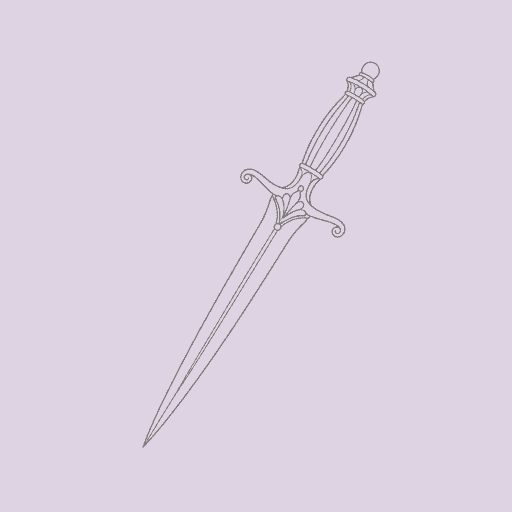
Viv’s pair of Britannia silver daggers are a complex symbol of her inherited identity, representing both the noble legacy of her father and the compulsive, often monstrous, burden of her aeon nature. As her primary weapons, the daggers are the most tangible manifestation of The Weight of a Hunter’s Duty. They are not merely tools but a sacred inheritance, a physical link to the father who trained her and whose murder she is driven to avenge. This deep personal connection is highlighted when one of the blades breaks during a fight on the subway. Her immediate, furious reaction—“Fuck. These were my father’s” (14)—reveals that their value extends far beyond their function. Her anger is not just about a compromised weapon but a desecrated heirloom, a severing of her connection to her past.
The breaking of the dagger also symbolizes the fracturing of Viv’s solitary identity. The event coincides with her introduction to Reid and her subsequent entry into Harker Academy, a community that challenges her lifelong habit of hunting alone. The damage to this symbol of her self-reliant, inherited duty foreshadows the ways her worldview and sense of self will be reshaped by her new relationships. The daggers represent a duty she perceives as both a noble responsibility and a private curse, and the breaking of one signifies a critical disruption to that isolated existence, forcing her to redefine her relationship with her calling and her capacity for connection.
Viv’s Camera
Viv’s photography is a recurring motif representing her struggle to connect with the human world from which her aeon nature alienates her. While her daggers are tools of violence that tether her to her predatory instincts, her camera is an instrument of observation and appreciation, allowing her to frame and find beauty in the mortal life she protects but cannot fully inhabit. This motif is central to the theme of Accepting a Monstrous Self, as it embodies Viv’s conscious effort to counterbalance the hunter’s bloodlust with a search for human connection and meaning. By capturing candid moments, she attempts to bridge the gap between her violent duties and her own fragile humanity, seeking proof that she is more than just a killer.
This internal conflict is a constant source of tension for her, as she feels like an outsider in the very world she is sworn to defend. Her camera becomes a tool for self-affirmation, a way to remind herself of the goodness she is fighting for and her own place within it. After giving her pretzel to a hungry boy and his dog on the subway, Viv photographs an exhausted mother enjoying a burrito, reflecting that the moment is “incredibly human, and, as I often try to remind myself, so am I” (8). This quiet moment reveals the core function of the motif: Photography is not just a hobby but a deliberate practice of empathy and self-reassurance. It is how Viv fights the internal monstrosity she fears, actively seeking out and documenting the humanity in others to reinforce her own.

Unlock the meaning behind every key symbol & motif
See how recurring imagery, objects, and ideas shape the narrative.
- Explore how the author builds meaning through symbolism
- Understand what symbols & motifs represent in the text
- Connect recurring ideas to themes, characters, and events
Related Titles
By Kate Golden

Featured Collections
Appearance Versus Reality
View Collection
Brothers & Sisters
View Collection
Fathers
View Collection
Forgiveness
View Collection
Good & Evil
View Collection
Grief
View Collection
Guilt
View Collection
Hate & Anger
View Collection
Memory
View Collection
Mortality & Death
View Collection
Pride Month Reads
View Collection
Pride & Shame
View Collection
Revenge
View Collection
Romance
View Collection
Teams & Gangs
View Collection
Valentine's Day Reads: The Theme of Love
View Collection