Harvest Season
A modern alternative to SparkNotes and CliffsNotes, SuperSummary offers high-quality Study Guides with detailed chapter summaries and analysis of major themes, characters, and more.
Summaries & Analyses
Quizzes
NEWReading Tools
Themes
Content Warning: This section of the guide contains discussion of graphic violence, mental illness, illness, and death.
The Human Cost of True Crime Content
In Harvest Season, the protagonists are all anti-heroes, with Harper, Nolan, and Arthur all being serial killers who commit crimes according to personal moral codes. While author Brynne Weaver presents the central characters as criminals, she also casts many of their actions as well-intentioned, often driven by principles of community, love, and justice. Meanwhile, she critiques the modern true-crime phenomenon, arguing that online communities like the Sleuthseekers transform real human suffering into a detached and dangerous form of entertainment. The novel portrays these amateur investigators as consumers of tragedy rather than seekers of justice, driven by a desire for notoriety and a sense of intellectual superiority that shapes them into antagonists within the narrative. This pursuit of a “story” dehumanizes victims and survivors, turning them into puzzle pieces in a game, and creates tangible, real-world danger by encouraging reckless behavior that ignores ethical boundaries and escalates threats for those they target.
The dehumanizing nature of this content-driven investigation is most evident in how the Sleuthseekers treat Harper. On their Discord server, a user named KnightofTruth shares a photograph of her taken without her knowledge, reducing her to an object of speculation. He writes, “She must have been important to his investigation. Anyone know who this is?” (70). This question frames Harper not as a person with a right to privacy, but as a “key” to unlocking the mystery of Sam and Vinny’s deaths. This pattern continues when Sleuthseekers Tylor, Emma, and Charlie arrive in Cape Carnage and begin showing the photo to locals. They are not interested in Harper’s well-being or in what problems they could be causing by attempting to force her into the public eye; they only care what information she might possess. While Harper has committed crimes since her arrival in Cape Carnage, she only lives there because of her desire to escape her past as a victim of violence and public scrutiny. In investigating her background and attempting to discover her, they trespass on these boundaries she has created.
The three Sleuthseekers are primarily in Cape Carnage due to the death of Sam Porter, a documentarian and prominent Sleuthseeker whom Harper killed in Tourist Season. He stalked Harper with a drone, aggressively confronted her, and ultimately took Nolan hostage to force a confession for his film. The desire to find justice for the victims Nolan and Harper killed is never presented as inherently wrong; however, Weaver ultimately presents Sam’s motives for trying to solve the case as false. Sam is only a content creator willing to commit violent crimes to manufacture a compelling narrative. His behavior directly leads to his own death at Harper’s hands, something presented as agreeable within the logic of the narrative, as him infiltrating this community and exposing the protagonist for his personal gain is presented as a moral failing against which Harper has a right to protect herself and Nolan.
The residents of Cape Carnage reaffirm the moral code by which the novel and its protagonists operate. Sam and the other Sleuthseekers have no connection to Harper, the initial victims, or Cape Carnage, where community is prized. By contrast, the amateur sleuths are trespassing on local values and threatening relationships for shallow reasons, often anonymously and from a distance through the Discord server. When they do arrive, characters like Maya and Lukas resist their questions about Harper and her background, choosing instead to defend her from their investigation due to their own prioritization of personal relationships. They defend her right to privacy and a new identity, free from her past trauma and the permanent visibility she would receive if outed on the online forum. By portraying the Sleuthseekers as a swarm that descends on tragedy, Weaver suggests that the modern obsession with true crime is not a victimless hobby; instead, it can compound suffering for personal entertainment.
The Failures of the Justice System
Throughout Harvest Season, the official justice system is depicted as fundamentally inadequate, both through its inability to deliver true retribution for heinous acts and through its corruption by actual criminals like Sheriff Yates. The former perceived failure creates a moral vacuum that the novel’s protagonists—Harper, Nolan, and Arthur—feel compelled to fill through vigilante action; meanwhile, the collateral damage of the protagonists’ actions is exacerbated rather than mitigated by Yates, who seeks to inflict further harm. In light of an ineffective justice system, Weaver presents extralegal violence not as a simple or heroic solution, but as a morally complex and often grimly satisfying alternative. For these characters, inflicting violence based on personal moral codes becomes a necessary, albeit dark, means of protecting their community and avenging personal losses, blurring the line between protector and predator.
Arthur Lancaster represents the vigilante as a long-standing institution, a secret guardian of Cape Carnage who has spent decades eliminating threats that the law seemingly ignores. His established history of murdering predatory tourists and disposing of their bodies positions him as the town’s hidden authority. While his cognitive decline makes his actions increasingly reckless, as seen in his murder of Peter Evanston, the impulse remains rooted in a protective instinct. He operates from the conviction that certain individuals who cause harm are beyond the reach of conventional justice and must be dealt with permanently. Furthermore, he is motivated by an unsatisfied desire for revenge against his daughter’s killer, La Plume, who is revealed to be Sheriff Yates. This dynamic further emphasizes the idea that the legal system cannot be trusted, implying that individuals must seek justice when it cannot be ensured by existing institutions.
The means through which the protagonists seek “justice” is not presented as infallible or entirely defensible. Nolan Rhodes’s entire journey is a direct result of the justice system’s failure to avenge the death of his brother, Billy. His multi-year hunt to kill the four people involved in the fatal hit-and-run is a calculated campaign of personal vengeance. However, his scrapbook containing the names of his victims comes to represent the flaws in his logic in Harvest Season. He arrives in Cape Carnage with the intent to kill “Harper Starling,” the final name on his list, but he later learns that Harper is neither responsible for his brother’s death nor a simple criminal. This revelation upends the moral code that has driven him and justified his actions, in his mind, over the previous years. Still, in contrast to the corrupt law enforcement in Cape Carnage, his actions are offered some justification through their goal of protecting Harper and Arthur, with love and loyalty presented as defensible motivations for committing violence.
Sheriff Yates acts as a foil for these characters, as he operates based on his appreciation for the “art” of murder and a self-centered desire for control and cruelty. The system that could ensure retribution for those who have committed harm is intentionally undermined by Yates’s personal goals, as he only lied his way into his role as a Sheriff to observe Arthur more closely after murdering his daughter. He remains there to shape Harper into his “legacy,” hoping to create another killer who acts without earnest motivation. In contrast, Harper, despite her desire for a quiet life, is repeatedly thrust into the role of vigilante to protect herself and those she loves. Her initial act of faking her death—by sending a drunk driver over a cliff and assuming her identity—was an extralegal act of self-preservation. This pattern continues as she disposes of bodies and uses lethal force to protect Arthur and Nolan, prioritizing their lives over any legal or moral abstraction. The novel thus consistently places its protagonists in situations where violence is the only viable solution, unlike Sheriff Yates, who acts on his own motivation and corrupts the system he represents in doing so. Through this, the novel suggests that in a world where evil often goes unpunished, individuals must ensure justice.
The Cyclical Nature of Trauma
Harvest Season explores how trauma creates psychological wounds that fundamentally shape a person’s identity, dictating their capacity for trust and their patterns of behavior. The novel argues that such trauma is not a single event to be overcome; rather, it is a cyclical force that compels individuals to be drawn toward—or to recreate—familiar dynamics of danger and mistrust. This is most clearly illustrated in Harper’s journey; her survival of one serial killer’s cellar leads her directly into a volatile relationship with another killer. Their bond, built on shared darkness, offers a chance at healing, but it is ultimately shattered when her core trauma of betrayal is triggered, demonstrating how past wounds can make a future built on love and trust feel impossible.
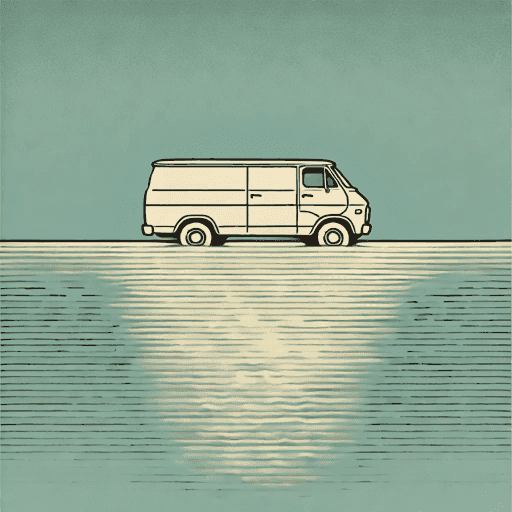
The foundation of Harper’s current life is a construct of her past trauma. She confesses to Nolan that she faked her death and assumed the identity of “Harper Starling” to escape the horror and unwanted public attention associated with being Autumn Bower, the famous survivor of Harvey Mead. This act of self-preservation forces her into an isolated existence defined by the constant fear of discovery, one heightened by her association with another serial killer, Arthur. Her past is literally unearthed when Nolan finds her submerged van, proving that no matter how deep she buries it, her trauma remains. Her entire identity is a defense mechanism against reminders of her past. Her perceived powerlessness against this history arises in her cottage, primarily through the motif of her chessboard. After finding one of the pieces moved, she thinks, “I don’t move the white pawn two spaces like I do when I think I can stand up to traumas of my past that trail after me like a wraith. I’m no longer ready to play” (69). This presents her trauma as something she seeks to avoid despite knowing it is inescapable, as well as casting it as a game to be started, played, and ended cyclically. She yearns to gain power over it yet often finds herself lacking the ability to do so.
The relationship between Harper and Nolan is both intimate and volatile because it is founded on their intersecting traumas. Both are killers shaped by grief—Harper by the murder of her boyfriend Adam, and Nolan by the death of his brother Billy. Their moments of greatest connection come through confessions of their darkest acts, such as Nolan detailing his first murder and Harper recounting Adam’s horrifying death. This shared understanding of violence and vengeance allows them to accept parts of each other that the outside world would condemn. However, this same foundation makes their bond fragile, as it is built on a mutual recognition of each other’s brokenness.
The cyclical and destructive power of trauma is revealed in the novel’s climax, when Sheriff Yates successfully frames Nolan and triggers Harper’s deepest fears. She immediately concludes that Nolan has been orchestrating a long, elaborate revenge plot, mirroring her initial trauma of being betrayed and captured. The love and trust they have built evaporates in an instant. Her immediate reaction is to pull a gun on him, accusing, “what better way to torture me than to fill my heart and then crush it” (338). This violent rejection demonstrates how her past trauma has made the possibility of betrayal more real to her than the possibility of genuine love, forcing the cycle of pain, mistrust, and isolation to begin once more. The novel ends on a cliffhanger, leaving the resolution of Harper’s character arc and this theme for the third installment of the series.

Unlock every key theme and why it matters
Get in-depth breakdowns of the book’s main ideas and how they connect and evolve.
- Explore how themes develop throughout the text
- Connect themes to characters, events, and symbols
- Support essays and discussions with thematic evidence
Related Titles
By Brynne Weaver