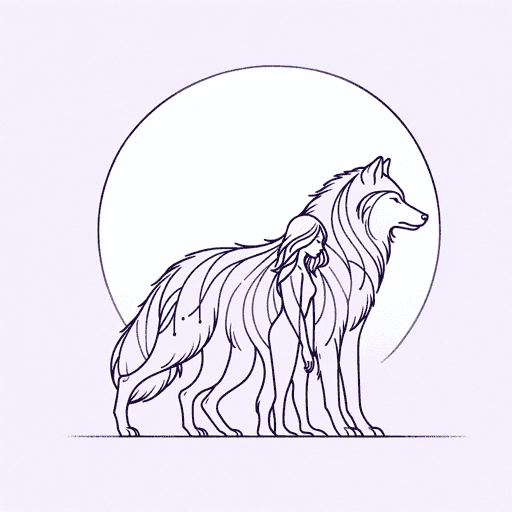
Julie Of The Wolves
Julie Of The Wolves
A modern alternative to SparkNotes and CliffsNotes, SuperSummary offers high-quality Study Guides with detailed chapter summaries and analysis of major themes, characters, and more. For select classroom titles, we also provide Teaching Guides with discussion and quiz questions to prompt student engagement.
Summaries & Analyses
Quizzes
NEWReading Tools
Part 2Chapter Summaries & Analyses
Content Warning: This section of the guide includes discussion of death, physical abuse, substance use, addiction, bullying, and rape.
Part 2: “Miyax, The Girl”
Part 2, Pages 75-84 Summary
The second part of the novel is a flashback. Miyax recalls her early life. She does not remember her mother well because she dies when Miyax was only four. Miyax’s Aunt Martha tells her that her father Kapugen “lost his mind” (76) after her mother’s death. He left a successful job as the manager of a reindeer herd and took Miyax to live at a seal camp and live more traditionally. Kapugen and his friend Naka became close and “sang the song of the wolves” (78). Miyax can remember traditions practiced at the seal camp, like the Celebration of the Bladder Feast, which celebrates bladders for holding “the spirits of the animals” (77).
Miyax recalls how travelers would arrive at the seal camp in the summer. She met Inuit who spoke mostly English. Communicating with them, she hears her father and herself referred to by their English names, Charlie Edwards and Julie, respectively. Miyax remembers her mother calling her Julie and declaring, “I am Eskimo, not a gussak!” (81), which is a term for a white person.
Kapugen and Martha tell Miyax that she must go to school to comply with the Bureau of Indian Affairs regulations and will live with Martha. It is at this point that Miyax “becomes” Julie. Before Julie departs, Kapugen tells her she can leave Martha once she turns 13 by marrying Daniel, who is Naka’s son. Julie enters school and learns English. One day, an old man comes and tells her that Kapugen has disappeared while seal hunting and is presumed dead.
Part 2, Pages 84-96 Summary
Julie begins to acclimate to life in Mekoryuk, Alaska, where she lives with Martha. The more modernized life in the city makes her realize “that she had lived a strange life” (84) beforehand. In her new life, Julie struggles to fit in. Some of her schoolmates make fun of her for believing a charm bracelet is a “i’noGo tied,” or totem (79). She throws her own i’noGo tied away that night in shame.
One day, a man named Mr. Pollock from the Reindeer Corporation asks Julie to be a pen pal for his daughter Amy in San Francisco. Julie is captivated by Amy’s letter that describes life in the city, and she is touched when Amy asks when she is coming to live with them in San Francisco. More time passes, and Julie is told that she will have to leave to go and live with her father’s old friend Naka and marry his son, Daniel. She flies to be with Naka and his wife, Nusan. Julie meets Daniel and “knew from his grin and dull eyes that something was wrong with him” (92). Nusan confirms that Daniel has some sort of developmental disability but is good and will be “like a brother” (92). Miyax is married immediately but spends her time helping Nusan with sewing and other chores instead of building a relationship with Daniel.
Julie feels isolated but does meet a friend named Pani NalaGan (Pearl Norton in English). They speak different Inuit languages, so they speak to each other in English. The two girls spend their time in a soda shop, and Pearl advises Julie to run away because she is unhappy.
Part 2, Pages 96-104 Summary
Julie rarely sees Daniel but continues to receive letters from Amy. She learns that Naka has an alcohol addiction and at times becomes violent. One night, he attacks Nusan in a drunken rage, and Julie escapes to the Quonset or soda bar. She meets a young man named Russell who is campaigning against alcohol addiction. He mentions a man from San Francisco who is helping him in his cause, and Julie realizes he means Mr. Pollock.
One night, Nuka is in jail because of his disorderly behavior, and Nusan leaves home for work. Julie is home alone at first, but then Daniel comes in. He mentions that people are making fun of him because he’s “got a wife and can’t mate her” (102). He molests her and attempts to rape her before announcing that he will try again tomorrow. Julie is sickened and immediately prepares to leave. She goes to Pearl and asks for food and supplies: “They’re a wedding present,” Pearl says, “You can keep them. No one uses these old-timers” (104). Julie runs away, declaring that she will now be called Miyax again.
Part 2 Analysis
Part 2 provides flashbacks reminiscing on Miyax’s life before she departed for the wilderness. These flashbacks, which describe her life among other people, contrast with Part 1’s focus on natural imagery and the forces of wilderness and wildlife. The anecdotes of Miyax’s earlier life also flesh out her character and deepen her story. While Part 1 mentions Miyax’s relationship with her father and her husband Daniel in passing, Part 2 provides specific details about what Miyax has lost and left behind since entering the wilderness, developing the theme of The Wilderness Versus Human Society.
Miyax is adept in the wilderness, but she struggles to find her footing in 20th-century, Westernized society. When she moves from her village to live with her Aunt Martha and go to school, she feels constantly out of place and “desperately homesick” (94). She makes an effort to learn Western ways but finds it difficult. Even among people her own age, Miyax struggles to fit in. Girls at school make fun of her for believing in her i’noGo tied, causing “the blood to rush to her face” and for her to throw her i’noGo tied away (85). Some of Miyax’s reactions to these struggles foreshadow her increasing sense of pride and confidence in her identity and further tie the human versus nature conflict to the novel’s depiction of Indigenous Wisdom and Traditions. While Miyax makes a concerted attempt to learn English, she also prefers to speak her first language, such as when she tries to speak it with Pearl.
As Part 2 continues, human society proves to be challenging and dangerous. In addition to being an outsider in Westernized spaces, Miyax is forced to dodge Naka’s drunken outbursts and domestic abuse, the apparent death of her father (which later turns out to be false), and being assaulted by Daniel. Amidst all of the challenges that she faces and her ongoing sense of isolation, Miyax does find two friends who influence her motivations and actions. The pen pal relationship she develops with Amy provides a glimpse into another way of life and encourages Miyax to believe that the situation she is in is not the only one possible for her. The friendship she develops with Pearl is equally encouraging. It is Pearl who reminds Miyax that she is not bound to a life with Daniel, urging her that “[a]ll you have to do is leave the house or run away and everything’s forgotten” (94), and it is Pearl who helps Miyax prepare to run away by giving her food and supplies. The friendships Miyax makes with Amy and Pearl while living in the city of Mekoryuk, which is otherwise unfriendly to her, mirror the bonds Miyax forges with the wolves in the largely hostile landscape of the North Slope of Alaska and reflect the novel’s interest in Independence Versus Solidarity.
It is naïve of Miyax to hold on to the hope of getting to San Francisco, a city far away, which she has never visited, to live with a pen pal she has never met in person. This is especially so given how unhappy Miyax is with urban life. Nevertheless, Amy’s letters turn into a signal for a path to escape, in Miyax’s imagination. Immediately after Daniel assaults her, Miyax decides to leave for the wilderness. She not only leaves the area but also sheds the identity of Americanized city life, telling herself “Julie is gone […] I am Miyax now” (104). More than it reflects a desire to live in a city, Miyax’s plan shows that she is determined not to reject her identity and traditional upbringing, even if it means leaving a world of comfort behind.

Get in-depth, chapter-by-chapter summaries and analysis from our literary experts.
- Grasp challenging concepts with clear, comprehensive explanations
- Revisit key plot points and ideas without rereading the book
- Share impressive insights in classes and book clubs