Relic
A modern alternative to SparkNotes and CliffsNotes, SuperSummary offers high-quality Study Guides with detailed chapter summaries and analysis of major themes, characters, and more.
Summaries & Analyses
Quizzes
NEWReading Tools
Important Quotes
Content Warning: This section of the guide contains depictions of murder, graphic violence, illness, and death.
“The hut had been lined with human skulls. Examining a few of the closest, Whittlesey noticed deep scratch marks he could not immediately understand. Ragged holes yawned through the tops.”
(Prologue, Chapter 1, Page 6)
In this passage from the Introduction, the imagery of skulls with “ragged holes” and unexplained “scratch marks” establishes a tone of horror and foreshadows the creature’s method of killing. This inciting incident also introduces a sense of mystery and ancient violence, foreshadowing the bloody scenes that will later erupt within the civilized confines of the museum.
“I said we do not have wild animals in the Museum…Yes, that includes bears…No, I’m not going to give any names…How could I possibly answer that question?…This press conference is over.”
(Part 1, Chapter 5, Page 31)
During a press conference after the two boys are murdered, Museum Director Wright’s dialogue is characterized by clipped, repetitive denials, with the ellipses designed to simulate a cacophony of questions from the press. By only detailing one half of the frenetic exchange, the authors adopt an impressionistic writing style to deliver a vivid but understated sense of the scene’s chaos. The syntax also conveys his panicked and defensive state as he attempts to control an uncontrollable narrative by invoking Institutional Prestige as a Veil for Dangerous Truths.
“I’ve heard something about the condition of the bodies. The force used was…of a nonnormal nature.”
(Part 1, Chapter 6, Page 38)
Dr. Frock makes this comment Margo, delivering the novel’s first expert assessment that the killer is something more than a typical human assailant. The dramatic pause indicated by the ellipsis, followed by the deliberately understated phrase “nonnormal nature,” creates an atmosphere of suspense and intellectual dread. As the architect of the “Callisto Effect” theory, Frock frames the violence as evidence for his controversial ideas, a focus that hints at his own self-centered hubris amid the broader crisis.
“And under the Museum is a warren of abandoned tunnels. […] The subbasement is huge, multileveled…much of it isn’t even electrified. I doubt if there’s anybody still alive who really knows their way around down there.”
(Part 1, Chapter 7, Page 41)
Journalist Bill Smithback’s description establishes the museum subbasement’s ominous nature, with diction such as “warren,” “abandoned,” “unelectrified” characterizing the space as a primal, unmapped underworld that does not conform to the rules of the upper museum’s ordered existence. This structural duality mirrors the novel’s central focus on The Fragile Illusion of Civilized Behavior.
“‘There are certain things we expect, and indeed, that we have a right to expect. They are—’ she ticked them off on bony fingers. ‘One: No controversy. Two: Nothing that might offend ethnic groups. Three: Nothing that might harm the Museum’s reputation. Now, is that so unreasonable?’”
(Part 1, Chapter 13, Page 74)
Lavinia Rickman’s tone of condescension dominates her scolding of Smithback as she deliberately employs institutional prestige as a veil for dangerous truths. Her list of demands reveals that the museum’s primary concern is to maintain a false, sanitized public image in order to appease donors and the public. The characterization of her fingers as “bony” adds a predatory, skeletal quality to her act of censorship.
“The wooden door frame was scored and gouged into a welter of fresh splinters, as if something with claws had been scrabbling at it.”
(Part 1, Chapter 14, Page 86)
This description of the secure area door provides further physical evidence suggesting that the killer is not human, shifting the narrative into the realm of a horror story. The verb “scrabbling” evokes a sense of desperate, animalistic frenzy as this unknown force literally clawed at the vaults holding the museum’s secrets.
“Here was something truly odd: the program had identified a large chunk of DNA as belonging to an animal named Hemidactylus turcicus. […] The Biological Nomenclature Database told him: COMMON NAME: TURKISH GECKO”
(Part 1, Chapter 17, Page 105)
This passage illustrates the intricacies of Scientific Inquiry as a Counterpart to Horror. The DNA analysis, a tool of objective reason, produces an irrational and seemingly impossible result: a hybrid of human and reptile genetic material. The sterile, computerized presentation of a monstrous biological truth likewise amplifies the dread by framing it in the unemotional language of science.
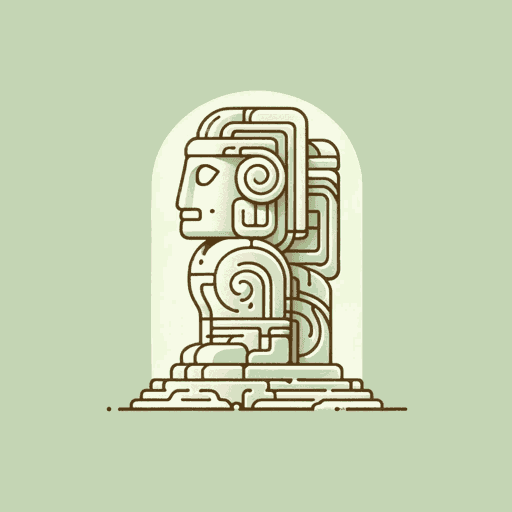
“MBWUN. This carving is a representation of the mad god Mbwun […] Margo felt a chill creep over her. She looked closer, repulsed by the reptilian features, the small, wicked eyes…the talons. Three on each forelimb.”
(Part 1, Chapter 20, Page 134)
As she peeks inside the Superstition exhibition, Margo connects the murders to a key artifact, and the vivid scene provides the first detailed description of the shadowy beast currently haunting the museum. The museum label uses detached, academic language to frame the figurine as a mythic “representation,” but Margo’s horrified recognition of the three talons emphasizes the idea that this figure is no mere myth. This juxtaposition transforms the curated display into the locus of a tangible threat, delivering critical foreshadowing.
“Museum staffers called it The Bones because Boylan, the owner, had hammered and wired an amazing number of bones into every available flat surface. The walls were lined with countless femurs and tibias, arranged in neat ivory ranks like bamboo matting. Metatarsals, scapulas, and patellas traced bizarre mosaics across the ceiling.”
(Part 2, Chapter 21, Page 142)
The uniquely decorated tavern is a symbolic microcosm of the museum itself, and its grim ornaments likewise reflect the fragile illusion of civilized behavior. Just as the museum curates and displays skeletons for scientific study, the bar arranges them for grotesque decoration, blurring the line between the academic and the macabre.
“We usually use human DNA as the outgroup, since we’ve mapped so much of it. […] And to our surprise, we got a positive reading on the outgroup, that is, Homo sapiens. And, as you know, we identified DNA strands from several species of gecko—or so it appears.”
(Part 2, Chapter 23, Page 157)
Here, the authors employ scientific jargon as a literary device to ground the fantastical horror in a plausible, technical reality. The bizarre and contradictory DNA results—a mix of human, gecko, and unidentified genes—embody the idea of scientific inquiry as a counterpart to horror. Ironically, the application of precise scientific methodology yields no clarity; instead, the authors use this language to deepen the mystery, suggesting that the pursuit of knowledge can uncover truths that defy rational explanation.
“When the temperature in the computer room reached ninety-four degrees, the tolerances of the ROM chips governing the Automatic Disaster Control System were exceeded. Failure occurred ninety seconds later.”
(Part 2, Chapter 26, Page 175)
This passage uses the dry, passive voice of a technical report to create a strong sense of foreshadowing. The very fact that the authors have paused to deliver these specific details suggests that those details will become a crucial factor in the climactic crisis at the opening of the Superstition event. The specter of total system failure also highlights the fragility of the complex safety features that the museum uses to maintain order and safety. On a broader scale, this potential failure illustrates the idea that civilization’s sophisticated methods of control can be undone by a single, overlooked variable.
“DETAIL LISTING Item: 1989-2006.2 Removed By: Rickman, L. 53210 Approval: Cuthbert, I. 40123 Removal Date: 3/15/95”
(Part 2, Chapter 28, Page 194)
The dry, staccato tone of this computer readout belies the deeper indications of the information provided, for this passage is a crucial piece of evidence confirming the protagonists’ suspicions of a museum-orchestrated cover-up. The format lends an air of objective fact to the discovery that Lavinia Rickman, the head of public relations, personally removed Whittlesey’s journal with Cuthbert’s cooperation. This act of institutional secrecy illustrate the administrators’ willingness to use institutional prestige as a veil for dangerous truths.
“Every sixty to seventy million years or so, life starts getting very well adapted to its environment. […] Then, suddenly, a new species appears out of the blue. It is almost always a predatory creature, a killing machine.”
(Part 2, Chapter 29, Page 203)
In this speech, Frock articulates his “Callisto Effect” theory, a fictional scientific concept that fuels the novel’s central premise. The theory serves as a sophisticated form of exposition, providing a framework that elevates the creature to an evolutionary inevitability. This passage recasts the story’s events as a scientific case study, reinforcing the theme of scientific inquiry as a counterpart to horror.
“Unless you define a curse as a mixture of greed, human folly, and scientific jealousy. You don’t need Mbwun to explain.”
(Part 2, Chapter 32, Pages 226-227)
Speaking to Margo and Smithback, the retired botanist Jörgensen dismisses the popular idea of a supernatural curse, instead offering a rational explanation. This statement argues that the true “curse” is the predictable outcome of a collision between institutional ambitions and personal rivalries. The authors use Jörgensen’s dialogue to frame the climactic horror as a consequence of the greed and folly driving the museum’s leadership.
“Carlos: She say you take devil.
Myself: What devil?
Carlos: Mbwun. She say you take devil Mbwun in box.”
(Part 2, Chapter 35, Pages 249-250)
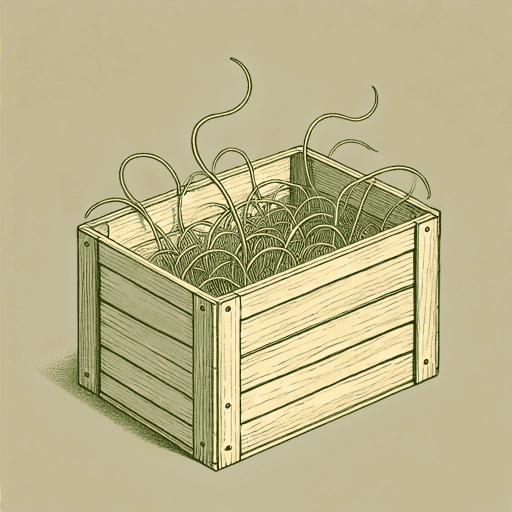
This verbatim transcription from Whittlesey’s journal captures the moment of catastrophic misinterpretation that sets the plot in motion. Whittlesey is assuming the “devil” refers to the Kothoga figurine, while the woman is pointing at the packing fibers in the open crate. This misunderstanding highlights the theme of scientific inquiry as a counterpart to horror, for Whittlesey’s focused academic quest causes him to miss the true, biological nature of the threat he is unleashing.
“‘I regret to say it,’ said Pendergast, ‘but this strikes me as a system designed for failure. […] It’s too complex, and I wouldn’t trust it in an emergency. What we need is a proven approach, something we are all familiar with.’”
(Part 2, Chapter 36, Page 258)
In the museum’s security command center, Pendergast delivers a calm but damning assessment of the high-tech system meant to protect the gala. This line foreshadows the very system failure that will trap the guests with the creature. Pendergast’s critique illustrates the theme of institutional prestige as a veil for dangerous truths by exposing the administration’s preference for a superficially impressive yet fatally flawed technological solution.
“This beast, whatever it is, appears to have the strength of a grizzly bear, the speed of a greyhound, and the intelligence of a human being. […] What we have is a creature with a preternatural sense of smell and very poor eyesight that hunts nocturnally.”
(Part 2, Chapter 41, Page 291)
After Margo and Frock run the creature’s DNA through the extrapolator program, Frock summarizes the findings, outlining the creature’s grim synthesis of animalistic power and human intellect. The use of animal similes (“grizzly bear,” “greyhound”) renders the abstract scientific data much more immediately threatening. This moment represents the climax of the novel’s investigative arc, as the pursuit of knowledge has yielded a complete profile of the monster just as it is poised to strike.
“Cuthbert looked at Frock intently. ‘I don’t know what you’re thinking,’ the Scotsman said, ‘or what your game is. Perhaps it’s some desperate eleventh-hour attempt to derail the exhibition, to turn me into a laughingstock. But I will tell you this, Frock: If you make one more outburst, I will have Mr. Ippolito forcibly remove you from these premises and I will see to it that you never set foot in here again.’”
(Part 3, Chapter 43, Page 304)
Following Frock’s public warning that a beast is loose, Cuthbert’s obtuse response reveals his misguided priorities; even in the moment of greatest crisis, he is still more concerned with preserving the museum’s professional reputation. This issue becomes clear when he reduces this life-or-death warning to Frock’s latest move in a personal “game” intended to make Cuthbert a “laughingstock.” With these words, he explicitly prioritizes the exhibition’s success over all other considerations.
“D’Agosta stopped, frozen. Mummies don’t bleed.”
(Part 3, Chapter 44, Page 310)
This terse sentence crystallizes the horror of the hidden body in the Superstition exhibition. The use of italics represents D’Agosta’s internal realization, creating a moment of stark clarity. The phrase’s simple, declarative structure contrasts with the surrounding chaos, underscoring the final collapse of the boundary between the museum’s artificial world of exhibits and the bloody reality of the creature hunting within its walls.
“The lights flickered a third time and went out, plunging the Rotunda into darkness. Over the screams, the rumble of the descending door continued relentlessly.”
(Part 3, Chapter 46, Page 320)
This sentence uses sensory details—the visual failure of light and the auditory “rumble” of the door—to symbolize the catastrophic failure of the museum’s control. The adverb “relentlessly” personifies the security door, making it seem as though the very system designed to protect people is now almost consciously trapping the guests with the monster. The juxtaposition of human screams with the mechanical rumble illustrates the fragile illusion of civilized behavior.
“I’m talking about Montague’s disappearance. We should have taken care of the problem then, instead of pretending it never happened. All that blood in the basement near the Whittlesey crates, Montague gone missing. […] You ordered the floor cleaned and the incident forgotten. We washed our hands of it, and hoped whoever or whatever killed Montague would disappear.”
(Part 3, Chapter 51, Page 358)
In this scene, Cuthbert delivers a direct confession of the museum administration’s long-standing culpability in the unfolding disaster. The repetition of the word “we” implicates the entire leadership in a conspiracy of silence, and the clichéd phrase “washed our hands of it” underscores a conscious moral abdication. This moment reveals that the evening’s horror is the direct consequence of years of institutional secrecy and willful negligence.
“Smithback was worried, but still rational. Early on, he’d felt a moment of sheer terror when he realized the rumors about a Museum Beast were true. But now, tired and wet, he was more afraid of dying before he wrote his book than he was of dying itself. He wondered if that meant he was brave, or covetous, or just plain stupid.”
(Part 3, Chapter 54, Page 384)
Despite the intensity of his terror, Smithback engages in an internal monologue that reveals the persistence of civilized ambition, and the narration pointedly emphasizes his preoccupation with recognition and financial gain—even in the midst of such a life-threatening scenario. This characterization shows that an individual’s modern values can absurdly persist even when the structures that support them have collapsed into chaos.
“‘It knows what’s going on, it knows exactly what’s happening.’ […] ‘It hates us,’ said Cuthbert. As the medics threw open the door of an ambulance, Coffey yelled, ‘What did it look like?’ ‘There was sadness in its eyes,’ said Cuthbert. ‘Infinite sadness.’”
(Part 3, Chapter 56, Page 409)
Delivered during his psychological breakdown, Cuthbert’s description complicates the creature by acknowledging its complex human emotions. This personification elevates the monster to a tragic figure, implying that it is a conscious being trapped within a monstrous form. The quote directly invokes scientific inquiry as a counterpart to horror, hinting at the Epilogue’s revelation about the creature’s true nature.
“She would never forget the sight of the creature’s brain exploding out of the ruined eye socket, at once a horrifying and beautiful sight. In fact, it was the eyes—the horrible, angry eyes—that had given her a sudden, desperate flash of an idea, even as she’d scrambled backward, away from the rotting stench and slaughterhouse breath.”
(Part 3, Chapter 61, Page 442)
The narrator’s description of the creature’s demise dramatizes grotesque violence by incongruously pairing it with intellectual triumph. Margo’s victory is achieved through scientific observation, as her understanding of primate anatomy gives Pendergast the fatal target. This moment encapsulates scientific inquiry as a counterpart to horror, as an academic insight is applied with lethal precision to destroy the very monster that a different scientific pursuit unleashed.
“Proof, rather, that the monster was Whittlesey.”
(Epilogue, Chapter 63, Page 464)
This declarative sentence fragment, italicized for emphasis, delivers the novel’s final and most crucial plot twist, recontextualizing the entire narrative. Kawakita’s internal monologue reveals that Whittlesey became the very monster he sought to discover, thereby transforming into the ultimate embodiment of the fragile illusion of civilized behavior.

Unlock every key quote and its meaning
Get 25 quotes with page numbers and clear analysis to help you reference, write, and discuss with confidence.
- Cite quotes accurately with exact page numbers
- Understand what each quote really means
- Strengthen your analysis in essays or discussions
Related Titles
By these authors