Relic
A modern alternative to SparkNotes and CliffsNotes, SuperSummary offers high-quality Study Guides with detailed chapter summaries and analysis of major themes, characters, and more.
Summaries & Analyses
Quizzes
NEWReading Tools
Prologue-Part 1, Chapter 10Chapter Summaries & Analyses
Content Warning: This section of the guide contains depictions of graphic violence, animal death, illness, and death.
Part 1: “Museum of Unnatural Mystery”
Prologue, Chapter 1 Summary: “The Amazon Basin, September 1987”
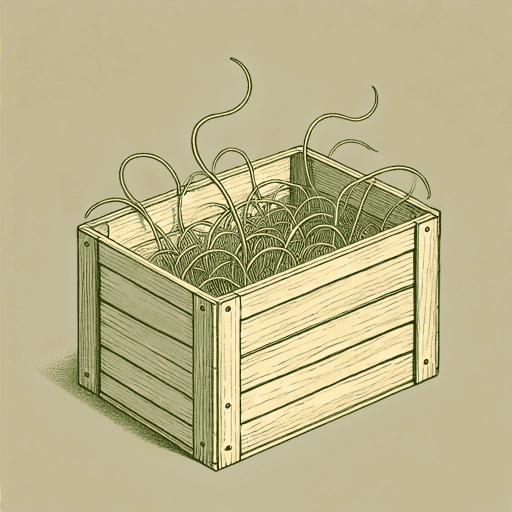
In September 1987, anthropologist John Whittlesey and his camp assistant, Carlos, rest in the Amazon jungle near Cerro Gordo. Whittlesey instructs Carlos to open a wooden crate containing artifacts, a plant press, and a field journal packed in indigenous plant fibers, then adds a small, unusually heavy carved figurine depicting a beast with exaggerated claws and reptilian features, and begins writing a letter to his colleague, Montague.
In the letter, Whittlesey references the recent breakup of his expedition, then stops to reflect on the desertion of his colleague, Maxwell. He goes on to write to Montague that he is sending Carlos back with the crate while he continues alone to search for their missing colleague, Crocker—one of the few who opted to continue on with Whittlesey after Maxwell’s departure. He identifies the figurine as proof that the Kothoga tribe of “shadow people” exists and that the “Mbwun cult” is real. He urges Montague to safeguard the figurine and to use the other materials to restore his reputation at the museum. His field notes detail the expedition’s dissolution after an argument with Maxwell, after which only Whittlesey, Carlos, Crocker, and two local guides remained.
Whittlesey silently reflects on his and Crocker’s recent discovery of the figurine in a hidden hut flanked by carved stone tablets. Seeing the place, the two guides muttered about curses and the Kothoga tribe, then vanished. The figurine itself was located on an earthen mound surrounded by carved discs, and the walls were lined with human skulls that had deep scratch marks and holes where bone had been removed. A mysterious woman suddenly came out of the forest, warning of curses, then disappeared back into the jungle. After the discovery of the hut, Crocker left on a short walk and never returned.
Now, after Carlos departs with instructions to wait two weeks in Porto de Mos before shipping the crate, Whittlesey follows an ancient trail toward a plateau, planning to search for Crocker and the Kothoga tribe. Following the scent of decay to a clearing, he finds Crocker’s mutilated corpse near a ritually carved tree. Parrot feathers are on the man’s chest, and his severed arm is still lashed to the tree trunk. The back of the skull has been torn away and what remains bears signs of being clawed with immense force. As the jungle falls silent, Whittlesey sees two glowing, slitted eyes watching from the brush before they vanish.
Prologue, Chapter 2 Summary: “Belém, Brazil, July 1988”
In July 1988, a smuggler named Ven works the Belém docks at night, increasingly convinced that the foreman suspects his operation. Working with Ricon, the assistant harbormaster, Ven diverts cargo boxes from upriver shipments and hides them behind museum crates marked for New York until they can be loaded onto US-bound freighters.
After the foreman leaves his office, Ven uses a copied key to enter the warehouse and navigates toward a stack of crates labeled MNH, NEW YORK, which arrived from Porto de Mos the previous fall. He has been using the space behind them to stash his goods and plans to leave before the crates are shipped.
As Ven approaches, he smells a strange, “goatish” odor of decay. Ignoring his instinct to flee, he squeezes into the cramped space behind the crates. Something slams him against the wall with tremendous force, and before he can scream, he feels a final, sharp pain in his skull.
Part 1, Chapter 3 Summary: “New York, Present Day”
On a Sunday at the New York Museum of Natural History, two young brothers wander through darkened halls searching for dinosaurs, separated from their parents. Billy, the older boy, finds a metal door behind a canvas barricade leading to a spiral staircase descending into darkness. He tells his brother to wait while he explores. When Billy doesn’t return, the younger boy follows—slipping through the barricade and descending into the dark, where a strange smell fills the air and his calls go unanswered.
Part 1, Chapter 4 Summary: “Monday”
On Monday morning, graduate student Margo Green arrives at the museum to find police cars and ambulances in the staff courtyard. She and her colleague, Assistant Curator Gregory Kawakita of the Evolutionary Biology Department, discover that the corridor to Margo’s basement office is blocked by police tape; guards are preventing staff from entering the sealed area. In the staff lounge, Margo notices conservation expert Charlie Prine being escorted out by officers, his shoes soaked in blood.
Lieutenant D’Agosta of the NYPD enters the crowded lounge and announces that bodies have been found under suspicious circumstances. He closes the Museum and orders everyone to remain while officers sweep the building for a possible killer still inside. After D’Agosta leaves them under guard, Margo cannot stop thinking about the blood on Prine’s shoes.
Part 1, Chapter 5 Summary
An hour later, staff are released but must avoid taped-off areas. Journalist Bill Smithback, who is writing a book about the museum, tells Margo that Charlie Prine discovered the bodies of two young boys in the basement. Police are investigating the possibility of a wild animal attack and have brought in special coroner Dr. Matilda Ziewicz. Museum Director Winston Wright will hold a press conference to address the rumors.
In a harried press conference, Wright denies the press’s insinuations that the museum keeps wild animals. He repeatedly refuses to comment on the nature of the killings until autopsies are complete and insists that the upcoming Superstition exhibition will open as scheduled. The chaotic event ends with Wright visibly furious.
Part 1, Chapter 6 Summary
Margo visits her dissertation advisor, Dr. Frock, a distinguished physical anthropologist who now uses a wheelchair following childhood polio and malaria. His controversial “Callisto Effect” theory proposes that evolution sometimes produces short-lived aberrant species through sudden environmental pressures rather than gradual change. A fossil footprint of an unknown creature sits on his desk; as the only physical evidence for Frock’s theory, the object is often derided by critics.
Margo presents her research on Kiribitu plant classification, which Frock approves. He then raises the topic of the murders, expressing unease about the unusual force used on the bodies. He encourages Margo not to abandon her research despite her father’s recent death, and as she departs, he warns her to be careful.
Part 1, Chapter 7 Summary
Over lunch, Smithback tells Margo that police are using a bloodhound to track something through the museum’s vast spaces, including five miles of forced-air ducts and a warren of largely unmapped subbasement tunnels beneath the original building. He also mentions the persistent staff rumor of a “Museum Beast” that supposedly killed someone years ago.
George Moriarty, the young curator of the Superstition exhibition, joins their table. Smithback shows him edits made by Lavinia Rickman, the chief of public relations, who has been heavily censoring the manuscript for his commissioned book about the museum. Moriarty, whom Smithback despises for adhering to official guidelines, sides with Rickman, and Smithback makes an excuse to leave. Moriarty expresses interest in Margo’s ethnopharmacology work and asks to discuss the exhibition with her.
Part 1, Chapter 8 Summary
Professional tracker Jonathan Hamm waits in a basement corridor with his two hounds, Lieutenant D’Agosta, and two armed deputies. The dogs struggle to find a clear scent due to the contaminated crime scene and the chemical smell of preserved specimens nearby. D’Agosta admits that his blueprints do not cover the subbasement they are about to enter.
The team descends into dark, brick-lined tunnels. At a junction, one hound catches a strong air scent, and both dogs begin baying frantically. The first hound, Castor, breaks free and races into the darkness; the second, Pollux, follows. Their barking abruptly stops, replaced by a terrible shriek. A shape hurtles from the darkness, panicking the deputies, who fire twice, only to realize that they have just killed the fleeing Pollux. Further down the tunnel, the team finds Castor torn nearly in half. Amid Hamm’s dismayed silence at the carnage, D’Agosta calls off the search and leaves the scene for forensics.
Part 1, Chapter 9 Summary
Moriarty, who has been tasked with working on the upcoming Superstition exhibition, asks Margo to help identify some poorly documented shamanistic plants from the Cameroons for the display. They head to the sixth-floor storage vaults, where Moriarty unlocks a small vault crammed with Central African artifacts. When he estimates that the work will take 10 to 15 hours, Margo’s enthusiasm dims, but she reluctantly agrees to help despite her dissertation deadline.
Moriarty defends the exhibition against charges of sensationalism before inadvertently quoting his boss, Dr. Cuthbert, who called Frock “mentally unsound” and dismissed the man’s Callisto Effect theory. Offended, Margo walks away. A horrified Moriarty realizes that Frock is her advisor and quickly apologizes, explaining the long-standing feud between Frock and Cuthbert. Margo accepts his apology on the condition that he guide her out of the storage maze.
As they leave, Moriarty tells her about Kothoga tribe material in the exhibition, including a figurine of the mythical beast Mbwun, which will be a centerpiece. He confides that there has been high-level controversy surrounding the artifacts, as well as rumors of a curse. He adds that the Kothoga tribe materials are still in their original crates, which are now in the museum’s secure area. The crates were recently moved because they had apparently been tampered with, but Moriarty refuses to elaborate further on this point.
Part 1, Chapter 10 Summary
At 2:15 pm, Lieutenant D’Agosta waits in the Medical Examiner’s autopsy suite. Dr. Matilda Ziewicz arrives and begins the autopsy of William Bridgeman, one of the murdered boys. The body has massive head trauma and an enormous laceration across the chest. The entire back portion of the skull has been punched through, and some brain tissue is missing entirely.
Ziewicz identifies the missing brain regions as the thalamus and hypothalamus. Dr. Gross notes what appears to be a bite mark on the tissue, and Ziewicz observes three parallel lacerations consistent with sharpened fingernails or claws. Deep within the torso wound, Ziewicz extracts a claw, causing D’Agosta to exclaim in shock. Ziewicz dryly notes that his unprofessional outburst is being recorded.
Prologue-Part 1, Chapter 10 Analysis
The opening chapters deliberately build suspense by establishing the labyrinthine architecture of the New York Museum of Natural History, implying that its multilayered hallways, exhibits, and subterranean passageways conceal many generations of oddities, curiosities, and deadly secrets. The inherent danger of the museum subbasement is further emphasized as the two ill-fated boys venture into its unknown depths. As the younger of the two boys fearfully follows his older brother down the staircase, Preston and Child focus closely on the child’s inner world, drawing upon the tropes of the horror genre to create a vivid sense of even the most minor, short-lived characters in the novel. The understated horror of the incident then collides with the novel’s more procedural qualities as D’Agosta and the tracker patrol the dark hallways and unwittingly send two dogs to be slaughtered by an unseen force. These scenes emphasize The Fragile Illusion of Civilized Behavior, making it clear that the museum’s pristine public halls rest upon a treacherous foundation. The verisimilitude of the descriptions is due to co-author Douglas Preston’s experience as an employee at the American Museum of Natural History, for the text dramatizes his own memories of the sprawling edifice, transforming this place of public education into an unpredictable environment hiding primordial threats.
The museum administration’s tendency to downplay the murders establishes the theme of Institutional Prestige as a Veil for Dangerous Truths. Following the discovery of the children’s bodies, Director Wright holds a press conference to deflect the mounting rumors, adamantly insisting that the upcoming Superstition exhibition will proceed on schedule. The trickle-down effect of his suppressive policy is also evident in the behavior of Public Relations Chief Lavinia Rickman, who heavily censors Bill Smithback’s promotional manuscript and forbids him from indulging in sensational details that may damage the museum’s reputation. Her determination to suppress the more revealing passages of Smithback’s manuscript also foreshadow the revelation of just how deeply she is involved in hiding the museum’s darker secrets.
The pursuit of scientific discovery in these chapters frequently yields destruction, illustrating the theme of Scientific Inquiry as a Counterpart to Horror. John Whittlesey mounts an expedition to the Amazon Basin to validate his anthropological theories, but this academic quest leads him only to ruin, presaged by his discovery of the ominous deserted hut and the violently mutilated corpse of his colleague, Crocker. Whittlesey initially believes that his unearthing of the strange Mbwun artifact will restore his reputation, but instead, it proves to be the precursor of his own complex demise. Whittlesey’s own scientific zeal is mirrored in the present-day timeline as Dr. Frock clings to his pet theory of the Callisto Effect and remains determined to frame the unfolding tragedy of the museum murders as a potential academic victory. Specifically, Frock regards the savage force used on the murdered boys with clinical detachment, focusing instead on the prospect of discovering new vindication for his belief that evolution can suddenly cause abrupt, dramatic aberrations. However, his focus on the emotionless patterns of the scientific method suggests that his relentless drive for academic understanding may cause him to downplay the more brutal realities of the unfolding crisis.

Get in-depth, chapter-by-chapter summaries and analysis from our literary experts.
- Grasp challenging concepts with clear, comprehensive explanations
- Revisit key plot points and ideas without rereading the book
- Share impressive insights in classes and book clubs
Related Titles
By these authors