Relic
A modern alternative to SparkNotes and CliffsNotes, SuperSummary offers high-quality Study Guides with detailed chapter summaries and analysis of major themes, characters, and more.
Summaries & Analyses
Quizzes
NEWReading Tools
Character Analysis
Content Warning: This section of the guide contains depictions of graphic violence, illness, and death.
Special Agent Pendergast
Special Agent Pendergast functions as an archetypal detective and enigmatic hero. He is characterized by his piercing intelligence, unflappable composure, and eccentric, courtly Southern manners, which conceal his formidable and sometimes ruthless nature. Arriving from the New Orleans FBI field office to investigate a connection between the museum murders and a cold case, he serves as the primary driver of the official investigation. His methodical approach indicts the incompetence of the museum administration, revealing their deliberate obfuscation. As he seeks out the mysterious murderer, Pendergast operates with an authority that transcends typical bureaucracy, confidently overruling multiple individuals whose political clout would normally prove an obstacle to his investigation.
As a modern-day analog to Sir Arthur Conan Doyle’s iconic Sherlock Holmes, Pendergast cuts through the institutional secrecy and internal politics that threaten to derail the search for the killer. He immediately recognizes the administration’s attempts at obstruction and confronts them directly, prioritizing the investigation over the museum’s public relations concerns. His partnership with the more-grounded Lieutenant D’Agosta provides the narrative with forward momentum and establishes D’Agosta’s role as a Watson-like sidekick who will accompany Pendergast on future adventures in the broader series. In general, Pendergast’s intuitive leaps and arcane knowledge complement D’Agosta’s by-the-book police work. Pendergast also shows a unique ability to connect with intellectual giants such as Dr. Frock, for he recognizes the value of the esteemed scientist’s controversial theories when others dismiss them. Pendergast therefore embodies the novel’s exploration of Scientific Inquiry as a Counterpart to Horror.
Margo Green
Margo Green serves as the novel’s central protagonist. A graduate student in ethnopharmacology, she offers scientific expertise that becomes crucial to understanding the nature of the Mbwun creature. Initially presented as a diligent but somewhat insecure academic, Margo acts as the primary point-of-view character, grounding the novel’s more outlandish events in a logical, human context. As she helps to solve the murders, she evolves from a timid researcher into a courageous and resourceful investigator, and she plays an indispensable role in confronting the beast.
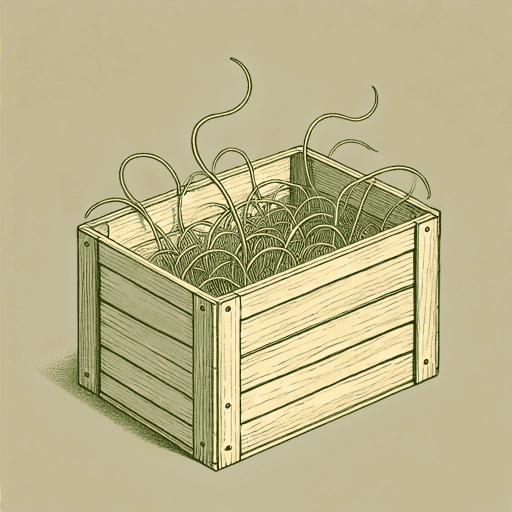
Her development is spurred by her mentor, Dr. Frock, who encourages her research and recognizes her potential. While she is initially reluctant to become involved in the case, Margo’s scientific curiosity and growing sense of responsibility compel her to act. Her analysis of the fibers from the Whittlesey crate reveal the creature’s hormonal dependency and provide the key to luring it into a trap. This breakthrough illustrates that her academic pursuits, once a source of professional anxiety, can also be a tool for survival. Her climactic realization that the creature’s primate-like frontal eyes are its only vulnerability allows Pendergast to make the killing shot. Later, her decision to remain at the museum and pursue a professorship signifies her full embrace of her identity as a scientist.
The Mbwun Creature (John Whittlesey)
The Mbwun creature is a genetically distorted human being whose monstrous transformation threatens to topple the civilized sanctity of the museum. It is a deadly and efficient predator whose immense strength, speed, and cunning are exemplified by its brutal method of killing; it systematically decapitates its victims, removing and consuming the hormone-producing part of the brain known as the hypothalamus. This act is driven by a biological imperative: an addiction to the hormones contained in a rare plant, for which the human hypothalamus is a meager substitute. The creature is intelligent enough to hide its victims, elude extensive searches, and recognize traps, making it a formidable adversary.
The creature’s tragic origin deepens its character beyond that of a simple monster. It is the transformed John Whittlesey, the anthropologist who led an ill-fated expedition to the Amazon in the late 1980s. Having been captured by the Kothoga tribe and forced to ingest the transformative plant, Whittlesey devolves into the very object of myth that he originally sought to study. This transformation demonstrates the consequences of unchecked scientific ambition and analyzes The Fragile Illusion of Civilized Behavior. As the creature, Whittlesey is driven solely by instinct and addiction, journeying from the Amazon to New York in pursuit of the crates that contain the last vestiges of the life-sustaining plant. This grim pilgrimage culminates in a horrific rampage when its supply is cut off.
Dr. Frock
Dr. Frock, the chairman of the evolutionary biology department, is a mentor to Margo Green and contributes greatly to the characters’ growing understanding of the Mbwun creature. Confined to a wheelchair due to a long-ago battle with polio, he displays a formidable, far-reaching intellect. However, his reputation as a brilliant scientist is tarnished by the marginalization of his controversial pet theory, the “Callisto Effect,” which posits that evolution can produce short-lived, monstrous aberrations. His staunch defense of this concept has placed him at odds with the museum’s conservative administration. Initially dismissed by his peers as “Frock’s folly” (36), this theory provides the only scientific framework capable of explaining the creature’s existence.
Frock’s primary focus is to use the circumstances of the museum murders to vindicate his life’s work. He is ambitious and takes clear intellectual delight in seeing his ideas proven correct, as when he openly exclaims that the creature is “the vindication of [his] theory” (120). He guides Margo’s investigation, encouraging her to use Kawakita’s extrapolator and immediately grasping the significance of her discovery about the plant fibers and the creature’s hormonal dependency. His conflict with Cuthbert and Wright highlights the use of Institutional Prestige as a Veil for Dangerous Truths, for he seeks to pursue scientific truths despite the inconvenience that his efforts might cause for an administration obsessed with appearances and fundraising. Despite his frustrations with the bureaucracy, he remains a dedicated scientist who uses his knowledge to help solve the crisis.
Lieutenant Vincent D’Agosta
Lieutenant Vincent D’Agosta of the New York Police Department serves as the deuteragonist. He is a pragmatic police officer who acts as the official liaison to the FBI investigation. As an everyman figure, he demonstrates a gruff, by-the-book approach to police work, providing a stark contrast to the eccentric methods of Agent Pendergast. In D’Agosta’s initial reactions to the case, he is overwhelmed by the gruesome crime scenes and expresses a visceral, human horror that jars with Pendergast’s cool detachment. Despite his world-weary perspective, he accepts the fantastical elements of the case and learns to work effectively with Pendergast, and the two ultimately form a bond of mutual respect.
While Pendergast operates on an intuitive and intellectual plane, D’Agosta handles the on-the-ground logistics of managing personnel, securing crime scenes, and dealing with the museum’s uncooperative administration. His frustration with the bureaucracy and his eventual defiance of the arrogant Agent Coffey demonstrate his integrity and commitment to justice. D’Agosta’s journey culminates in the subbasement, where he is forced to lead a group of terrified civilians to safety, relying on courage and quick thinking to survive.
William Smithback, Jr.
William Smithback, Jr. is a journalist commissioned to write a laudatory book about the museum’s new Superstition exhibition. He functions as an observer, a source of comic relief, and an important catalyst for uncovering information. Smithback is characterized by his cynical wit and his persistent desire to uncover sensational stories. He cultivates the appearance of a hard-driving reporter, with a perpetually rumpled suit and a hunger for “gory particulars” (40). His ambition is revealed when he initially views the murders as a potential boon for his book, musing that an account of the “grisly Museum killings… could be a best-seller” (29). This self-interest makes him an effective but unorthodox investigator, and his journalistic digging allows the authors to deliver crucial exposition, most notably the massacre aboard the Strella de Venezuela (the ship that transported the Whittlesey crates to New Orleans).
Despite his stock role as a wisecracking opportunist, Smithback demonstrates moments of genuine bravery and loyalty, particularly in his assistance to Margo and his courage during the escape through the subbasement. His ongoing battle with Lavinia Rickman, who repeatedly censors his manuscript, critiques the concept of institutional prestige as a veil for dangerous truths. He also acts as an important link between the different character groups, gathering information from curators, police, and museum staff alike to piece together a more complete picture of the unfolding crisis.
Gregory Kawakita
Gregory Kawakita is an ambitious assistant curator in the evolutionary biology department and a protégé of Dr. Frock. He serves as a foil to Margo Green, representing a more career-oriented and politically astute approach to science. Kawakita is the creator of the genetic sequence extrapolator, a revolutionary computer program that becomes a critical tool in identifying the nature of the Mbwun creature. Though he works under the controversial Frock, Kawakita is pragmatic and self-serving, expressing a philosophy that “you don’t owe anyone but yourself” (265).He even considers abandoning Frock and moving to the more politically powerful Cuthbert’s department in order to advance his career. Throughout most of the novel, he presents himself as a talented but self-absorbed scientist, but the Epilogue reveals his true nature as his ambition takes a dark and dangerous turn. He alone deduces the full truth that the creature was the transformed John Whittlesey. Rather than sharing this knowledge, he secretly cultivates the Mbwun plant and begins selling it as a powerful narcotic called “glaze” to finance his research. Although he understands the reovirus’s power to remake a human into a monster, he fully intends to harness this power for himself, believing that he can succeed where the Kothoga failed. This revelation reframes him as a potential future antagonist.
The Museum Administration (Wright, Cuthbert, and Rickman)
Winston Wright, the museum director; Ian Cuthbert, the deputy director; and Lavinia Rickman, the chief of public relations, collectively function as the story’s institutional antagonists. They are defined by their shared commitment to protecting the museum’s reputation and financial stability at all costs. Their actions (or lack thereof) are the primary embodiment of the novel’s focus on institutional prestige as a veil for dangerous truths. Wright is a pompous, ineffectual leader who is more concerned with appearances than substance, while Cuthbert is the more calculating and ruthless of the group, pushing to open the Superstition exhibition despite the clear danger. Rickman is the personification of censorship, remaining obsessed with sanitizing any information that could harm the museum’s image.
The three administrators’ share a history of covering up crucial dangers—particularly the disappearance of the curator, Montague, and the discovery of blood near the Whittlesey crates. Their obfuscation of the truth has continued for years prior to the museum murders, establishing their pattern of willful ignorance and self-preservation. Throughout the novel, they actively obstruct the police investigation, downplay the threat to the public, and prioritize the opening night gala over human safety. Their belief that they can manage and contain the crisis ultimately fails, leading to the catastrophic events of the opening night. Eventually killed by the Mbwun creature (or in Cuthbert’s case, experiencing an acute mental health crisis), all three administrators suffer fates that are intended to serve as a harsh indictment of their institutional hubris.
George Moriarty
George Moriarty is the earnest and somewhat shy assistant curator responsible for mounting the Superstition exhibition. He functions as a sacrificial lamb whose death underscores the lethal danger stalking the museum and the recklessness of the administration. As a loyal “company man” (43), Moriarty genuinely believes in the exhibition’s educational and entertainment value, defending it against accusations of sensationalism. His interactions with Margo Green reveal a dedicated, if slightly naïve, academic who is passionate about the museum’s collections. He is eventually killed by the Mbwun beast.
Ippolito
Ippolito is the museum’s director of security, an overconfident official whose blunders exhibit the flaws of embracing technological hubris. He places absolute faith in the museum’s high-tech but untested security system, often dismissing concerns that fall outside his technical protocols. When the security system catastrophically fails and seals the building during the opening gala, his vaunted “fortress” becomes a lethal cage for the guests. His sudden and gruesome death in a basement stairwell marks the total collapse of the museum’s formal authority, leaving the survivors to rely on the raw instinct of Pendergast and D’Agosta.

Unlock analysis of every major character
Get a detailed breakdown of each character’s role, motivations, and development.
- Explore in-depth profiles for every important character
- Trace character arcs, turning points, and relationships
- Connect characters to key themes and plot points
Related Titles
By these authors