Relic
A modern alternative to SparkNotes and CliffsNotes, SuperSummary offers high-quality Study Guides with detailed chapter summaries and analysis of major themes, characters, and more.
Summaries & Analyses
Quizzes
NEWReading Tools
Themes
Content Warning: This section of the guide contains depictions of graphic violence, illness, and death.
Institutional Prestige as a Veil for Dangerous Truths
In Relic, the complex setting of the New York Museum of Natural History becomes a study in how an institution can defend its prestige even when lives are at risk. Rather than acting to stop the murders taking place within the museum’s walls, the leadership tries to protect the institution’s reputation and finances, and their cowardice allows the concealed danger of the Mbwun creature to fester unchecked. Dr. Wright, Dr. Cuthbert, and Lavinia Rickman all engage in a pattern of suppression, tight controlling of critical information, and prioritizing their ambition over their responsibility to protect the public. In short, the threat of the “Museum Beast” endures for years because the administration keeps denying that anything is happening.
The leadership’s habit of hiding trouble begins years before the murders of the two boys. When curator Montague disappears near the newly arrived Whittlesey crates, leaving behind a pool of blood, Dr. Wright and Dr. Cuthbert simply order the staff to clean the floor and move on, and they never call the police. This same reaction appears again when the boys are killed, for at that point, Director Wright’s press conference focuses on steering the conversation away from any mention of a predator; instead, he focuses on reassuring the public that the Superstition exhibition will open as planned. His response shows that he cares most about the museum’s reputation and income and is willing to sacrifice the safety of visitors and employees alike for the sake of the institution’s public image.
This need to control the story shapes the museum’s internal records as well. The head of public relations, Lavinia Rickman, acts as the museum’s filter, actively censoring William Smithback’s book by removing any mention of controversial topics or failed expeditions like Whittlesey’s. As she openly tells the writer, “I am concerned with emphasis, not accuracy” (73), and it is clear that she sees it as her responsibility to hide inconvenient truths for the sake of the institution. As is later discovered, she even goes so far as to remove Whittlesey’s field journal from the collection, then arranges for the computer record of her action to vanish. The journal is the physical evidence tying the museum’s administration to a dangerous expedition, and Rickman’s actions align her with the museum leadership’s willingness to engage in a self-serving cover-up that puts additional lives at risk.
The decision to hold the Superstition gala despite the unsolved murders becomes the museum’s worst mistake. Even after a third murder, the leaders are so focused on the money and prestige tied to the event that they willfully disregard the inherent risks of putting an unknowing crowd within reach of a mysterious killer. When Pendergast orders a delay in the event, Wright uses his political contacts to cancel the postponement, relying upon his own prestige to get the results he wants. This choice crowns the administration’s long pattern of denial. By pressing ahead, they create the parameters for the inevitable massacre that follows, and the entire crisis arises from the same instinct that led them to wash away Montague’s blood years earlier. In their minds, their own prestige is far more important than the safety of the public.
The Fragile Illusion of Civilized Behavior
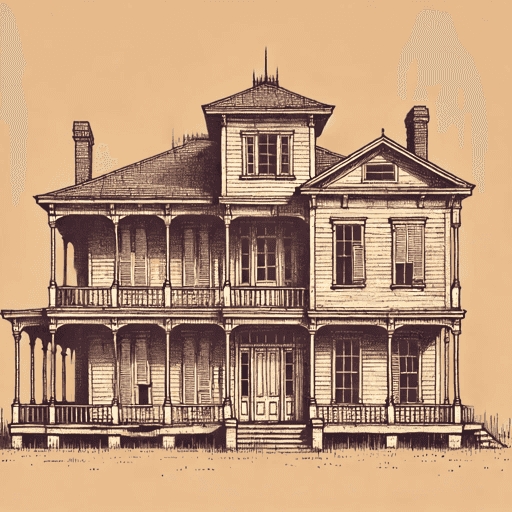
Throughout the novel, the New York Museum of Natural History stands as a symbol of order and human intellect, but the authors repeatedly emphasize just how thin that order is. The story pointedly critiques the museum’s elegant veneer by juxtaposing its carefully curated displays with the violence inside its walls, and this pattern suggests that when faced with life-or-death situations, the delicate veneer of civilized behavior quickly gives way to the far more instinctual motives of defense and survival. Just as Whittlesey, the consummate scientist, is transformed into a monster, the scenes of chaos that erupt from the museum’s stately gala show just how close the average person is to violence, and this contrast marks the fundamental fragility of civilization itself.
The museum’s very layout emphasizes this pattern, for although the public galleries present light, space, and careful arrangement, they conceal a dark, ominous “warren of abandoned tunnels” (41), a disorganized subbasement that the staff barely understands. The contrast between the formal halls and the buried maze builds the narrative tension, as the ordered world of the museum quite literally rests atop a shadowy realm that allows the Mbwun beast to move unseen. The creature thus becomes the most direct manifestation of the dark truths that hide beneath the museum’s carefully polished surface.
Whittlesey himself represents this concept. The Epilogue shows that a reovirus alters his body until he becomes the creature, but in the beginning of the novel, he enters the Amazon as a scholar searching for answers. Even after his transformation, his mind remains sharp—as evidenced by his arduous journey back to the museum that once served as the epitome of his own civilized life. Now, however, the brutal drives of sheer survival govern his choices, compelling him to lash out and murder stray humans who venture into his domain. As the creature, Whittlesey’s mix of intelligence and instinct emphasize the paradox of a human self trapped within a body built for predation.
As chaos erupts at the gala on the opening night of the Superstition exhibit, the authors widen the theme significantly, examining the collapse of civilization on a massive scale. The event gathers the city’s elite in a room designed to display refinement, but with the discovery of the hidden body, the calm social performance of the partygoers ends instantly. Overcome with terror, the guests shove past each other, claw for exits, and use any means available to escape. Their formal manners vanish amid the existential fear that now drives their actions. This scene, like the novel’s previous depictions of violence, shows just how quickly humans can revert to their deepest instincts in the face of sudden danger.
Scientific Inquiry as a Counterpart to Horror
In Relic, the authors create an incongruous blend of adrenaline-infused danger and calm, deliberate scientific inquiry, and this paradox dominates every aspect of the novel, from the stately but ominous setting of the museum to the incisive attitudes of the key characters. As Margo, Frock, and Pendergast draw closer to the truth, Preston and Child make it clear that their dogged pursuit of knowledge exposes them to the threat of danger at every stage of the investigation. Yet just as Margo and Frock’s scientific work uncovers the origins of the museum’s terror, it also provides the information needed to end it. Through Whittlesey’s expedition, the book implicitly links the concepts of discovery and devastation; this pattern is also echoed in the characters’ genetic work in the museum, as these labors take place against a backdrop of predatory attacks.
The disaster begins with Whittlesey’s academic mission to the Amazon, and the layers of strife and personality clashes embedded in his expedition presage the inevitable dissolution of the group and the demise of its members. The very fact of his own hidden agenda—to find the lost Kothoga tribe and rebuild his reputation—imbues his fragmented portions of the narrative with a deadly sense of urgency that is only heightened by his macabre discoveries of the hut and the Mbwun figurine. In a letter, he calls the figurine “the proof I’ve been looking for” (4), but his ill-omened discovery of the psychoactive plants is destined to transform him into the primordial monster that stalks the dark halls of the museum that he once walked as a respected scientist. In essence, the scientific discovery of the reovirus is intertwined with this deeper horror, for the very truths that Whittlesey seeks allow an ancient danger to enter the modern world.
In the novel’s primary narrative thread, the characters’ scientific analysis at the museum continues this pattern. Specifically, Margo Green combines her own skills in genetic sequencing with the computing power of Kawakita’s extrapolator program to study the samples of the psychoactive plants. The results displayed on her screen—the outcome of hours of careful scientific study—nonetheless fill her with a sense of horror as she interprets the data and realizes that the creature has broken the rules of known species to become “a killing machine of the highest order” (291). However, although this information frightens her, it also guides her. Knowing that Mbwun reacts to smell and light, Margo gives Pendergast the crucial information he needs . Thus, the same tools that identify the horror of the creature’s origins also offer up the means to end its years-long rampage.
Finally, Dr. Frock’s complex reaction to the existence of Mbwun identifies his own intricate relationship to the ethics of the situation. Although he earnestly uses his skills to aid in the identification and destruction of the creature, he cannot conceal his scientific zeal or his determination to defend his beloved “Callisto Effect” theory. Faced with the prospect of physical proof that his notion of evolutionary anomalies is correct, he reacts with fear and excitement in equal measure, openly crowing that the creature could be “the vindication of [his] theory” (120). In his desire to be proven right, he sets aside his instinctive horror at the deaths taking place, and the intensity of his personal ambition indirectly sets the stage for his reappearance in the novel’s sequel, Reliquary (1997).

Unlock every key theme and why it matters
Get in-depth breakdowns of the book’s main ideas and how they connect and evolve.
- Explore how themes develop throughout the text
- Connect themes to characters, events, and symbols
- Support essays and discussions with thematic evidence
Related Titles
By these authors