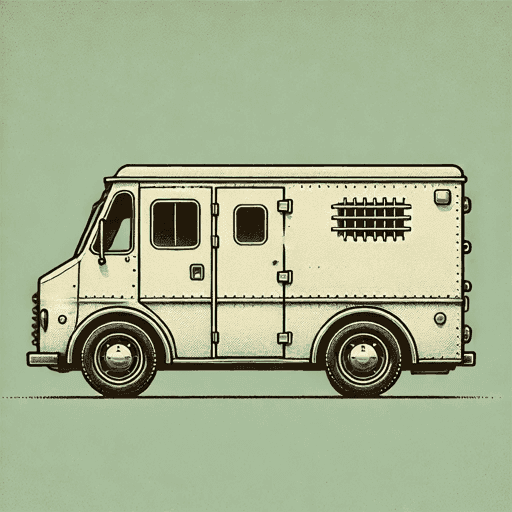
Rogue Lawyer
Rogue Lawyer
A modern alternative to SparkNotes and CliffsNotes, SuperSummary offers high-quality Study Guides with detailed chapter summaries and analysis of major themes, characters, and more.
Summaries & Analyses
Quizzes
NEWReading Tools
Background
Content Warning: This section of the guide includes a discussion of death.
Series Context: The Prequel Story of Sebastian and Partner
Although Rogue Lawyer is a standalone novel, John Grisham published a short story prequel, “Partners” (2016), that provides essential backstory for the novel’s central relationship. The story details the case that brought Sebastian Rudd together with his driver, bodyguard, and only friend, a man known only as “Partner.” In the prequel, Rudd defends Partner, a former MMA fighter and bouncer, against the charge of killing an undercover narcotics officer during a botched sting operation. Despite facing a corrupt police force and a biased justice system, Rudd secures a not-guilty verdict, earning Partner’s unwavering allegiance. The novel alludes to this pivotal event when Rudd explains, “I earned his loyalty when a jury found him not guilty of killing an undercover narcotics officer. We walked out of the courtroom arm in arm and have been inseparable ever since” (5). Understanding this origin story illuminates the depth of their bond in Rogue Lawyer. Partner is more than an employee; his loyalty is absolute because Rudd saved his life, freeing him from a system designed to convict him. This context enriches the reader’s appreciation for their unconventional professional arrangement and the unspoken trust that allows Rudd to navigate the dangerous world he inhabits, knowing Partner is always watching his back.
Social Context: The Militarization of American Police Forces
The novel’s “Warrior Cops” section dramatizes the real-world militarization of American police departments, a trend that accelerated after the 9/11 attacks. Federal initiatives have fueled this phenomenon, most notably the Department of Defense’s 1033 Program, which “allows eligible law enforcement agencies to acquire surplus military equipment at no cost, covering items such as tactical gear, vehicles, weapons, and more” (Commonwealth of Massachusetts. “1033 Program.” Mass.Gov). Consequently, civilian police have access to armored vehicles like MRAPs (Mine-Resistant Ambush Protected vehicles), assault rifles, and combat gear. In a 2015 report, it was noted that “[n]early 80% of the SWAT raids the ACLU studied were conducted to serve search warrants, usually in drug cases” (American Civil Liberties Union. “War Comes Home: ACLU.” ACLU.org, 19 Apr. 2015). Grisham depicts this phenomenon in the botched SWAT raid on the Renfro home, where eight officers in “full combat gear” (108) invade the house of an elderly couple to combat drug trafficking. However, their maneuvers are the result of faulty information, for the Renfros have no involvement in the crime and are merely victims of a stolen IP address. In the raid, however, the police even bring a tank, which Rudd notes “they use whenever possible” (111). Critics of police militarization argue that it fosters a “warrior” mindset, leading to excessive force in routine domestic situations, such as serving warrants (McElrath, Wayne, and Sarah Turberville. “Poisoning Our Police: How the Militarization Mindset Threatens Constitutional Rights and Public Safety | Project on Government Oversight.” Project on Government Oversight, 9 June 2020). The tragic raid on the Renfros, which results in Kitty Renfro’s death, exemplifies this critique. Instead of a simple knock on the door, the police launch a pre-dawn assault on a quiet suburban home, a scenario that mirrors real-life incidents. Grisham uses this context to explore the dangerous consequences of applying military tactics to civilian policing.

Get in-depth, chapter-by-chapter summaries and analysis from our literary experts.
- Grasp challenging concepts with clear, comprehensive explanations
- Revisit key plot points and ideas without rereading the book
- Share impressive insights in classes and book clubs