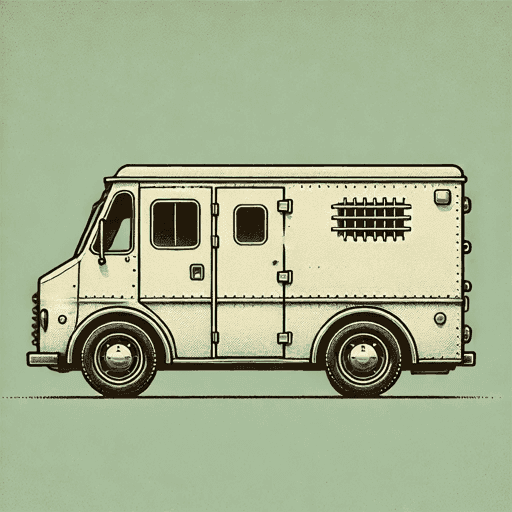
Rogue Lawyer
Rogue Lawyer
A modern alternative to SparkNotes and CliffsNotes, SuperSummary offers high-quality Study Guides with detailed chapter summaries and analysis of major themes, characters, and more.
Summaries & Analyses
Quizzes
NEWReading Tools
Themes
Content Warning: This section of the guide includes a discussion of death, substance use, and graphic violence.
The Perversion of Justice in a Corrupt System
In Rogue Lawyer, the American legal system appears less flawed than openly hostile to the truth. The book portrays “justice” as a pliable idea shaped by political ambition, police mistakes, and a built‑in presumption of guilt that turns a fair trial into a rare accident rather than an intended result. Through Sebastian Rudd’s cases, the narrative shows how the very tools meant to shield the innocent often ensure their conviction, creating a bleak portrait of a system that favors speed and self‑protection above accuracy.
The capital murder trial of Gardy Baker anchors this argument. Faced with a brutal crime and heavy public pressure, the police and prosecutors build a case around an emotionally unsteady teenager whose appearance makes him an easy target. The state has “no physical evidence linking Gardy to the murders. Zero” (9). Instead of investigating Jack Peeley, the real killer and someone who has more of a motive than Gardy, the authorities stitch together a false story supported by fabricated testimony. They rely on Smut, a professional jailhouse informant, after feeding him details so he can claim Gardy confessed. Dan Huver, the prosecutor, pushes this manufactured case because he wants a headline conviction during his reelection campaign. The institutions involved chase a tidy, politically useful resolution that calms public anger rather than the truth.
The judiciary, expected to check this kind of abuse, joins it instead. In the same trial, Judge Kaufman, who is also running for reelection, clears a path for the prosecution at every turn. He rejects all of Rudd’s pretrial motions, including a request to move the case to a community without prejudice. He even allows inflammatory testimony such as a preacher’s comments about Gardy’s supposed satanic interests, a story that only stirs the jury. Rudd remarks that it is “up to Judge Kaufman to deliver” (15) a conviction, which shows how the judge abandons neutrality to enforce the town’s preferred outcome. It is only when Rudd uses unorthodox means to obtain undeniable evidence of Peeley’s guilt that the prosecution and judge must admit there is no case against Gardy.
The perversion of justice in order to cover up monumental mistakes by law enforcement is most stark in the case of Doug Renfro. After a SWAT team raids the wrong house and kills Doug’s wife, Kitty, the police department immediately begins a cover‑up. Rather than admit their mistake, officers smear Doug in the press as a drug trafficker who fired first, then indict him for attempted murder. Rudd notes, “They knew they had made a mistake, but coming clean is simply not in their playbook” (109). Ultimately, this strategy shields the department from liability and protects the “warrior cops” from scrutiny. By recasting the victim as the aggressor, the system shows that its deepest loyalty lies with its own reputation, even when that loyalty destroys an innocent man’s life.
Justifying Unethical Means for Ethical Ends
“Rogue Lawyer” tracks the moral compromises required to resist a corrupt system and argues that, when official channels fail, someone like Sebastian Rudd must use the same unethical tactics his opponents rely on to reach a just outcome. Rudd bribes, intimidates, and illegally obtains evidence. The novel frames these choices as practical steps in a world where people with power ignore the rules. Consequently, illegal methods become the only tools available inside a system that has abandoned its own standards.
Rudd first applies this philosophy in the Gardy Baker case. Convinced that Gardy is innocent and blocked by a court unwilling to pursue the real killer or order DNA testing, Rudd notes, “When the State, with its limitless resources, commences a fraudulent case and cheats at every turn, then cheating is legitimized” (16). So, he turns to crime to gather the evidence the system refuses to touch. He sends his fighter, Tadeo Zapate, to provoke a bar fight with Jack Peeley so he can collect a blood sample. Rudd then adds the stolen blood and a strand of hair he lifted from the evidence file to a package sent to a private lab. Although this step violates legal and ethical rules, it clears Gardy and exposes the true murderer. Rudd’s unethical measures succeed where the legal process fails, showing how sometimes justice can depend on breaking the law.
Rudd also bends the machinery of the courts when he realizes the bench can be as biased as the police. While filing a civil suit for Doug Renfro, he knows that drawing an unfriendly judge would doom the case. He pays Okie Schwin, a court clerk, $3,000 in cash to rig the random assignment. The bribe places the case before Judge Arnie Samson, who has a record of challenging the city’s police department. By altering a system that claims to value impartiality, Rudd tries to counter a tilt he believes already favors the government.
Later, Rudd’s boldest tactic appears after Assistant Police Chief Roy Kemp arranges the kidnapping of Rudd’s son, Starcher. Instead of using this crime for personal retaliation, Rudd uses it for his client. During a settlement meeting for the Renfro case, he hands the mayor and the city attorney an affidavit describing the police‑led kidnapping and warns that he will release it publicly. This threat pushes them to agree to a $2 million settlement, twice the statutory limit. When they label his maneuvers as extortion, Rudd says, “It certainly is, but right now extortion is a few notches down the pole. At the top is murder, followed by kidnapping. You don’t want to start a pissing contest with me” (249). Rudd turns a violation of his family into a tool for Doug Renfro, blending his personal life with his professional code: Any method becomes acceptable if it achieves justice.
The Thin Line Separating Criminals from Enforcers
In Rogue Lawyer, the titles “criminal” and “law enforcer” often collapse into each other. People with badges use violence, coercion, and secrecy much like the criminals they claim to oppose, while figures in the underworld command enough power to challenge the state itself. Grisham builds a world where authority, whether legal or illegal, warps those who hold it, and where the labels of protector and predator lose clear meaning.
Police officers in the novel repeatedly ignore legal procedure and embrace criminal tactics to guard their interests. The “warrior cops” who “launched an assault” (108) on Doug Renfro’s home show what this collapse looks like. After they kill Kitty Renfro during a raid, their first move is concealment. They blame Doug in the press, claim he is a drug trafficker, and indict him for attempted murder. Unlawful killing, conspiracy, and framing an innocent person are actions that mirror an organized crime unit. This pattern intensifies when Assistant Police Chief Roy Kemp orders the kidnapping of Sebastian Rudd’s eight‑year‑old son, Starcher, and uses the child’s disappearance to extract information from Rudd. The department does not simply bend the rules; it behaves like a criminal network.
The criminals in the book command their own form of power, shaping a parallel system that sometimes eclipses the state. Link Scanlon, a violent crime boss on death row, exerts more control than the officers who guard him. With a smuggled phone, he orders bombings targeting the courthouses that convicted him and sparks a deadly riot at Big Wheeler prison. His influence ends with a helicopter escape from the prison roof. Scanlon’s reach inside the state’s most secure space, his ability to disrupt its institutions, and his escape all reveal him as the head of a rival power structure rather than a confined inmate.
Sebastian Rudd stands in the middle of this blurred territory. Working in a moral gray zone, he relies on criminals and their methods to counter the criminality he sees in the police. His closest ally, Partner, is a bodyguard he defended after Partner was charged with killing an undercover officer. To gather evidence, Rudd turns to the fighter Tadeo and later asks Tadeo’s brother Miguel, a gang leader, to pressure Scanlon’s men. Miguel ends up killing the men “as a favor for [Rudd]” (332). A lawyer sworn to uphold the law becomes someone who depends on the street to push back against the state. The novel repeats the idea that labels like “cop” and “criminal” explain little; what matters is how a person uses their power.

Unlock every key theme and why it matters
Get in-depth breakdowns of the book’s main ideas and how they connect and evolve.
- Explore how themes develop throughout the text
- Connect themes to characters, events, and symbols
- Support essays and discussions with thematic evidence