Roses of May
Roses of May
A modern alternative to SparkNotes and CliffsNotes, SuperSummary offers high-quality Study Guides with detailed chapter summaries and analysis of major themes, characters, and more.
Summaries & Analyses
Quizzes
NEWReading Tools
Prologue-Chapter 1Chapter Summaries & Analyses
Content Warning: This section of the guide includes discussion of graphic violence, sexual violence, emotional abuse, disordered eating, mental illness, and cursing.
Prologue Summary
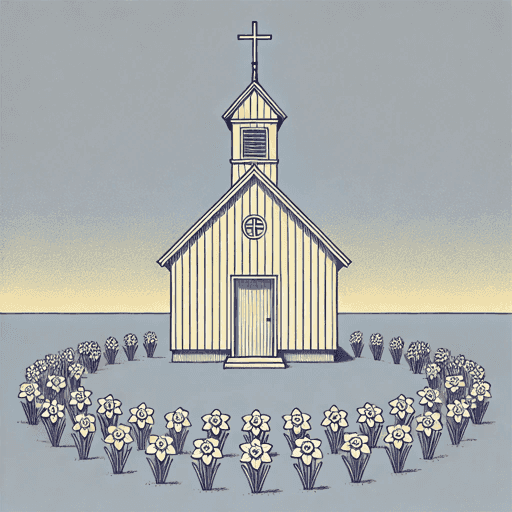
An unnamed narrator addresses a killer in second person, revealing that Darla Jean Carmichael is his first victim, though he does not yet know it. On a spring day, the killer watches Darla Jean walk to church in her white Easter dress. He is obsessed with her innocence and believes she belongs to him. When he sees her hand linked through the arm of a young man carrying a basket of church fundraiser treats, he feels furious and betrayed. Following them to the church, he watches through a window as the couple shares a kiss—Darla Jean’s first. The killer believes this kiss was meant for him and feels she has been sullied and made worthless. He slides down the exterior wall, weeping and shaking, but resolves to save her from herself. After the young man and pastor leave, he enters the church. Darla Jean greets him with a smile that falters as he approaches. The killer attacks her with a knife and kills her, then flees, feeling hurt and betrayed. He leaves her dead on the stone floor, her Easter dress torn and blood-soaked, surrounded by scattered jonquils he had picked for her. A jagged smile is carved across her face. The narrator states she will not be the killer’s last victim.
Chapter 1 Summary: “February”
In February, Special Agent Brandon sits at his desk in Quantico, overwhelmed by paperwork. His teammate Mercedes Ramirez teases him, and their boss Vic Hanoverian maintains his characteristically organized workspace. Ramirez mentions Vic is returning from a deposition related to the “Butterfly Garden” case, an investigation involving young women held captive. Eddison reflects on an unsolved serial killer case represented by colorful folders on his desk. He looks at photos of his long-missing sister Faith and of himself with Priya, whose murdered sister Chavi is one of the unsolved case’s victims. He and Priya bonded over their shared anger after their losses. When Eddison texts Priya a photo, she responds from Colorado, and Vic asks him to say hello to her.
The narrative shifts to Priya exploring Huntington, Colorado, where she and her mother Deshani are living temporarily before moving to Paris. Priya photographs the town’s oddities for Chavi, who was murdered almost five years ago. She reflects on her friendship with the Quantico agents and her past patterns of eating in response to grief. In a Kroger parking lot, she discovers a pavilion where elderly veterans play chess, reminding her of playing with her father. An elderly World War II veteran, Harold “Gunny” Randolph, welcomes her. She also notices another chess player, a man with an unsettlingly forgettable face.
At home, Priya finds three unusual cards from the three agents and realizes Ramirez used glitter glue to cover the butterfly designs on hers. Later, Eddison admits to Priya that one of the survivors from the “Butterfly Garden” case has died by suicide—the third in less than four months. They had warned her parents, but the warning went unheeded. Priya asks to meet the other survivors, but Eddison refuses lightly.
The narrative intercuts with second-person flashbacks to the killer. On a past Easter Sunday, he stalks Zoraida Bourret, a devoted teenage girl whose police officer father was killed in the line of duty. Believing he must preserve her purity, the killer steals her younger sisters’ purses from a church pew, knowing Zoraida will return for them. When she does, he renders her unconscious and then kills her by cutting her throat, arranging her body before the altar with purple-throated white lilies in a halo around her head.
Priya returns to the chess pavilion, where a veteran named Corgi nicknames her “Blue Girl.” She meets other vets including Happy, Yelp, and Pierce, purposely losing games to them. At the Kroger cafe, Landon offers her an unsolicited ride home, which she refuses.
At home, Priya finds a letter forwarded by Vic from Inara Morrissey, a Butterfly Garden survivor who saw Priya’s photo on Eddison’s desk. Inara asks how to cope with pressure to fix herself and whether she’s allowed to stay broken. After discussing with her mother whether moving to Paris means leaving Chavi behind and voicing fear that the killer will strike again in spring, Priya later decides to answer the letter following a nightmare about her sister.
Eddison and Ramirez travel with Vic to North Carolina for the funeral of a Butterfly Garden survivor from the Kobiyashi family who has died by suicide. They meet Vic’s mother, Marlene, and pick up two survivors, Inara and Bliss, who wear red and blue instead of black because black was their only clothing in the Garden. At the sparsely attended funeral, Inara tells Eddison he does not have to be there, helping him realize his attendance is his own choice. Eddison reflects that spring is coming and Chavi’s killer will strike again.
After a nightmare about finding Chavi’s body, Priya writes to Inara recounting that night in detail. She describes how Josephine, her 17-year-old sister Chavi’s best friend and girlfriend, joined the search. She tells Inara their family disintegrated afterward, with their father choosing to leave. She assures Inara they are allowed to be broken and owe the public nothing.
Priya returns to the chess pavilion, where she confides in Gunny that it is a bad day because of nightmares about her sister’s murder. Landon pesters her again at the Kroger cafe, but Joshua intervenes by spilling coffee on him and giving Priya a shuttle service card. At home, Priya sends Eddison a photo of Special Agent Ken, a doll she photographs in various locations.
Working late, Eddison reviews the Church Killer files. Vic joins him, and they re-examine the case from a fresh perspective. They review the facts: 16 victims killed in churches during spring; each associated with a different flower. They identify two victim patterns: 8 victims were raped and beaten to varying degrees, while the other 8 were not raped and were likely choked unconscious before being killed. The two groups also differ in how their clothing was handled, and the agents organize these details on a whiteboard in an effort to identify connections.
The narrative shifts to another killer flashback. He recalls stalking Sasha Wolfson, admiring her laugh and goodness. Fearing she will be corrupted like her older sister, whom he views as wild, he follows her into a church and kills her. Afterward, he places a honeysuckle from her hair crown on his tongue, tasting its sweetness mixed with blood.
Prologue-Chapter 1 Analysis
The opening sequence of The Roses of May establishes a narrative structure that combines the methodical framework of a police procedural with the interiority of a psychological thriller. By alternating between the Quantico FBI headquarters and Priya’s daily life, the novel balances law enforcement logistics with the enduring realities of victimhood. The agents’ professional duties are inextricably linked to the emotional fallout of the preceding Butterfly Garden case; the death of a survivor by suicide highlights how the effects of trauma continue to shape survivors’ lives beyond the point of rescue. The unsolved case folders on Eddison’s desk visually reinforce the persistent burden of these open narratives. This dual focus broadens the novel’s scope beyond the immediate crisis of captivity, directing attention toward the ongoing process through which survivors continue to live with past experiences. Letters between Priya and the survivor Inara Morrissey further blur the boundaries between distinct investigations, shifting emphasis from procedural resolution to the communal and isolating effects of trauma. When Eddison admits to Priya that a third survivor has died by suicide in less than four months, the conversation underscores how rescue alone cannot undo psychological devastation. The agents warned the victim’s parents, but institutional intervention proved insufficient. This early revelation establishes the stakes: within the theme of The Failure of Justice and the Turn to Violence, legal closure does not provide sufficient resolution for survivors attempting to rebuild their lives.
The novel weaves second-person flashbacks into the procedural framework to articulate the theme of Female Innocence as Justification for Violence. The killer’s internal monologues reveal a rigid ideological framework shaped by patriarchal beliefs, dividing women into the pure or the fallen. He operates under the delusion that his victims belong to him, viewing their independence as a personal affront. He murders Darla Jean Carmichael as a punitive measure after witnessing her first kiss, concluding she is “worthless now, just like all those other whores out in the world” (3). The violence of this attack, culminating in the carving of a grotesque smile across her face, demonstrates how female autonomy triggers violent retaliation from a man who perceives himself as the rightful guardian of innocence. Conversely, he targets Zoraida Bourret because she embodies a “good girl” archetype devoted to her family; her murder is performed carefully to permanently suspend her in a state of uncorrupted grace. This rigid moral categorization dictates his methods, and is symbolized by the flowers left at each scene. The scattered jonquils around Darla Jean denote his perceived betrayal, while the halo of white lilies framing Zoraida signifies his twisted reverence. These floral signatures reduce individuals to symbols within the killer’s system of judgment, linking violence to his attempt to impose meaning and control. By leaving distinct botanical markers, he transforms each victim into part of a recurring pattern that reflects his constructed hierarchy of female worth.
Priya’s daily routines illustrate the theme of Living With Grief as Identity. These scenes present grief as something that continues to shape how Priya understands herself over time. This reality manifests physically through Priya’s past struggle with binge eating, presented in the narrative as a coping response through which she attempts to manage overwhelming emotional distress. The narrative also develops the symbol of Priya’s camera, which becomes a psychological shield and a tool for connection. By documenting her surroundings, Priya imposes aesthetic order on a chaotic environment, noting that “[t]he world seems a little less frightening, somehow, if [she] can keep the camera lens between [her] and everything else” (13). She photographs Huntington’s oddities for her deceased sister Chavi, keeping her present within ongoing experience and memory. This practice enables Priya to sustain a sense of connection with Chavi through repeated acts of remembrance, demonstrating how survivors construct personal rituals that incorporate loss into their sense of self over time.
Priya’s search for order extends to her social interactions, particularly through the motif of chess. In the unfamiliar town of Huntington, Priya seeks out a group of military veterans playing in a park pavilion. The game’s structured, rule-bound nature provides a sense of stability within an environment shaped by past violence, and playing allows her to maintain a connection to her absent father, who taught her the game. By joining the veterans, men like Gunny, Corgi, and Pierce, she integrates herself into a community of individuals who also understand the long-term endurance of trauma, creating an unspoken solidarity. Her choice to intentionally lose games establishes a safe, predictable dynamic, reducing pressure and limiting scrutiny from others. She confides in Gunny about her nightmares, receiving straightforward empathy that acknowledges her experience without drawing attention to it. This sanctuary is threatened, however, by the unwelcome attentions of Landon, a man who follows her from the chess pavilion into the Starbucks café. His persistent behavior signals that her carefully constructed safe spaces remain vulnerable to intrusion. When Joshua intervenes by spilling coffee on Landon and offering Priya a shuttle service card, the interaction introduces another stranger into her orbit, adding to the uncertainty she must manage while interacting with others. Her methodical navigation of this new social environment underscores her resilience as she continues to process her recovery, demonstrating how she manages ongoing tension between withdrawal and connection in her interactions with others.

Get in-depth, chapter-by-chapter summaries and analysis from our literary experts.
- Grasp challenging concepts with clear, comprehensive explanations
- Revisit key plot points and ideas without rereading the book
- Share impressive insights in classes and book clubs