Shady Hollow
Shady Hollow
A modern alternative to SparkNotes and CliffsNotes, SuperSummary offers high-quality Study Guides with detailed chapter summaries and analysis of major themes, characters, and more.
Summaries & Analyses
Quizzes
NEWReading Tools
Prologue-Chapter 6Chapter Summaries & Analyses
Content Warning: This section of the guide includes discussion of graphic violence and death.
Prologue Summary
Shady Hollow is a small, peaceful village of woodland creatures deep in the northern forest. A river winds through town, feeding a millpond where Otto Sumpf, a quarrelsome toad, lives alone. At the far end of the pond stands the Von Beaverpelt Sawmill, the community’s economic engine, overseen by its owner, Reginald von Beaverpelt.
Beyond the mill, Shady Hollow’s streets are lined with shops, a police station, a bank, and Nevermore Books. The true social center of town is Joe’s Mug, a coffee shop run by a moose named Joe. Nearby, the Shady Hollow Herald serves as the town’s newspaper, its typical content running to spelling bee champions and peach cobbler recipes. The narrator acknowledges that darker forces are hidden in Shady Hollow, but they are about to come out.
Chapter 1 Summary
At dawn one late August morning, Gladys Honeysuckle, a hummingbird and gossip columnist for the Shady Hollow Herald, flies her usual route into town. As she passes over the millpond, she notices an unfamiliar shape on the water. She circles lower and realizes she is looking at a dead toad floating belly-up: Otto Sumpf.
Though Otto was known for his bad temper, the sight of his body shocks her deeply. Gladys’s first instinct is to tell everyone immediately, but a small inner voice reminds her to contact the police first. She resolves to calm herself at the office before making the call—but upon landing at the Herald, she catches the smell of strong coffee and realizes the fox has beaten her there.
Chapter 2 Summary
Vera Vixen, a news reporter for the Herald, is already at her desk when Gladys arrives in unusual silence. Vera quickly coaxes the truth out of her, and Gladys tearfully recounts finding Otto’s body. Seeing a major story, Vera settles Gladys with sugar water and tissues, then grabs her camera and heads to the pond.
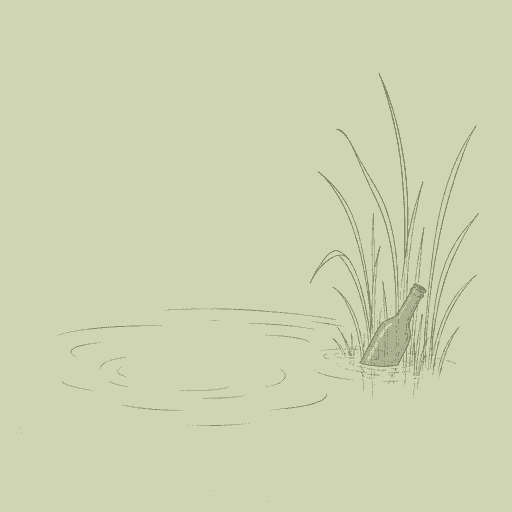
She photographs Otto’s body, the damp paw prints along the bank, and a clean, shiny bottle half-hidden in the reeds. She doubts the death is accidental, noting drily that an amphibian drowning is hard to believe. Returning to the Herald, she overhears Gladys already embellishing the account to colleagues. Vera heads to the police station, but Chief Theodore Meade, a slow-moving black bear, is out. She reports the death to his deputy, Orville Braun, a brown bear notably “sharper” than his boss.
Orville accompanies Vera to the pond, rows out, and retrieves Otto’s body. When it is placed face-down on the mud, Vera sees the evidence of foul play: blood seeping from Otto’s back, and a knife handle protrudes from it. It is clearly a murder—the first killing in Shady Hollow, to Vera’s knowledge. Orville vows to find the killer and takes charge of the scene. Vera, shaken but focused, returns to the newspaper, recognizing both the tragedy and the professional opportunity before her.
Chapter 3 Summary
While the murder unfolds at the pond, business at Joe’s Mug carries on as normal. Joe opens at six and serves his regulars: Howard Chitters, a mouse and chief accountant for the sawmill, who stops in daily for pastries for his demanding boss, von Beaverpelt; and Professor Ambrosius Heidegger, a vegetarian owl who still keeps nocturnal hours and stops by for a bedtime snack. Joe overhears customers mentioning Deputy Orville’s name and senses something is wrong.
Lenore Lee, the raven who runs Nevermore Books, arrives for her usual coffee and scone. She tells Joe she noticed a commotion at the pond and wonders if someone drowned. Joe confesses a deep, inexplicable unease and predicts that the town is on the verge of significant change. Lenore, skeptical that anything could truly disrupt Shady Hollow, leaves for her bookshop—a repurposed grain silo across the street—hoping Vera will come by soon with the full story.
Chapter 4 Summary
Back at the Herald, Vera develops her film and studies the photographs of the crime scene. Editor BW Stone, having already heard from Orville, wants a full-page story by sundown. Vera heads out to gather facts and finds the town buzzing with gossip. At Joe’s Mug, Joe tells her that the day before, Otto had heated arguments with Reginald von Beaverpelt and Ruby Ewing, a sheep. Ruby came into the café that morning late and visibly haggard. Vera then visits Lenore at Nevermore Books. When Vera says there has never been a murder in town, Lenore corrects her, recounting a killing during the sawmill’s construction.
Their conversation is cut short when, out the window, they see Deputy Orville marching a raccoon named Lefty down Main Street in rope cuffs. Lefty loudly protests his innocence. Orville tells Vera he is only questioning Lefty, whose paw prints were found at the scene. He dismisses her journalism as unimportant.
Stung, Vera returns to Lenore’s shop, and the two examine her photographs together. Lenore spots drag marks, suggesting that the body was pushed into the water from the bank. They identify raccoon, beaver, and hoof prints—too many to single out Lefty.
Returning to the crime scene, Lenore retrieves the green bottle from the reeds. Vera identifies it as a cordial bottle from the Bamboo Patch, a restaurant run by a giant panda named Sun Li. The label is clean and intact, suggesting it was left there recently. They place the bottle in Vera’s bag and head to the Bamboo Patch for lunch, intending to question Sun Li.
Chapter 5 Summary
Vera and Lenore arrive at the Bamboo Patch, where owner Sun Li greets them and seats them by a window. When Vera shows him the bottle, Sun Li immediately identifies it as a plum wine he sells. He recalls that the last one went to Ruby Ewing earlier that week. He notes that Ruby worked briefly at the restaurant when it first opened and developed a taste for the wine. Vera also asks whether he knew Otto; Sun Li confirms that Otto had dined there occasionally and had tried to sneak out leftovers to reverse-engineer the sauce recipe.
During the meal, Vera notices the von Beaverpelt daughters—Anastasia (Stasia) and Esmeralda (Esme)—eavesdropping from a nearby table. Lenore launches into a loud, distracting complaint about bookshop customers until the sisters lose interest and prepare to leave. As they pass, Esmeralda dismisses Otto as a crank who had insulted them, implying that no one will miss him. The sisters leave abruptly. Vera muses that Otto had a talent for targeting people’s sore spots.
Chapter 6 Summary
That afternoon, Orville works the case without the chief, who remains absent. He formally identifies the body, gathers evidence, and sends an urgent message by pigeon requesting a medical examiner from a neighboring village. The police station’s two cells are both occupied: one holds Otto’s body, the other holds Lefty, who continues to protest his innocence loudly. Orville privately doubts Lefty killed Otto—his arrest was partly a matter of optics; Orville believes the citizens need to see that something is happening with the case. It also gives him the opportunity to question Lefty about a series of local thefts.
Medical examiner Dr. Solomon Broadhead, an adder, arrives and delivers a startling finding: Otto did not die from the stab wound. The cause of death was poison, the specific type still to be determined. A stunned Orville must reconsider the entire case. He questions Lefty, who insists he is a thief, not a murderer, and had no motive to kill someone with nothing worth stealing. Orville decides to hold him overnight anyway, then goes home exhausted and falls asleep in his armchair.
Meanwhile, Vera races to finish her story at the Herald. BW Stone, gleefully anticipating high sales and a drawn-out trial, hovers over her as the deadline approaches. Vera gets the piece in just as the presses begin to run, then heads home to rest.
Prologue-Chapter 6 Analysis
The novel’s opening establishes the idyllic setting of Shady Hollow and its environs, initially hewing close to cozy mystery conventions with its friendly, beautiful little village. The prologue paints a picture of a “mostly peaceful society” anchored by the economic power of the Von Beaverpelt Sawmill and the communal warmth of Joe’s Mug (3). However, this harmony fractures immediately upon Gladys Honeysuckle’s discovery of Otto Sumpf’s floating corpse. Rather than responding with communal mourning, the townspeople react with frenzied speculation. When Vera Vixen visits Joe’s Mug to gather facts, she finds the café functioning as a hub of morbid curiosity rather than grief, demonstrating that the town’s politeness is a fragile veneer. The sudden presence of murder strips away this civility, exposing a community eager to consume a neighbor’s tragedy as entertainment. By filtering traditional cozy mystery tropes through an anthropomorphic animal society and then subverting them, the narrative explores how easily polite social facades collapse under the pressure of violence, establishing the theme of Exposing the Fragile Veneer of Civility.
These early chapters establish a structural framework that will be consistent throughout the novel, juxtaposing two modes of information dissemination to develop the theme of The Importance of Ethical Investigation. Gladys rapidly embellishes her account of discovering the body, adding dramatic “hints of doom” to captivate her audience at the newspaper office (15), prioritizing the thrill of a scoop over accuracy. Conversely, Vera relies on material evidence and systematic documentation for her investigation. She independently photographs the paw prints and retrieves a pristine green glass bottle from the reeds before alerting authorities. Later, Vera collaborates with bookshop owner Lenore Lee to analyze the crime scene photographs and trace the cordial bottle back to Sun Li’s Bamboo Patch restaurant. Vera’s methodical process frames professional journalism as an intellectual discipline that can counteract community uproar. This dichotomy positions ethical reporting as a corrective force, arguing that truth must be constructed from empirical evidence rather than extrapolated from a rumor mill.
The portrayal of the initial police response critiques institutional complacency, introducing the theme of Seeking Justice in an Inadequate System. Chief Theodore Meade is entirely absent from the crisis, opting to take the police boat on a literal fishing expedition while a murder remains unresolved. His absence creates a vacuum of authority, illustrating law enforcement as physically and intellectually unequipped to handle serious crime. Although Orville is portrayed as “sharp” and motivated, he is unequipped for a crime of this magnitude. To assuage community upset, he immediately arrests Lefty, a marginalized raccoon with a history of petty theft, dismissing Vera’s journalistic findings while he relies on the flimsy presence of Lefty’s tracks (amid many others) at the millpond. Orville’s reactionary arrest, even though he doesn’t even really believe in Lefty’s guilt, exposes how a flawed justice system relies on pre-existing biases and procedure rather than critical analysis. This institutional ineptitude mirrors real-world instances in which marginalized individuals are wrongfully targeted by authorities seeking quick, unexamined resolutions. The complete failure of Shady Hollow’s official police force necessitates Vera’s independent investigation.
The revelation that the murder weapon was poison dramatically alters the trajectory of both Orville and Vera’s investigations, introducing the motif that will drive the rest of the mystery plot. Medical examiner Dr. Solomon Broadhead reveals a startling twist: Otto died from poison, not the visible knife wound, making the stabbing a post-mortem act of misdirection. Concurrently, Vera learns from Joe that Otto had recently argued with Reginald von Beaverpelt over the sawmill he shares the millpond with, the town’s economic heart and physical centerpiece. The use of poison reframes the murder as an act of premeditated deception rather than a sudden outburst of physical rage, complicating discussions about motive. Because poisoning requires careful planning, covert execution, and intimate access, its use mirrors the town’s own hidden animosities, operating beneath a civil, neighborly exterior. Connecting the victim to the town’s wealthiest industrialist via a recent public dispute casts immediate suspicion on the upper echelons of Shady Hollow’s hierarchy. The sawmill, a monument to progress and prosperity, is suddenly linked to a clandestine, toxic conflict. Through this revelation, the narrative solidifies its critique of the social hierarchy of small communities, suggesting that the most profound threats to the community originate from the secretive resentments festering within its elite social structures.

Get in-depth, chapter-by-chapter summaries and analysis from our literary experts.
- Grasp challenging concepts with clear, comprehensive explanations
- Revisit key plot points and ideas without rereading the book
- Share impressive insights in classes and book clubs