Shady Hollow
Shady Hollow
A modern alternative to SparkNotes and CliffsNotes, SuperSummary offers high-quality Study Guides with detailed chapter summaries and analysis of major themes, characters, and more.
Summaries & Analyses
Quizzes
NEWReading Tools
Themes
Content Warning: This section of the guide includes discussion of death.
Exposing the Fragile Veneer of Civility
In the idyllic village of Shady Hollow, where woodland creatures live in a “mostly peaceful society” (3), civility functions as the bedrock of daily life. The town’s social fabric is woven from pleasantries exchanged at Joe’s Mug and the gentle rhythm of small-town news. However, the brutal murder of the curmudgeonly toad Otto Sumpf shatters this peaceful facade and reveals the gossip, prejudice, and long-simmering resentments lurking just beneath the surface. The novel argues that this small-town politeness is a fragile screen for deep-seated social tensions, which erupt quickly and with surprising force when the established order is threatened by violence. The community’s reaction demonstrates that their civility is not an inherent trait but a performance that quickly collapses under pressure.
The first crack in the town’s composure appears with the revelation of their insatiable appetite for gossip. When Gladys Honeysuckle discovers Otto’s body, her initial shock quickly gives way to the thrill of possessing vital news she must “tell everyone!” (10). Her account of the discovery rapidly evolves as she relates it across town, embellished with “hints of doom” that she hadn’t mentioned in her first telling (15). This sets the tone for the town’s response, where morbid curiosity overwhelms grief. Joe’s Mug, the town’s social heart, becomes a hub of frenzied speculation, rather than communal mourning that might be more expected upon the death of a local. The residents indulge in what the narrator calls the “delicious gossip brought by the murder” (27), transforming a tragedy into a grim form of entertainment. This immediate shift from neighborly decorum to excited rumor-mongering reveals how shallow the town’s veneer of respectable solemnity truly is.
The murder also reveals the community’s latent prejudice against outsiders and nonconformists. Rather than considering that the killer could be one of their own, the residents and even law enforcement quickly target those on the social margins. Orville’s first official act on the case is to arrest Lefty, a known petty thief, based on the flimsy evidence of paw prints at the scene, dismissing the raccoon’s protests of prejudice. Simultaneously, suspicion falls upon Sun Li, the panda who runs the Bamboo Patch restaurant, because very little is known about his past. Idle chatter at Joe’s escalates into damaging rumors that he “killed a creature in a fight in his home country and had to flee” (68). The town’s readiness to blame the raccoon and the panda, who are perceived as different, exposes a xenophobic core that is usually masked by polite greetings and neighborly conduct.
The violence also unravels the carefully constructed public images of Shady Hollow’s most prominent citizens. The von Beaverpelt family, who function as the town’s unofficial royalty, see their private dysfunctions laid bare. The investigation uncovers Reginald von Beaverpelt’s long-standing affair with Ruby Ewing and the fact that he was being blackmailed. This hidden scandal culminates in a shocking public spectacle at his wake, where his widow, Edith, confronts Ruby, screaming, “Just what do you think you are doing here, you woolly homewrecker?” (151). This outburst, in a setting that demands the utmost decorum, marks the complete disintegration of civility in Shady Hollow. The raw, private resentments of the town’s leading family spill out for all to see, proving that their respectable public front was as fragile as anyone else’s. The murder doesn’t introduce conflict to Shady Hollow; it simply exposes what was already there by revealing how fragile the veneer of civility truly is.
The Importance of Ethical Investigation
In the wake of Otto Sumpf’s murder, information in Shady Hollow travels along two divergent paths: the swift, distorted current of community gossip and the slow, methodical channel of Vera’s journalistic investigation. The narrative deliberately contrasts the town’s appetite for sensational, often baseless, rumors with reporter Vera Vixen’s painstaking commitment to evidence. By highlighting how idle speculation endangers the innocent and obscures facts, the novel champions the ethics of professional journalism as a more reliable, albeit more challenging, path to truth. It suggests that in a community easily swayed by prejudice and fear, the disciplined search for verifiable facts is essential to achieving a just outcome.
Gossip is immediately presented as a destructive and unreliable force. Gladys Honeysuckle, the hummingbird columnist, embodies this impulse; after finding Otto’s body, she quickly embellishes her story and spreads it, telling Vera before she even goes to the police. This sets a pattern for the town, where speculation hardens into conviction with alarming speed. At Joe’s Mug, unsubstantiated theories about Sun Li’s past escalate into confident declarations that he is a fugitive who killed someone in his home country. These rumors, fueled by xenophobia rather than evidence, demonstrate how gossip poisons the community, creating false narratives that obstruct justice and target innocent individuals. The novel portrays this collective rush to judgment as a dangerous force that actively works against the discovery of truth.
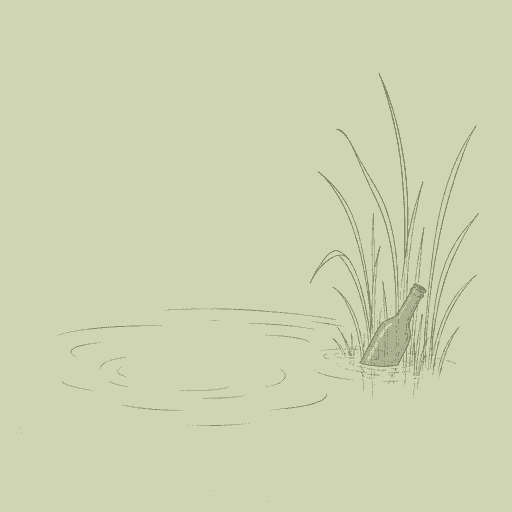
In opposition to the town’s rumor mill stands Vera Vixen and her methodical approach to reporting. From the beginning, her actions are guided by a need for factual evidence. Instead of spreading secondhand news, she goes directly to the crime scene to “record all the details” (12), taking photographs of paw prints and an overlooked wine bottle that proves to be a critical clue. Her process is one of patient accumulation: she interviews witnesses, consults her friend Lenore for historical context, and meticulously compiles her findings in a notebook. This systematic gathering of information contrasts with the town’s uninformed, emotional, and prejudiced conclusions. Vera’s belief that a reporter must “ask the questions others were afraid to ask” positions her brand of journalism as an intellectually rigorous and morally necessary discipline that will look beyond rumor to get at the truth (12).
The novel further asserts journalism’s value by showing its power to hold official institutions accountable. When Deputy Orville arrests Lefty based on little more than his reputation, Vera uses her position at the Shady Hollow Herald to challenge the flawed investigation, directly confronting his unsupported contention that Lefty is responsible. Her published article highlights the discovery of the plum wine bottle, a piece of evidence that the police had ignored. The article explicitly questions why “this avenue of inquiry was scorned by the police” (49), forcing Orville to confront his oversight and take the clue seriously. This moment underscores the novel’s contention that responsible journalism does more than report on events; it can actively shape them, correcting the course of a flawed justice system and pushing it toward a more thorough and evidence-based pursuit of the truth. Ultimately, Vera’s reporting, not the town’s gossip or the police’s initial assumptions, is what solves the case, affirming the vital social role of a diligent and ethical press.
Seeking Justice in an Inadequate System
When murder disrupts the tranquility of Shady Hollow, the ineptness of the town’s official justice system is revealed. The novel critiques institutional complacency by contrasting the inefficacy of the police force with Vera’s determined, if unorthodox, investigation. Through the characters of the indifferent Chief Meade and the initially misguided Deputy Orville, the book argues that in a flawed and inadequate system, the pursuit of true justice depends on the moral courage and personal initiative of individuals.
The inadequacy of Shady Hollow’s law enforcement is embodied by Chief Theodore Meade. He is a bear who seems “singularly uninterested in solving crime when he could be fishing” (xii). In the critical hours after Otto Sumpf’s body is discovered, Meade has taken the police boat on a “literal fishing expedition” (16), leaving his deputy without key resources. His absence is both physical and intellectual; when finally confronted with the gravity of the situation, he panics, confessing, “I don’t know how! I’ve never had to investigate a murder before!” (81). Meade’s abdication of his duty creates a vacuum in which justice is more difficult to pursue. His incompetence and reluctance to take control illustrate the failure of an institution where leadership is unmotivated and unprepared, making it necessary for an outsider to take charge.
Deputy Orville Braun, while more dedicated than his boss, initially represents a different kind of systemic failure: a reliance on procedure over critical thinking. His immediate response to the murder is to arrest Lefty, the town’s resident petty criminal, based on paw prints at the scene, telling Vera to “[l]eave the investigation to the professionals” (31). However, Orville proves capable of growth, illustrating how the system can change in response to need. After Vera’s reporting uncovers evidence he missed, he moves from arrogant dismissal to a grudging but effective collaboration. He eventually invites Vera to compare notes, and together they fill out a chart of suspects and alibis. This evolving partnership suggests that for justice to be achieved, the official system must be willing to look beyond its own limitations and accept the contributions of engaged citizens.
Ultimately, the novel posits that the pursuit of justice is a perilous undertaking, especially when it isn’t adequately supported by the authorities. Vera Vixen operates outside official channels, taking significant risks to uncover the truth. She enters Otto’s home without permission to retrieve his journals, withholding crucial evidence from the police because she has more faith in her own competence. This decision, while ethically questionable, is instrumental in uncovering the killer’s motive. Her investigation culminates in a confrontation with the murderer, and her survival depends entirely on her own wit and courage, not on police protection. This climactic sequence solidifies the novel’s central argument: When institutions fail, the responsibility for justice depends upon individuals willing to stand up for it.

Unlock every key theme and why it matters
Get in-depth breakdowns of the book’s main ideas and how they connect and evolve.
- Explore how themes develop throughout the text
- Connect themes to characters, events, and symbols
- Support essays and discussions with thematic evidence