Shift
A modern alternative to SparkNotes and CliffsNotes, SuperSummary offers high-quality Study Guides with detailed chapter summaries and analysis of major themes, characters, and more.
Summaries & Analyses
Author Insights
Quizzes
NEWReading Tools
Games
Important Quotes
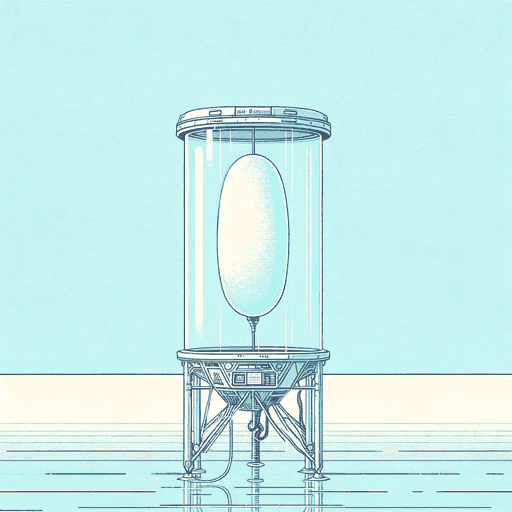
“Troy returned to the living and found himself inside of a tomb. He awoke to a world of confinement, a thick sheet of frosted glass pressed near to his face.”
(Part 1, Prologue, Page 5)
The novel’s opening words are deceiving. They imply that Troy awakens in a coffin and was somehow buried alive—but the narrative later reveals that he woke in a cryopod where he was frozen for more than 60 years. Not only does this deception introduce one of the novel’s main themes, Equal Denial of Truth and Lies, but it places the plot firmly in the science fiction genre because—throughout this novel and the other books in the Silo series—the plot explores unique time frames and life spans.
“‘Because,’ he said. ‘This building I want you to design for me—it’s going to go underground.’”
(Part 1, Chapter 1, Page 20)
The first part of the book centers on Donald Keene’s agreement to design a biotecture building for Senator Paul Thurman that can house up to 10,000 people. This building, Donald is told, is an emergency shelter for workers at a nuclear waste facility, the Containment and Disposal Facility (CAD-FAC), which will likely never be used. However, as the first part of the book cycles between Donald’s timeline and Troy’s, it becomes clear that Donald is the architect who created the silos that feature prominently in the first book of the Silo series, WOOL.
“Whirls of dust and low clouds hung over a field of scattered and mangled debris. A few metal poles bristled from the ground and sagged lifelessly, the tents and flags long vanished. Troy thought of something but couldn’t name it. […] His watering eyes drifted across the scorched hills, the gray slopes rising up toward the dark and menacing clouds. The debris scattered everywhere was rotting away. Next shift, or the one after, and it would all be gone.”
(Part 1, Chapter 2, Page 24)
After awakening for his first shift, Troy goes straight to the cafeteria to look at the screen that shows the world outside. While the scenery is sad and reflects a great catastrophe, Troy subtly reveals that he has faint memories that should have been fully erased by the medication he received in the silo: As Troy views the terrible scene, he recalls that the poles once held flags and tents, foreshadowing a time when his memories return more fully and he recalls the purpose of those flags and tents.
“The Senator hung up abruptly. As Donald returned the phone to its cradle and grabbed his coat, his new monitor remained quietly perched on his desk, watching him blankly.”
(Part 1, Chapter 5, Page 46)
This moment comes after Donald and Mick argue over Donald’s refusal to show Mick his work on Thurman’s project and Thurman’s unexpected phone call reminding Donald that all work must remain confidential. Donald misses the fact that the monitor Anna Thurman—a wireless network expert—installed in his office was on during his argument with Mick. This moment shows that the Senator is spying on Donald, perhaps because he doesn’t fully trust him, and foreshadows Anna’s later using her wireless technology skill to manipulate Donald.
“The Order, he had decided, was more recipe book than operations manual. The shrinks who had written it had accounted for everything, every quirk of human nature. And like the field of psychology, or any field that involved human nature, the parts that made no sense usually served some deeper purpose.”
(Part 1, Chapter 8, Page 58)
This is one of the novel’s first discussions of The Order. Donald’s description of it shows that The Order is designed to make running all the silos foolproof, using psychology to predict what people will do and provide a solution to any problem. However, this discussion also foreshadows a time later when even the psychologist who wrote The Order can’t figure out why some of the silos fall—even when their leaders follow the rules in The Order.
“‘Uh, this shows two thousand spools of fiber optic. I’m pretty sure my plans call for forty spools.’
[...] ‘Son, this is why hammers cost the Pentagon their weight in gold. It’s just government accounting. Just a signature, please.’
‘But that’s fifty times more fiber than we’ll need,’ Donald complained, even as he found himself scribbling his name.”
(Part 1, Chapter 9, Page 69)
This exchange reveals that the truth of what Thurman and his coconspirators had planned was right in front of Donald the whole time he was working on the project, but he failed to see it. Donald believes that he’s building only one underground bunker, but when he’s presented with an invoice for far too much fiber-optic cable, he misses the implication. This is one example that Donald recalls when he begins to put the details of Thurman’s plan together.
“Anything these puppies can stitch, they can unstitch.”
(Part 1, Chapter 13, Page 95)
Thurman talks about the nanobots he uses in 2049 to stay in good health. In his usual way, he presents the truth to Donald in such a way that Donald doesn’t always connect the puzzle pieces and understand what Thurman is telling him. Here, Thurman tells him that the nanobots can be used as weapons but fails to tell him that this technology has been determined too powerful to fight and has inspired a plan to destroy the world in order to reset humanity.
“It was as if his looming birthday were some deadline to beat, and so the sooner he visited his father and departed, the better. But now, in the wash of sights and sounds from his childhood, his dark and angry thoughts melted away. It was home, and Mission hated how good it felt to be there.”
(Part 2, Chapter 26, Page 186)
Mission gives thought to the emotions that overwhelm him when he returns home after dwelling on his driving need to escape the farms and take control of his own fate. These new emotions suggest that Mission’s desire to escape his destiny on the farms isn’t as much about what he wants as about a sense of oppression resulting from a lack of choice. Mission’s thoughts reflect those of other teens who rebel against their parents or the government because they feel they lack control over their lives.
“But Donald—what had he done? He had killed more than a silo full of people; he had drawn the plans that helped end the world.”
(Part 2, Chapter 29, Page 206)
During Donald’s second shift, he remembers the past. This is important not only because it explores the idea that some people in the other silos remember it too— and can cause chaos for those who have complied with the drugs—but also because it foreshadows Donald’s search for answers that his memories can’t provide. In addition, this moment resolves foreshadowing from the previous chapters in which Troy showed expressed much emotion that apparently stemmed from guilt, finally revealing the root of that guilt.
“They were using the radios at high frequencies. We think it started with forty, that maybe their IT head went rogue. They hijacked their antenna and began communicating with the other silos around them, and we couldn’t cut them off. They had taken care of that as well.”
(Part 2, Chapter 31, Page 222)
Anna explains the reasons that 11 of the silos fell, including Silo 40. This situation reveals that the psychologists couldn’t predict every move that the budding silo communities would evolve. Additionally, this information about Silo 40 begins to connect Shift with Juliette’s story, providing background on events to come in Silo 17 and how Juliette manages to contact the other silos without Silo 1’s knowledge.
“The stories Mrs. Crowe made up were straight from the children’s books. There were blue skies and lands of green, animals like dogs and cats but bigger than people. Juvenile stuff. And yet, these fantastic tales of a better place left Mission angry at the world he lived in.”
(Part 2, Chapter 34, Page 239)
Mission’s description of Mrs. Crowe’s stories shows that she either has firsthand memories of the world before the nuclear strike or heard these stories from someone else who remembered. While Mission thinks her stories are childish and fictional, he clearly feels that they represent an existence that’s no longer obtainable, which adds fuel to his anger that he’s expected to be a farmer because his father is one. This illustrates the root of unrest in Silo 18, yet everyone sees Mrs. Crowe as a gentle teacher with a vivid imagination.
“A century of sleep had weakened him, he thought. A century of sleep and the knowledge that Mick and Helen had lived a life together. He felt suddenly angry at Helen for not holding out, for not living alone, for not getting his messages and meeting him over the hill.”
(Part 2, Chapter 39, Page 270)
Donald reflects on learning that his college buddy married his wife and they had two children in the aftermath of the nuclear strike. This information shows Donald the life he would have had if he’d made it to the Tennessee tent before the airstrikes, and it also leads Donald to a truth about Mick and Anna he never suspected. In addition, this information reveals that Helen survived the strike and that her life was good despite being without Donald.
“Donald was verging on the realization that humanity had been thrown to the brink of extinction by insane men in positions of power following one another, each thinking the others knew where they were going.”
(Part 2, Chapter 43, Page 285)
Donald’s assessment of Thurman, Victor, and Erskine’s actions reveals not only his thought process but also the truth behind the creation of WOOL. What seemingly separates Donald from these three men is his belief that they must be “insane” because of the audacity of their actions. However, Donald soon acts in a similar manner—and thinks of his perception as slowly breaking from reality, posing the question of whether Donald is any better than the other three.
“Cam was dead, of that he felt certain. And how many others had suffered the same fate? A twinge of guilt accompanied the sick thought that the fallen would have to be carried up to the farms in plastic bags. A porter would have to do that job, and it wouldn’t be a pretty one.”
(Part 2, Chapter 47, Page 305)
Death is a recurring theme in Mission’s story, beginning with his guilt over his mother’s death sentence because of his very existence and leading to the violence in Silo 18 that comes with the unrest Donald and the others are trying to subdue. This thought not only expresses Mission’s grief over his friend’s death and the work that the events will create but also foreshadows Mission’s own trip up the central stairs in a body bag later in the story. In addition, this moment touches on the idea that every rebellion—both the current small-scale Silo 18 rebellion and the larger-scale search for the right silo community to base the future of humanity upon—involves sacrifice.
“‘Why do you think we hate our fathers? It’s because she makes us hate them. Gives us ideas to break free from them. But this won’t make it better.’ He waved his hand. ‘Not that it matters. What I knew yesterday had me terrified for my life. For all of us. What I know now gives me hope.’”
(Part 2, Chapter 56, Page 348)
Rodny expresses what Thurman taught him: that anarchy won’t help the people in the silos. Donald was right when he recognized that those who remember cause dissension—and that ridding the silos of them will improve community harmony. Rodny has become a good IT head in that he’s willing to follow Thurman’s orders without question, but the right choice for those living in the silos is still debatable.
“There were bits of his past shrouded and hidden from him. There were things like the mark on his neck and the scar on his stomach that he couldn’t remember coming to be. Everyone had their share of these things, parts of their bygone days they couldn’t recall, but Mission more than most. Like his birthday. It drove him crazy that he couldn’t remember when his birthday was. What was so hard about that?”
(Part 2, Chapter 57, Page 353)
After Mrs. Crowe’s death and the end of the Silo 18 rebellion, Mission settles down as a farmer and marries Allie—everything he fought against before because it was a fate outside his control. However, his lack of memory shows that Silo 1 was able to reset Silo 18 by wiping their memories of Mrs. Crowe and returning the community to a cooperative society. This moment is bittersweet because it shows that Mission survived his failed rebellion but that the boy he was as a rebel no longer exists.
“She turned and pulled him down the stairs, toward the thundering approach of something awful, and Jimmy realized at once that he wasn’t in trouble at all. They all were.”
(Part 3, Chapter 59, Page 362)
Even at 16, Jimmy quickly realizes that trouble is coming when he sees the fear on his mother’s face. Howey expertly adds tension to the plot through Jimmy’s story, saving the greatest intensity until the end. While Mission’s experiences were violent, Jimmy’s silo is more broken than Mission’s was, and the violence is much more intense, increasing the narrative tension until the final pages.
“Many years ago, Donald Keene had been elevated by a simple change in title. Power and importance had come in an instant. For all his life, he had been a man to whom few listened. A man with a degree, a string of jobs, a wife, a modest home. And then one night, a computer tallied stacks of ballots and Donald Keene became Congressman Keene. He became one of hundreds with his hand on some tiller—a struggle of hands pushing, pulling, and fitfully steering.
It had happened overnight, and it was happening again.”
(Part 3, Chapter 62, Page 382)
When Donald is mistaken for Thurman, he quickly recognizes the power this mistake grants him. Donald sums up his character well, describing himself as a commoner suddenly in a position of power. This appears to set him apart from Thurman and the others, to make him appear somehow better—but it only foreshadows Donald’s using his power to make decisions similar to those that Thurman and his friends made.
“Donald coughed into his elbow once more, an itch in his throat that he couldn’t quite soothe. He opened one of the folders and reached for his glass. Taking a few gulps of water and beginning to read, he failed to notice the faint stain left behind, the spot of blood in the crook of his elbow.”
(Part 3, Chapter 68, Page 411)
Donald is showing symptoms of lung disease, perhaps cancer. This seems contradictory in light of the nanobots injected into each person when they’re put in the cryopods, suggesting that Donald’s trip outside infected him with bad nanobots—or that whoever switched him with Thurman interrupted the nanobots’ work. Either way, this illness will become an issue for Donald—but not until the next book in the Silo series.
“Did these men see themselves as deck hands on some great ark with a noble purpose? Or were they walking in circles simply because they knew the way?”
(Part 3, Chapter 73, Page 430)
Donald wonders about the men in Silo 1 and their motivations. This is an interesting question to ask when looking at humanity and trying to assess people’s motives. However, the question might also be whether the people in the silos were aware that they were walking in circles simply because they knew the way.
“His heart pounded as it began to come together, a thing he dearly wanted to disbelieve. His phone hadn’t worked properly the day the bombs fell; he hadn’t been able to contact Helen. And then there were all the times before when he couldn’t reach Mick, the nights he and Anna had found themselves alone.
And now they’d been left alone again, in this silo. Mick had changed places with him at the last moment. Donald remembered the conversation in a small apartment. Mick had given him a tour, had taken him down into a room and said to remember him down there, that this was what he wanted.”
(Part 3, Chapter 79, Page 462)
Donald begins to piece together all the lies and truths that Anna, Mick, and Thurman told him before the day of the nuclear strike. While they gave him clear clues, Donald was trusting and allowed himself to be manipulated, never seeing what the people he cared about were doing to him and his wife. This truth is the seed of change in Donald, combining with his new sense of power and inspiring him to act in ways he might not have before.
“All that remained was a poem and the call to be remembered, a mark to prove he’d been there.
I am Solo.”
(Part 3, Chapter 84, Page 483)
Loneliness is a strong theme in Jimmy’s story as he fights for survival in the emptiness of Silo 17. After seven years, this loneliness has become profound. He writes a poem on the board in his classroom, leaving it for someone to find but unaware that someone will find it. This is another connection between Jimmy and Juliette’s story that tightens the strings of narration among the three books.
“‘You did it,’ he said. ‘I saw it. There were blue skies and green grass out there, Charla! I saw it!’”
(Part 3, Chapter 97, Page 547)
After awakening his sister, Donald uses her skills as a drone pilot—which are likely why Thurman invited her to join the project—to investigate the world beyond the silos. While the drones were clearly designed to disintegrate, Donald gets a glimpse at the world that he suspected was outside the silos after his own trip outside. This inserts hope into the plot and foreshadows the moment that Juliette and her community venture outside in the next book.
“His discovery was that evil men arose from evil systems, and that any man had the potential to be perverted. Which was why some systems needed to come to an end.”
(Part 3, Chapter 100, Page 555)
Although Donald resorts to the same behavior that characterized Thurman, Victor, and Erskine’s actions, Donald must separate himself from them to believe that his actions are pure and right. Therefore, he associates Thurman’s actions with the system in which he held power: the US government. Donald seeks to separate from that and help those in the silos do the same by breaking down the system. Donald plans to help Juliette rebel just like Mrs. Crowe did in Silo 18 more than years ago.
“‘Be careful where you go digging.’
There was a pause. Donald glanced over his shoulder at the engineer, who took a sip from his thermos.
‘Oh, we’ll be careful where we dig,’ this Juliette finally answered. ‘I’d hate for you to hear us coming.’”
(Part 3, Epilogue, Page 570)
Donald’s first conversation with Juliette foreshadows many more. He wants to use her to destroy the system and save as many survivors as possible. Donald considers his motives pure and thinks the results will be right rather than correct, just as Erskine said Victor wanted. The defiant Juliette is clearly the right person for the job. However, their choice of words once again denies the truth by placing it in plain view. Juliette is literally digging; she’s digging a tunnel to Silo 18.

Unlock every key quote and its meaning
Get 25 quotes with page numbers and clear analysis to help you reference, write, and discuss with confidence.
- Cite quotes accurately with exact page numbers
- Understand what each quote really means
- Strengthen your analysis in essays or discussions
Related Titles
By Hugh Howey




Featured Collections
737
Appearance Versus Reality
View Collection
1451
Books on Justice & Injustice
View Collection
1179
Challenging Authority
View Collection
1530
Community
View Collection
316
Fantasy
View Collection
519
Fate
View Collection
939
Good & Evil
View Collection
298
Health & Medicine
View Collection
341
Horror, Thrillers, & Suspense
View Collection
824
Loyalty & Betrayal
View Collection
1216
Mortality & Death
View Collection
493
Order & Chaos
View Collection
1179
Power
View Collection
900
Safety & Danger
View Collection
196
Science Fiction & Dystopian Fiction
View Collection
363
The Future
View Collection
870
The Past
View Collection
623
Trust & Doubt
View Collection
1246
Truth & Lies
View Collection
72
TV Shows Based on Books
View Collection
80
YA Horror, Thrillers, & Suspense
View Collection