The Auction
The Auction
A modern alternative to SparkNotes and CliffsNotes, SuperSummary offers high-quality Study Guides with detailed chapter summaries and analysis of major themes, characters, and more.
Summaries & Analyses
Quizzes
NEWReading Tools
Symbols & Motifs
Masks
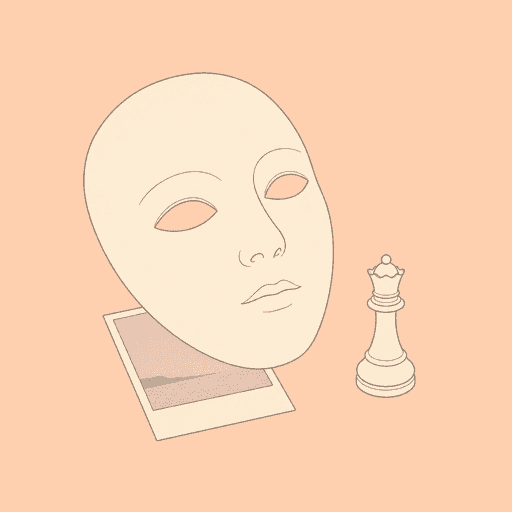
The masks Lincoln Knight wears are a potent symbol of his fractured identity and the psychological armor required for his quest for vengeance. The physical masks, whether the full ceramic covering or the half-mask of black fabric, serve the practical purpose of hiding his disfigured face and his true identity as Killian Wolfe. However, their symbolic function is far more significant. They represent the monstrous persona he has cultivated over 18 years, a deliberate barrier created to separate the brutal actions of his mission from any potential for genuine human connection. He reflects on this persona after attending the auction, thinking that those who call him a monster “would be right” (12). This self-awareness shows that the mask is not just a disguise for others but a tool for himself, allowing him to embody the cold, ruthless predator necessary to dismantle the Brotherhood.
The mask is a physical manifestation of the emotional wall Lincoln builds around himself. By hiding his face and his past, Lincoln constructs his entire relationship with Imogen on a foundation of lies. His genuine feelings for her destabilize his attempts at maintaining a façade of invincibility; when he lets her see him without a mask and when she touches his scars, these moments symbolize him allowing love to penetrate his cold exterior. Ultimately, the mask symbolizes the unsustainable duality of his existence, since he cannot be loved without allowing himself to be fully seen and known, but he cannot deny his ultimately longing for love and intimacy.
Chess
The motif of chess illustrates the power dynamics of the Brotherhood and Lincoln’s calculated mission to destroy it. The organization is structured like a chessboard, with a clear hierarchy of Pawns, Knights, Rooks, and a King. In addition to providing the literal structure of the organization, the motif of chess is often used as a metaphor, revealing how the central conflict is structured as a methodical game. Lincoln does not engage in random violence; instead, he strategically targets and removes pieces from the board (killing members of the Brotherhood), always with the goal of taking the King. This motif elevates the narrative beyond a simple revenge plot, portraying it as a battle of wits and strategy where every move is consequential. Lincoln’s targets are not just men; they are high-value pieces whose removal weakens the entire structure, demonstrating his intellectual and tactical prowess.
The chess motif reaches its thematic peak and becomes a powerful tool of foreshadowing when Imogen, watching Lincoln play, makes a seemingly offhand comment. After making a surprising move, she explains, “A good knight always protects his queen, sir. She’s the most powerful piece in the game” (293). Imogen’s words are innocent, but they set the stage for Lincoln to suspect that the true center of power may be a woman. The “game” Lincoln believes he is playing is far more complex than it appears and that his primary target may have been misidentified all along, casting suspicion on the motivations of female characters like Larissa and even Imogen herself.
The Garden
The overgrown garden at Rooks Blood quickly becomes one of Imogen’s favorite places. It symbolizes her inner healing and growth. Initially, the garden with its “tangled undergrowth and knotted brambles” (37) offers a direct parallel to her own neglected inner life. Her decision to begin tending to it, clearing away the overgrowth to uncover the beauty beneath, mirrors her personal journey of working through past trauma and rediscovering the person she is outside of her conditioning. This act of cultivation is a tangible expression of her path toward autonomy and emotional security as she physically reshapes her environment while simultaneously reshaping her sense of self. The garden mirrors Imogen’s inner state because it is impacted by the passing of time and the change of seasons; Imogen can take specific actions, like clearing out overgrown plants, but she also needs to allow time to pass before true growth and progress can be seen. Likewise, only the months she spends with Lincoln can truly impact her worldview and sense of self. The process can’t be rushed and needs to unfold organically. The symbol of the garden shows that inner growth is a gradual process which benefits from both intentional actions and the passage of time.

Unlock the meaning behind every key symbol & motif
See how recurring imagery, objects, and ideas shape the narrative.
- Explore how the author builds meaning through symbolism
- Understand what symbols & motifs represent in the text
- Connect recurring ideas to themes, characters, and events