The Bomb
The Bomb
A modern alternative to SparkNotes and CliffsNotes, SuperSummary offers high-quality Study Guides with detailed chapter summaries and analysis of major themes, characters, and more.
Summaries & Analyses
Quizzes
NEWReading Tools
Important Quotes
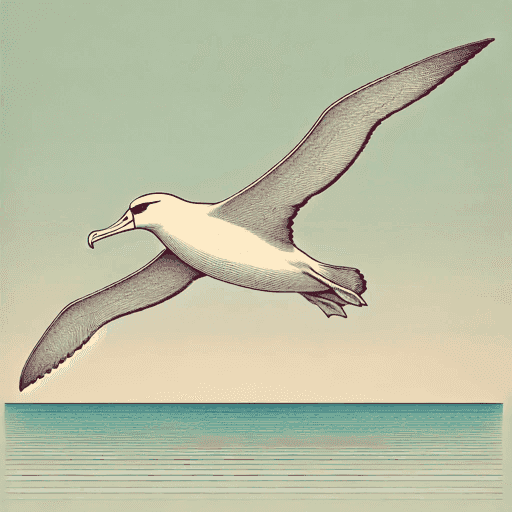
“Something terrible was going to happen to their atoll. The tournefortia tree had warned about it; now the albatross.”
(Prologue, Page v)
This quote from the novel’s opening introduces the recurring sense of warning and uncertainty, immediately establishing a tone of foreboding. It illustrates the Bikinians’ spiritual worldview, where nature communicates with humanity, shaping how they interpret events around them. The warnings from the tree and the bird signal that something harmful is approaching, preparing the reader for the events that follow.
“It is always land and money, everywhere.”
(Part 1, Chapter 2, Page 12)
Spoken by the elder Jonjen in response to a question about the cause of war, this line provides a succinct worldview that cuts through political rhetoric. The statement reflects a belief that conflict is driven by control over land and resources. Jonjen’s perspective grounds the narrative in an understanding of power, helping explain why outside forces take interest in places like Bikini.
“Sorry fell in love with Tara Malolo that day. Her laughter was musical, and even better, she knew about the ailiñkan.”
(Part 1, Chapter 3, Page 20)
This passage reveals Sorry’s adolescent infatuation with his teacher is linked to his fascination with the ailiñkan, or the outside world. His attraction is not merely romantic but intellectual, representing a yearning for knowledge beyond the confines of his atoll. This characterization shows how his curiosity about the outside world begins early and shapes his ambitions, even as that world later brings harm to his island.
“This alu I bring and place upon you As a reminder of us On this joyous occasion.”
(Part 1, Chapter 4, Page 25)
Chanted by Sorry’s mother as she places a seashell necklace on the American commander, these lines show a gesture of trust and welcome. The Bikinians perceive their liberation from the Japanese as a “joyous occasion” and offer a gift of friendship, while the reader understands the Americans will bring a greater catastrophe. The alu, intended as a “reminder” of the Bikinian people, highlights their hope for a positive relationship with the Americans, even though the situation later becomes more harmful for them.
“He was hopeless, Sorry thought. […] He loved his jimman but didn’t want to be like him.”
(Part 1, Chapter 5, Page 35)
This moment of internal reflection captures Sorry’s core conflict between tradition, embodied by his grandfather (jimman) Jonjen, and his desire for the modernity he sees in the Japanese Magazine. Sorry’s perception of Jonjen as “hopeless” reveals a generational divide and a dismissal of ancestral ways in the face of an appealing and unfamiliar outside world. This internal struggle shapes his decisions as he grows and begins to understand the value of his own culture.
“He could not understand how the same people who were having fun in the snow and riding the machine were also fighting a war.”
(Part 1, Chapter 6, Page 44)
Sorry reflects on the contents of a Japanese magazine, his connection to the world beyond Bikini. He is confused by how people can experience ordinary life and still take part in war. This confusion highlights his limited understanding of the outside world and draws attention to the contrast between everyday life and violence, which becomes more real to him as the story develops.
“It glided along without effort and then twisted its head and moaned. He could hear it clearly. […] Something terrible was going to happen to their atoll. The tournefortia tree had warned about it; now the albatross.”
(Part 1, Chapter 7, Page 49)
After spending a night alone, Sorry witnesses an albatross, an event he interprets as a bad omen. This passage reinforces the recurring sense of warning in the narrative, grounded in a Marshallese spiritual worldview. The albatross signals danger in a way that feels meaningful to the islanders, contributing to the growing sense that something is about to change.
“‘And you didn’t kill them?’ Abram was frowning at everybody in disbelief.”
(Part 1, Chapter 9, Page 57)
Upon his return to Bikini, Sorry’s uncle Abram learns that the villagers passively endured the Japanese occupation. Abram’s incredulous question establishes his character as a foil to the more compliant islanders, introducing the idea of a resisting control instead of accepting it. His reaction shows how different experiences shape responses to injustice, which becomes important later in the story.
“He’d carried it all this time, with honor. He gave me my scar. I gave him his. We’re even.”
(Part 1, Chapter 11, Page 72)
After tracking the tiger shark that scarred him years ago, Abram chooses not to kill it. This moment reveals a personal sense of balance based on experience and memory. Abram’s decision shows that some conflicts are not resolved through violence but through acceptance of what has already happened, developing his character beyond a purely reckless figure.
“‘They were just like us,’ his mother said. Like us, he thought. Sitting there innocently like us. Jonjen and Yolo and Lokileni and Abram and Tara Malolo and my mother and myself. Suddenly, all dead. Burned alive or blown to bits.”
(Part 1, Chapter 12, Page 79)
After hearing a radio broadcast about the bombing of Hiroshima, the family struggles to comprehend the event. The declaration, “They were just like us,” humanizes the distant victims and connects their suffering to the Bikinians’ own lives. Sorry’s internal monologue, which lists his family members, shows how he begins to imagine the impact of such destruction on his own community.
“The American flag is flying over the island, just like the Japanese flag flew over it; before that, the German flag; before the Germans, the Spanish flag…They can do anything they want.”
(Part 2, Chapter 1, Page 87)
Speaking to Sorry, Tara provides a concise history of colonial rule over Bikini. The repetition of different flags shows a continuous pattern of outside control over the island. This context highlights the Bikinians’ limited power over their own land and helps explain their situation under American authority.
“You are like the children of Israel, whom the Lord saved from the enemy and then led into the Promised Land. […] We’ve searched the world over and know that Bikini is the best place for the tests.
(Part 2, Chapter 2, Page 94)
Commodore Wyatt uses a biblical allusion to frame the Bikinians’ forced relocation as a divine journey, masking a military objective with religious rhetoric. This comparison is an act of manipulation, designed to appeal to the islanders’ Christian faith. The juxtaposition of this spiritual framing with the logistical statement that Bikini is simply “the best place for the tests” exposes the deceptive nature of the colonial power’s justification.
“We see the Americans as so great and powerful that we can’t say no to them, and the governor used our belief in God against us. I cry for our people, Sorry. They think they’ll be back in a few years and everything will be the same. It won’t, Sorry. It won’t ever be the same.”
(Part 2, Chapter 2, Page 98)
Following the village vote to leave Bikini, Abram explains the psychological and rhetorical forces that led to their acquiescence. His analysis pinpoints the immense power imbalance and the cynical exploitation of the islanders’ faith. The passage employs foreshadowing through the repetition of the phrase “It won’t…be the same,” emphasizes the lasting impact of displacement on their lives.
“They’d always been such gentle people, seldom raising their voices to each other. Now there was dark tension in the air. Villager against villager.”
(Part 2, Chapter 3, Page 104)
This narrative observation follows a heated argument over the decision to move to Rongerik. The author uses direct contrast to show how the external pressure exerted by the American military has fractured the community’s internal cohesion. The shift from a past of gentle unity to a present of “dark tension” illustrates that the damage inflicted by the atomic tests began with the social and psychological destruction of the Bikinian people, long before the bomb’s detonation.
“I plan to paint this canoe and its sail red, then take it into Bikini lagoon just before the bomb is ready to drop. I hope they’ll see me and decide not to drop it. […] ‘One Man Stops the Bomb.’ I hope they’ll tell the world…”
(Part 2, Chapter 4, Page 114)
Abram reveals his plan to Sorry, showing his intention to take a visible stand against the bomb test. This act represents a form of asymmetrical resistance, pitting a small, traditional vessel against the immense technological power of The Atom Bomb. The imagined headline shows how he hopes his actions will reach beyond the island and be recognized more widely.
“Maybe they should sail all the canoes back into Bikini lagoon just before the bomb was to drop? They could say, ‘Stop the bomb or kill us all—men, women, and children. You’ve taken our homeland, now kill us.’ Let the newsmen print that!”
(Part 2, Chapter 6, Page 123)
This internal monologue marks a crucial development in Sorry’s character, showing him internalizing his late uncle’s defiant spirit. The imagined dialogue reflects his attempt to give voice to the villagers’ loss and frustration. This moment shows how he begins to move from observation toward involvement.
“There’s something called fallout, tiny airborne pieces of radioactive debris from the explosions. The tiny pieces can get into the seaweed of the lagoon. A fish nibbles them and can become sick if it nibbles enough. The fish may glow. You eat the fish, you become sick.”
(Part 2, Chapter 8, Page 134)
Dr. Garrison’s clinical explanation translates an abstract scientific concept into a tangible reality for the Bikinians. The use of simple, direct syntax—“You eat the fish, you become sick”—emphasizes the immediate and unavoidable impact of the tests on the Bikinians’ survival.
“The scene of that fateful February day was reenacted several times, to be used for navy public relations purposes. Sorry heard Azakel tell everyone to smile. He noticed that only a few people did.”
(Part 2, Chapter 10, Page 144)
This scene shows how the relocation is presented in a controlled way for public purposes. The instruction to “smile,” contrasted with the villagers’ limited response, reveals a difference between what is shown and what is actually felt. The narration draws attention to how the situation is being shaped for others to see, rather than reflecting the villagers’ experience.
“As she and Sorry took a last look around the place where their dwelling had been, she said to Sorry, ‘I’ve been thinking about Leilang and where to leave her.’ […] ‘I want something of myself to stay here. Maybe she can watch over our land until we return.’”
(Part 2, Chapter 11, Page 148)
Lokileni’s decision to leave her rag doll is a personal way of staying connected to the land she is leaving behind. The doll acts as a proxy, a guardian spirit tasked with watching over their abandoned homeland, embodying the Bikinians’ deep spiritual connection to their land. This gesture conveys the human need to maintain a link to one’s roots and represents a quiet form of resistance against erasure.
“Dr. Garrison looked slowly around the island, then finally back at Tara. ‘No one knows. Maybe never,’ he said with sadness. […] Then, as they walked toward the LST, Tara said to Sorry, ‘Tell no one. There must be hope.’”
(Part 2, Chapter 11, Page 150)
This exchange reveals the critical truth that the Americans’ promise of a temporary relocation is false. Dr. Garrison’s admission shatters the illusion of benevolence, while Tara’s reaction shows her concern about how this knowledge might affect the others. Her instruction to remain silent reflects the need to protect the community’s sense of hope during a difficult transition.
“Everything bad that they’d heard about the atoll now seemed to be true. The palms were older, and many weren’t productive. […] Even the coconut husk fibers weren’t strong enough to make good sennit. […] Maybe Grandmother Yolo was right. Perhaps the ekejab, the evil Libokra, did still lurk in the lagoon with the stonefish and hover over the lagoon at night.”
(Part 2, Chapter 12, Page 157)
This passage contrasts the Americans’ false promise of a “better island” with the harsh reality of Rongerik, exposing the deceptive nature of their assurances. The details about the environment highlight the challenges the Bikinians face in sustaining their way of life. The reference to Libokra connects these difficulties to their spiritual understanding of the world, reflecting how they interpret their situation.
“‘They have Hawaiian disease,’ she said to Sorry. ‘All they see are the palm trees and the lagoon. They hear guitar music that isn’t here. They look around and say, ‘Not a bad place to live,’ and fly back to Bikini with their portable typewriters and suntan oil.’”
(Part 2, Chapter 13, Pages 160-161)
Tara’s metaphor of “Hawaiian disease” critiques the superficial, romanticized colonial gaze of the American journalists. This perspective, symbolized by “suntan oil” and “portable typewriters,” willfully ignores the Bikinians’ suffering and instead manufactures a convenient narrative of placid natives. The details she mentions show how an incomplete view of a place can lead to misunderstanding and misrepresentation.
“Tara broke the trance. ‘We’re simply thumbing our noses at the giant.’ She put her thumb up to her nose, wiggled her fingers, and drew needed laughter.”
(Part 2, Chapter 14, Page 167)
This moment shows how the Bikinians understand their act of resistance. Tara’s gesture and comment frame their actions as a way of expressing defiance despite the imbalance of power. The scene captures how they maintain dignity and unity in a situation they cannot control.
“They were home—but they weren’t home, because this wasn’t home to them anymore, wasn’t the lagoon that Sorry had grown up in. It was a foreign water now under a foreign flag. […] The beautiful lagoon had turned hostile, its outriggers replaced by warships.”
(Part 2, Chapter 16, Page 175)
This passage describes how the lagoon has changed in meaning for the Bikinians. What was once familiar and central to their lives is now associated with outside control and military presence. The description shows how displacement can alter a person’s relationship with their own home.
“The adult children and grandchildren of the relocated Bikinians are still to be found in the Marshalls […] in Hawaii and California; and some in Nevada. A few of the older people still dream of the Bikini they knew as children. They have a word for it—lamoren. Ancestral land.”
(Epilogue, Page 195)
The epilogue’s final sentences shift from narrative to a factual, elegiac tone to summarize the permanent legacy of the bomb tests. The geographic listing of the diaspora emphasizes the scattering of a once-unified people. By concluding with the Marshallese word lamoren, the author gives a name to the lasting importance of ancestral land in their identity and memory.

Unlock every key quote and its meaning
Get 25 quotes with page numbers and clear analysis to help you reference, write, and discuss with confidence.
- Cite quotes accurately with exact page numbers
- Understand what each quote really means
- Strengthen your analysis in essays or discussions