The Bomb
The Bomb
A modern alternative to SparkNotes and CliffsNotes, SuperSummary offers high-quality Study Guides with detailed chapter summaries and analysis of major themes, characters, and more.
Summaries & Analyses
Quizzes
NEWReading Tools
Summary and Study Guide
Overview
Theodore Taylor’s 1995 young adult historical novel, The Bomb, follows Sorry Rinamu, a teenage boy living a traditional life on the remote Bikini Atoll in the Marshall Islands during and after World War II. American forces take control of the region and later designate the atoll as a site for atomic bomb testing, forcing the islanders to relocate. As Sorry comes to understand the nature and consequences of these developments, he resolves to stop the destruction of his homeland. The novel explores the themes of The Illusion of Benevolent Colonial Rule, The Devastating Human Cost of Scientific Militarism, and The Moral Imperative of Resistance Against Injustice.
The novel is informed by the author’s personal experiences. Taylor, a widely read author known for acclaimed books like The Cay, served as a U.S. naval officer at Bikini Atoll in 1946 and was an eyewitness to the forced relocation of the Bikinian people, which he later described as a “Trail of Tears” (198). This firsthand account grounds the narrative in a specific historical context. Upon its release, The Bomb received recognition, earning designations as an American Library Association Best Book for Young Adults and a Notable Children’s Trade Book in the Field of Social Studies.
This guide is based on the 2007 Harcourt, Inc. paperback edition.
Content Warning: The source material and this guide feature depictions of racism, sexual violence and/or harassment, child death, death by suicide, animal cruelty and/or death, graphic violence, and illness or death.
Plot Summary
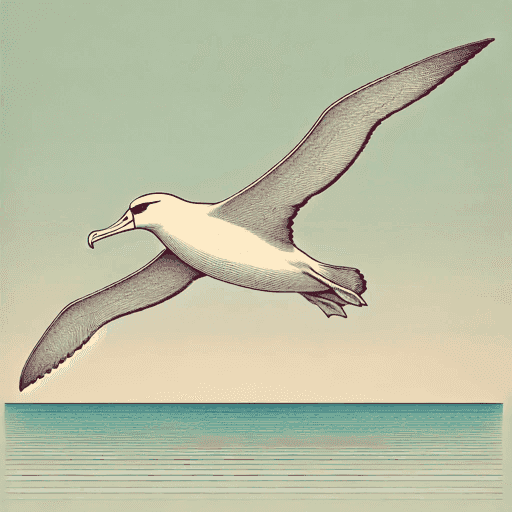
Set in the Marshall Islands during and after World War II, the story follows Sorry Rinamu, a teenage boy living on Bikini Atoll, a ring of 26 coral islands enclosing a lagoon roughly 2,200 miles southwest of Hawaii. In a brief prologue, Sorry awakens at dawn on Nantil, an uninhabited island, and watches a lone Laysan albatross glide past, moaning. His grandfather Jonjen once said an albatross moaned near Bikini shortly before a devastating typhoon. Sorry believes the bird carries a warning that something terrible will happen to their atoll.
The main narrative opens in late March 1944, when eight low-flying American aircraft roars over the island, terrifying the villagers before Jonjen identifies them by their white-star markings and the villagers erupt in joy. Bikini has been under Japanese military occupation since 1942, its people subjected to demands for food and threats of violence. Three days later, US marines land before dawn. The Japanese garrison has killed themselves rather than surrender, and the atoll is liberated. The villagers hold a torchlit church service of thanksgiving, singing “Amazing Grace.” Among the Japanese supplies, Sorry claims a thick magazine filled with photographs of the outside world.
The magazine becomes Sorry’s prized possession, feeding his hunger for the ailiñkan, the world beyond the lagoon. Meanwhile, he reluctantly accepts his new role as family alab, or representative on the village council, a responsibility that falls to him as the eldest male upon turning 14. His father, Badina Rinamu, died four years earlier under mysterious circumstances while spearfishing, and Jonjen has served as acting head. Sorry compromises by serving jointly with Jonjen, voting as one. Earlier, in November 1941, Tara Malolo, the village teacher, arrives on Bikini. She is a 24-year-old woman from Rongelap trained at a missionary college. She brings books and a world atlas, teaching geography and history. Sorry falls in love with her that first day. Less than two weeks later, Japan attacks Pearl Harbor.
To mark his coming of age, Sorry sails alone to Nantil for a night of solitude and reflection. At dawn, the lone albatross flies past and moans, repeating the moment described in the prologue. Sorry connects the omen to a warning his grandmother Yolo recently heard from the tournefortia, a gnarled barrier-beach shrub she claims speaks at night. No typhoon arrives that season, and the warning does not come true.
Months later, Sorry’s uncle Abram Makaoliej, his mother’s brother, sails unexpectedly into the lagoon in a stolen outrigger from Eniwetok. Abram, 32 and charismatic, has jumped an American merchant ship. He speaks English, plays guitar, and draws the attention of the villagers. Tara watches him with particular interest. Abram is scornful that the villagers did not resist the Japanese and warns Sorry that the Americans may never return the islands. He takes Sorry shark hunting off the barrier reef, seeking the tiger shark that scarred him 15 years earlier. They find the massive shark with Abram’s old spearhead still embedded in its back, but Abram lowers the harpoon, telling Sorry the shark carried the wound with honor and they are even. Sorry’s mother privately reveals she suspects Abram has come home to die, noting the pills he carries.
Abram repairs the Japanese radio and becomes the village’s nightly broadcaster, translating Armed Forces Network reports into Marshallese. In August 1945, he relays the atomic bombings of Hiroshima and Nagasaki. The villagers struggle to comprehend the devastation. On August 14, Abram announces Japan’s surrender.
In early February 1946, the USS Sumner arrives in the lagoon and begins surveying without explanation. Soon after, Commodore Wyatt, the military governor of the Marshalls, arrives by seaplane with the paramount chief Jeimata and an interpreter to announce that Bikini has been chosen for atomic bomb tests. Abram immediately shouts “No!” and protests in both languages, warning that the bomb will poison their land. The governor invokes the Bible, comparing the Bikinians to the children of Israel led to the Promised Land. Tara argues that they do not have to surrender their homeland. A vote among the 11 families yields nine in favor of moving; only Sorry and Jonjen, voting together, and one other family vote against. Sorry recalls the moaning albatross and understands that the omen referred to this event.
Chief Juda and a small party fly to survey replacement islands and choose Rongerik, an uninhabited atoll 120 miles east with a troubled reputation tied to Libokra, an evil spirit said to have poisoned its lagoon. Abram then reveals a secret plan to Sorry: He intends to paint the outrigger and its sail bright red, sail back into Bikini lagoon before the bomb drop, and position himself where the bomber crew will see him in an attempt to stop the test. He hopes the publicity will force the navy to find another test site. But moments after sharing this plan, Abram collapses from a severe chest pain attack and dies on the beach. At the graveside service, Sorry silently resolves to carry out Abram’s plan himself.
Sorry confides in Tara, who is horrified. She reveals that she and Abram were in love and insists the plan is dangerous. Sorry will not be dissuaded. Meanwhile, Dr. John Garrison, a Smithsonian scientist, arrives to collect wildlife specimens for radiation studies. Sorry and his younger sister Lokileni become his helpers. Dr. Garrison explains radiation and fallout as invisible poison entering living things through contaminated food and water. Sorry quietly gathers information for his plan.
Newsreel teams arrive to film the departure, staging scenes to suggest the Bikinians approve of the tests. During the final loading, Grandmother Yolo disappears; she has walked into the ocean rather than leave her homeland. Lokileni props her childhood rag doll, Leilang, against a dwelling upright as a symbolic guardian of their land. Dr. Garrison privately admits to Tara and Sorry that they may never return; Tara tells Sorry to keep this secret so hope can survive. As the ship pulls away, Jonjen begins singing “O God, our help in ages past” (151), and Bikini disappears behind them.
Rongerik proves difficult to sustain life: Fish are scarce, coconuts are small, and poisonous stonefish infest the lagoon. In mid-June, Sorry begins painting the outrigger red and announces his plan to the village. His mother objects, but Tara declares she will go with him, and Jonjen says he will go to pray. Some villagers begin to support the plan.
On June 28, the three depart in a ceremony following the islanders’ warrior tradition, wearing leis and flower headbands as villagers line a path of red hibiscus to the water. They sail 120 miles under cloud cover and reach Lomlik, inside Bikini’s atoll, by sundown on June 30. The lagoon is filled with warship silhouettes. Around two in the morning, they raise the red sail and push off into the dark lagoon.
At dawn on July 1, 1946, they position the canoe north of the target battleship USS Nevada. When they hear the bomber arrive overhead, they raise the red sail. Tara flashes a polished tin lid toward the sky while Jonjen prays, clutching his Bible. In the final moments, Sorry recognizes that the pilots are focused on the Nevada rather than the canoe.
The bomb detonates with a blinding flash. A violent red fireball rises from the target fleet, growing into an enormous cauliflower-shaped cloud. A searing heat wave catches the sail and hurls the canoe across the water. The story then shifts to an epilogue without confirming the immediate fate of the three characters.
The epilogue details the historical aftermath. By mid-1947, Rongerik’s food supply is so depleted that the villagers eat palm hearts. The navy evacuates them to Kwajalein, and they eventually resettle on Kili, a small island 450 miles away with no lagoon. In 1969, the U.S. government declares Bikini safe, but returning families are evacuated again when doctors discover Cesium-137 contamination. As of the book’s 1995 publication, the island remains poisoned. The descendants of the displaced Bikinians, numbering over 600, are scattered across the Marshall Islands, Hawaii, and the mainland United States, continuing to live away from Bikini while hoping to return.

Get in-depth, chapter-by-chapter summaries and analysis from our literary experts.
- Grasp challenging concepts with clear, comprehensive explanations
- Revisit key plot points and ideas without rereading the book
- Share impressive insights in classes and book clubs