The Great Fire
The Great Fire
A modern alternative to SparkNotes and CliffsNotes, SuperSummary offers high-quality Study Guides with detailed chapter summaries and analysis of major themes, characters, and more.
Summaries & Analyses
Quizzes
NEWReading Tools
Themes
Content Warning: This section of the guide includes discussion of racism.
Urban Growth and the Failure of Chicago’s Infrastructure
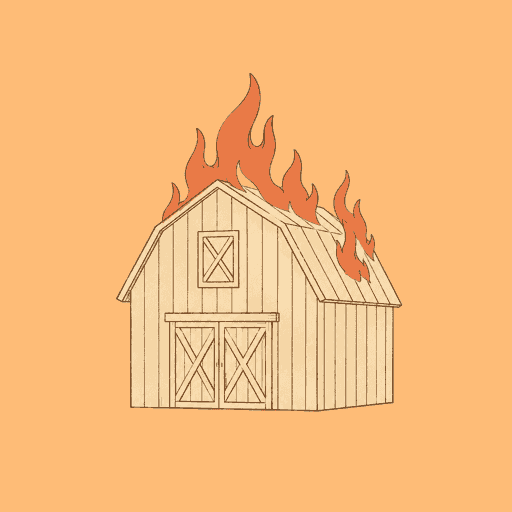
In The Great Fire, Murphy argues that 19th-century Chicago’s celebrated progress masked a city constructed so rapidly and carelessly that its buildings, streets, and emergency systems left it highly vulnerable to fire. The city’s identity, rooted in its rapid expansion and architectural grandeur, fostered a civic confidence that overlooked serious infrastructural weaknesses. This pride is evident in the flammable materials woven into its urban fabric, the critical failures within its emergency infrastructure, and the widespread belief that Chicago’s modern development made the city secure. Murphy presents the fire as the result of dangerous construction practices, weak infrastructure, and civic complacency in a city that prioritized rapid growth and appearance over long-term safety.
The most glaring vulnerability was Chicago’s reliance on wood. The city was, as Murphy describes, “a city ready to burn” (18). Roughly two-thirds of its 59,500 buildings were constructed entirely of wood. Even the more impressive structures proclaimed to be “fireproof” concealed wooden frames and floors behind stone facades and used flammable tar or shingle roofs. Architectural ornaments were carved from wood and painted to imitate stone, and stately churches featured wooden steeples clad in metal. This combustible web extended to the ground itself, with over 55 miles of pine-block streets and 600 miles of wooden sidewalks connecting every district. This network, Murphy notes, bound the city “in a highly combustible knot” (19), allowing fire to spread rapidly from poorer neighborhoods into the city’s wealthiest districts and commercial centers.
This physical fragility was compounded by serious failures within the city’s emergency infrastructure. The fire-alarm system, considered modern and efficient, proved susceptible to human error at the worst possible moment. Watchman Mathias Schaffer’s mistaken identification of the fire’s location, followed by his assistant William J. Brown’s stubborn refusal to send a corrected signal, dispatched fire companies on a “wild-goose chase” and delayed the response when containment was still possible (30). The most devastating failure, however, was the Chicago Waterworks. The machinery that supplied water to the entire city was housed beneath a wooden roof, leaving the system vulnerable to the very disaster it was designed to combat. When the waterworks burned, the city’s primary defense against the fire was eliminated. This single failure left countless buildings without protection, including structures considered fireproof that depended on a steady water supply to extinguish embers landing on their roofs.
The city’s material and infrastructural flaws were ultimately connected to a widespread civic confidence in Chicago’s rapid growth and modern development. Chicago’s leaders and citizens alike expressed strong faith in the city’s progress and construction practices. They pointed with pride to magnificent buildings like the Tribune building, which was lauded as “one of the most absolutely fireproof buildings ever erected” (73). Its protections became ineffective once the water supply failed, and the building was eventually destroyed by the fire. This confidence contributed to a broader sense of complacency. Murphy’s account suggests that Chicago’s rapid expansion and confidence in its infrastructure left the city unprepared for a disaster of this scale.
Disaster Exposes and Deepens Class Divides
While the Great Fire of 1871 is often remembered as a unifying tragedy, Murphy’s account reveals a more complicated reality: The disaster exposed existing class divisions and intensified them during the rebuilding process. The initial chaos seemed to level social hierarchies, as panic and desperation afflicted rich and poor alike. This temporary sense of shared suffering quickly faded in the aftermath of the fire. Chicago’s wealthier and more influential residents played a major role in shaping public discussions about the disaster and the city’s recovery. Poor and immigrant communities were frequently blamed for disorder and destruction, while rebuilding policies often placed heavier burdens on working-class residents. The Great Fire thus demonstrates how a city’s response to catastrophe can leave existing social inequalities more firmly in place.
The fire’s immediate onslaught affected residents across social classes, challenging assumptions about upper-class composure and control during crises. Alexander Frear, a visitor from New York, expected to see an orderly retreat among the city’s “better class” but was instead shocked by the reality. He witnessed mansions being emptied with “the greatest disorder and the greatest excitement,” observing “a mob of men and women, all screaming and shouting” (69). This scene of raw panic directly contradicted the prejudiced notion that only the poor and immigrant classes would succumb to chaos. While reporter Joseph E. Chamberlin documented the terror among the “wretched female inhabitants” of the poorer West Side (51), Frear’s testimony reveals that fear was experienced across social boundaries, showing that wealth and social standing offered no immunity to the chaos and fear caused by the fire.
Once the flames subsided, however, wealthier and more influential residents played an important role in shaping public accounts of the disaster and the city’s recovery. Many public narratives emphasized order and resilience, while reports of disorder were often associated with poorer communities. Horace White, the influential editor of the Chicago Tribune, offered a sanitized version of the evacuation, claiming there was “no panic, no frenzy, no boisterousness” and that “everybody was good-natured and polite” (75). Murphy juxtaposes this with the pandemonium described by Chamberlin and Frear, suggesting that White’s account helped project an image of stability and confidence to outside observers and potential investors. In the aftermath of the fire, Catherine O’Leary, a working-class Irish immigrant, became a central target of public blame. The press unfairly portrayed her and her neighborhood as a den of “blear-eyed, drunken, and diseased wretches” (134), using anti-immigrant stereotypes that shifted attention away from the city’s unsafe construction practices and infrastructural weaknesses.
The rebuilding process further entrenched these class divisions, as rebuilding policies often favored wealthier residents and businesses. City officials proposed strict “antifire” building regulations that required the use of expensive brick or stone, materials far “beyond the means of poorer citizens” (135). Without insurance or access to loans, working-class families who lost their wooden homes were effectively priced out of the city’s core. They were eventually permitted to rebuild with wood, but only outside an expanded commercial district. Murphy highlights the irony that the fire came to be seen as beneficial for classifying real estate, a process that pushed many poorer residents away from the city’s valuable commercial center. In the end, the new Chicago rose from the ashes as a city with even sharper social and economic divisions than before.
Eyewitness Accounts and the Making of Chicago Fire Myths
In The Great Fire, Murphy examines how eyewitness testimony, newspaper accounts, and later retellings shaped public understanding of the disaster. Murphy presents differing accounts from survivors, reporters, and civic leaders to show how understandings of the fire varied across individuals and social groups. Some accounts emphasized panic, confusion, and disorder, while others highlighted calmness, resilience, and civic unity during the disaster and its aftermath. By placing these perspectives alongside one another, Murphy demonstrates that historical narratives are often shaped by selective reporting and personal interpretation. The book also shows how certain versions of events became more widely accepted over time, especially in discussions about the city’s recovery, public reputation, and responsibility for the fire.
The core of Murphy’s method lies in presenting different eyewitness accounts without fully reconciling them. One clear example appears in descriptions of citizen behavior during the evacuation. Chamberlin described a chaotic “torrent of humanity pouring over the bridge” fleeing across the Randolph Street Bridge (62), a scene of shoving, collisions, and panicked desperation. Frear likewise witnessed “a mob of men and women, all screaming and shouting,” and a jam where people “struck and clawed each other” (69). Their reports paint a picture of widespread panic and disorder. In contrast, White insisted, “There was no panic, no frenzy, no boisterousness” (75). By presenting these contrasting accounts, Murphy highlights how individual experiences, social position, and personal priorities shaped descriptions of the disaster. The contrast between these accounts also encourages readers to consider how historical events are interpreted and remembered.
Some public accounts of the fire emphasized order, resilience, and rapid recovery in the aftermath of the disaster. As Murphy explains in his chapter “Myth and Reality,” prominent figures often downplayed the extent of the chaos. Editorials appeared claiming that there had been “little or no rioting or looting” (134), despite eyewitness accounts describing widespread plundering. Newspaper coverage and civic discussions frequently highlighted Chicago’s strength and ability to rebuild quickly after the fire. The press predicted that the city would become “a better city as well as a greater one” (121). These optimistic accounts helped shape a public image of Chicago as resilient and forward looking, while placing less emphasis on the fear, disorder, and destruction described in many eyewitness testimonies.
As stories about the fire spread, public blame often focused on immigrant and working-class communities. Catherine O’Leary, an Irish woman, was relentlessly and falsely blamed for starting the fire, a rumor that the press cemented into “established fact” despite an official inquiry that found no evidence. Similarly, the fire department was widely condemned as “drunken” and incompetent, even though many firefighters were exhausted after fighting another major blaze the previous night. By focusing blame on a poor immigrant and a working-class city department, many public accounts placed less emphasis on the unsafe construction practices, weak infrastructure, and rapid urban growth that had left Chicago highly vulnerable to fire. Murphy’s work shows how repeated rumors and selective reporting influenced public understanding of the Great Fire and its causes.

Unlock every key theme and why it matters
Get in-depth breakdowns of the book’s main ideas and how they connect and evolve.
- Explore how themes develop throughout the text
- Connect themes to characters, events, and symbols
- Support essays and discussions with thematic evidence