The Lion & the Deathless Dark
A modern alternative to SparkNotes and CliffsNotes, SuperSummary offers high-quality Study Guides with detailed chapter summaries and analysis of major themes, characters, and more.
Summaries & Analyses
Quizzes
NEWReading Tools
Symbols & Motifs
Content Warning: This section of the guide includes discussion of graphic violence, pregnancy loss, and death.
Zefiah (The Blade of Retribution)
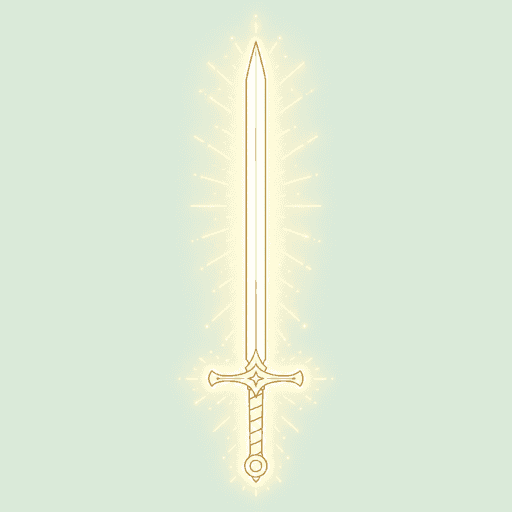
Zefiah is both a character and a symbol representing divine will, the burden of a predetermined fate, and Kyrene’s complicated relationship with her own power. As a sentient, god-forged weapon, Zefiah bestows superhuman strength upon Kyrene, but this gift comes at a price. The pact binds Kyrene to a destiny she did not choose, forcing her into servitude and promising an inescapable end. As Zefiah explains on the night they meet, “Death shall not touch you while you are my wielder, until the day I offer it to you by my blade” (2). This vow establishes Zefiah as the ultimate symbol of The Struggle for Autonomy Against Predetermined Roles, as the life she grants Kyrene is defined by the whims of the goddess Shiket and will end at the hand of her closest companion.
Throughout the novel, Zefiah’s judgmental commentary serves as the voice of the very divine system Kyrene resents. Her eventual shattering at Nyaxia’s hands is a key moment, symbolizing the destruction of Kyrene’s prescribed identity as the vessel of the gods’ will. Left with only broken shards of her blade, Kyrene is literally stripped of the power that defined her for a decade. This forces her to rely on her own ingenuity, rage, and relationships to survive. By the end of the novel, Kyrene’s transformation from a divine warrior to a self-made deliverer of justice is underscored when, as a Turned vampire, her telepathic connection to the holy blade is severed.
Blood
The pervasive motif of blood serves as the fundamental currency of life, death, and power in the novel. A constant reminder of the theme of Survival at the Expense of Innocence, its presence dictates the roles of predator and prey. For humans, blood is a fatal liability; its scent attracts the soulless and vampires, forcing the characters into monstrous moral choices. For example, The Vindica Ultis’s decision to deny Kyrene help or shelter as she experiences a pregnancy loss is based on the knowledge that her blood will attract predators. Despite her fury at this callousness, Kyrene later echoes this choice when she fails to free the cannibalized prisoners for the same reason.
For vampires, blood is sustenance, but for the Bloodborn, it is a poisoned chalice. While providing the medium for their powerful magic, it is also the vehicle for the curse that guarantees their eventual descent into monstrous bestiality. Septimus’s struggle to control his hunger for Kyrene’s blood externalizes this conflict, showing how a natural drive is perverted into a destructive force that threatens to consume his identity and morality.
The blood motif’s meaning evolves through Septimus. He confesses to Kyrene that the curse is an insatiable hunger that “will take and take and take, sometimes without our consent” (387), framing his bloodlust as an inescapable part of his being. Yet, in the final confrontation with Nyaxia, Septimus weaponizes his cursed blood, using its power to create the opening needed to imprison the goddess. Ultimately, blood becomes the medium for Kyrene’s ultimate act of Loyalty as an Antidote to Exploitative Authority. Her command, “Turn me,” is a choice to forsake her human blood and embrace a vampiric existence. Her willing transformation forges a new, shared future beyond their prescribed identities.
Cages
Cages recur as a motif that illustrates how imprisonment, whether physical or metaphysical, functions to dehumanize and control individuals. The novel’s literal cages serve as concrete manifestations of the struggle for autonomy against predetermined roles. In the cultist compound, Kyrene discovers prisoners being kept in a makeshift cage, their limbs harvested for cannibalism. Later, at the Shadowborn fortress of Kastivai, she witnesses a more systematized form of imprisonment as thousands of humans are kept as “livestock” in a stable-like construction. These images graphically depict a world where the powerful reduce the weak to resources, stripping them of their autonomy and humanity. The physical bars of these prisons visually represent the social and divine systems that trap characters throughout the narrative.
Beyond these literal structures, the motif extends to the metaphorical cages that confine the characters. The Bloodborn curse is a genetic prison, slowly destroying its victims from within and trapping them in a cycle of suffering. Prophecy also acts as a narrative cage, dictating a tragic path for Septimus’s family and assigning a false destiny to Kyrene that ultimately leads to her loved ones’ deaths. Her initial pact with Zefiah is similarly restrictive, binding her in servitude to Shiket in exchange for divine power. These invisible prisons prove just as difficult to escape as iron bars. The motif culminates in the plan to defeat Nyaxia, where the ultimate weapon is another cage—an ancient temple designed to imprison a goddess. Her entrapment suggests that in a world built on power and control, the only path to victory is to turn the masters’ tools against them.
Broken and Mutilated Bodies
The constant presence of broken and mutilated bodies is a visceral motif that graphically portrays the physical and psychological toll of a world ravaged by divine war. This pervasive imagery illustrates the theme of survival at the expense of innocence, as the cost of living is written in the dismembered, corrupted, and desecrated flesh of the fallen. From the novel’s outset, with the cannibalized prisoners whose limbs have been crudely harvested, to the slaughtered innocents at Hegaella and Estrys, bodily violation is an inescapable reality. This motif establishes a world where the physical form is a resource to be consumed, a canvas for cruelty, or simply collateral damage in the gods’ endless games.
The motif reaches its height in the reanimation and desecration of the dead. Srana’s corpse-automatons, particularly the horrific puppetry of Mirie, Marko, and Valentina, represent the ultimate violation. By transforming Kyrene’s loved ones into grotesque, mindless machines, Srana strips them of their dignity even in death, turning their bodies into weapons against the person they died protecting. This desecration is an act of psychological warfare that fuels Kyrene’s rage, converting her grief into a concrete drive for vengeance.
The metamorphosis of broken bodies into mutilated automatons is echoed in the curse of the Bloodborn, in which the body turns on itself. The monstrous forms of cursed vampires like Erekkus and King Thastias reveal a state beyond death, where the self is consumed, and the body becomes an unrecognizable prison of eternal suffering, a fate that Septimus and Kyrene ultimately fight to escape.

Unlock the meaning behind every key symbol & motif
See how recurring imagery, objects, and ideas shape the narrative.
- Explore how the author builds meaning through symbolism
- Understand what symbols & motifs represent in the text
- Connect recurring ideas to themes, characters, and events
Related Titles
By Carissa Broadbent