The Murder on the Links
A modern alternative to SparkNotes and CliffsNotes, SuperSummary offers high-quality Study Guides with detailed chapter summaries and analysis of major themes, characters, and more.
Summaries & Analyses
Quizzes
NEWReading Tools
Symbols & Motifs
Content Warning: This section of the guide includes discussion of death.
The Watch
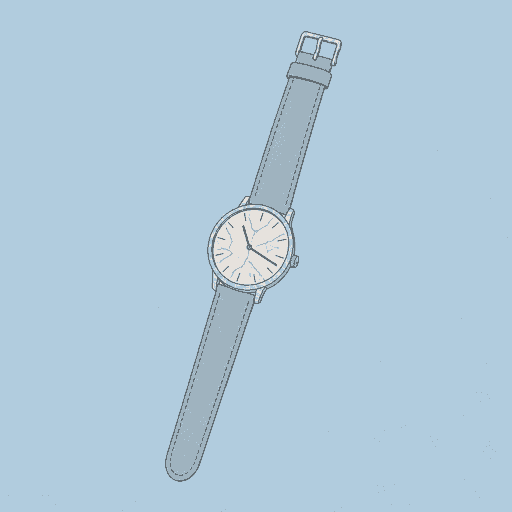
Mrs. Renauld’s wristwatch functions as a motif of The Unreliability of Appearances and Testimony. Found smashed near her dressing table, it initially appears to be incidental damage caused by the intruders. However, its hands, point to seven o’clock while she claims the attack took place around two, a telling clue that helps Poirot deduce that Renauld and his wife planned to fake his death. Someone advanced the hands to corroborate Mrs. Renauld’s false account of her husband’s abduction and then broke the glass to freeze the fabricated hour in place. The attempt backfires because, as Poirot discovers, “the glass is broken, yes, but the watch itself is still going” (42). The watch’s continued ticking beneath its shattered face mirrors the persistence of truth beneath a carefully constructed lie; damage to the surface cannot halt the mechanism underneath.
Poirot’s interpretation of the watch also supports The Importance of Psychology and Logic in Investigations. Where the official investigators treat the smashed timepiece as simple corroborating evidence, Poirot reads it as a psychological clue, reasoning that the need to manipulate time reveals both a liar and a motive for lying. He later explains that someone broke the watch in a deliberate attempt to make it so that “anyone leaving [Merlinville] by that [last] train would have an unimpeachable alibi” (105). This suggests that Madame Renauld broke the watch to shield Jack from suspicion, not realizing that he didn’t take the last train. The watch thus becomes the point at which physical evidence and psychological deduction diverge: One method accepts the object at face value while the other interrogates the intention behind its condition, exposing the gap between what appearances claim and what reasoned analysis uncovers.
The Open Grave
The freshly dug grave on the golf course is a motif of The Inescapable Consequences of Past Deceptions. Renauld intends the hole for the disguised body of the unhoused man, making the grave a prop in an elaborate stage play designed to fake his own death and allow him to escape blackmail. The grave represents his desperate attempt to bury his past identity of Georges Conneau forever. However, the plan backfires when Renauld himself is murdered and left in the very grave he dug, a perfect illustration of a trap ensnaring its creator. The location of the grave, marked out as a future bunker, is a crucial clue for Poirot, who immediately questions the logic of the supposed murderers. He remarks, “No one who knew would bury a body there—unless they wanted it to be discovered. And that is clearly absurd, is it not?” (54). This observation highlights the flaw in the official theory and points toward a pre-arranged plot where discovery was essential. The grave thus highlights not only the failure of Renauld’s deception but also the triumph of Poirot’s psychological method over Giraud’s focus on superficial evidence.
The Dagger
The airplane wire paper-knife, which exists in triplicate, functions as motif of The Unreliability of Appearances and Testimony. The dagger’s unassuming purpose as a paper-knife masks its deadly capabilities. Because it’s a specially commissioned keepsake, Hastings and the police initially assume that the object must be unique, and a key development in Poirot’s investigation is his discovery that the firm Jack employed “made to his order not two paper knives, but three” (193). This duplication complicates the mystery: The dagger belonging to Marthe is the murder weapon, a second belongs to Bella, and the third, which is initially presumed to be the only one of its kind, belongs to Mrs. Renauld.
Each of the three women who owns a dagger has a strong connection to the theme of unreliable appearances and testimony. Mrs. Renauld hides her husband’s past life, conceals Madame Daubreuil’s identity, and gives a false account of her husband’s death in an effort to shield her husband and her son. The narrative initially portrays Bella as a grasping, vengeful young woman seeking to use Jack to attain higher socioeconomic status, but her love for him is proven to be genuine and selfless. On the other hand, Marthe at first seems like a suitable match for Jack but is secretly the killer hiding behind the façade of concerned fiancée. The women’s misleading statements further link the dagger to the theme. Marthe never mentions that Jack gave her a dagger in any of her many conversations with the investigators. To shield Jack, Bella falsely claims she used the dagger to kill Renauld. Mrs. Renauld was in on the plan to fake her husband’s death by stabbing the unhoused man’s body with the dagger, and she gave Poirot and the others false testimony about how one of the masked assailants “caught up [her] little dagger paper knife from the dressing table” (39). The airplane wire paper-knife is closely tied to the layers of deceit that Poirot must peel back to find the truth, and the revelation that there are really three daggers rather than one reflects the complexity of the case.

Unlock the meaning behind every key symbol & motif
See how recurring imagery, objects, and ideas shape the narrative.
- Explore how the author builds meaning through symbolism
- Understand what symbols & motifs represent in the text
- Connect recurring ideas to themes, characters, and events
Related Titles
By Agatha Christie