The Shadows We Hide
The Shadows We Hide
A modern alternative to SparkNotes and CliffsNotes, SuperSummary offers high-quality Study Guides with detailed chapter summaries and analysis of major themes, characters, and more.
Summaries & Analyses
Quizzes
NEWReading Tools
Symbols & Motifs
Content Warning: This section of the guide features discussion of graphic violence, death, death by suicide, and child abuse.
The Horse Barn
The Hix horse barn collects the family’s violence in one structure. Jeannie is found hanging from its crossbeam, and Toke dies on its floor a year later. On the same day that he meets his demise, he drags Angel inside and drugs her in an attempt to stage her suicide, just as he once did Jeannie’s. Even Moody’s struggle with Toke and Jeb’s later decision to alter the crime scene by taking Angel inside both add to the weighty legacy of this particular setting.
When Vicky first takes Joe inside the barn, she points to the beam where Jeannie is believed to have died by suicide, then motions to the bloodstain on the lower boards, where Toke met his end. Joe bends down and touches the stain, calling it “Talbert blood” (99) and treating that contact as the closest he will come to the man who made him. The barn later returns to the narrative as the stage of Moody’s own struggle. Moody describes opening the back door, seeing “something on the ground near the front door” (224), and recognizing Angel by her moan. When he specifies that Toke attacked him with a coil of rope, this detail later allows Sheriff Kimball to realize what Toke meant to do with Angel that night. The barn’s frequent reappearance in the novel thus creates a sense of symmetry that ties the violent mysteries of this small down together.
Suicide Notes and Letters
Whenever the characters in the novel cannot be physically present, key letters and notes give them a voice that adds weight and nuance to the narrative. Specifically, Kathy’s letter finally reaches Joe after seven months in Lila’s keeping, and its measured, grammatical sentences are so unlike the erratic mother that Joe remembers that he calls Bremer to verify that her account of her new life is true. The letter’s clarity is therefore the first evidence—despite Joe’s skepticism—that Kathy’s recovery is genuine.
While this letter works to bring key characters together, other written documents help to solve the mysteries surrounding the recent deaths in Buckley. Toke’s poorly written letters eventually work as confessions, for his authorship can be traced through key errors in spelling. Toke’s hateful letter to Kathy, written from jail after he punched her, contains the erroneous phrase “make due” instead of “make do,” as well as “out come” instead of “outcome,” and these precise errors also appeal in the typed suicide note that Jeannie is believed to have written. When Joe recovers the missive from Moody’s case file, it also contains a misspelled version of the Hindi term “Bapu,” Jeannie’s term of endearment for her father (which she would never misspell). The matching errors reveal that Jeannie’s supposed “suicide” is really a murder, and Toke is the culprit.
Vehicles
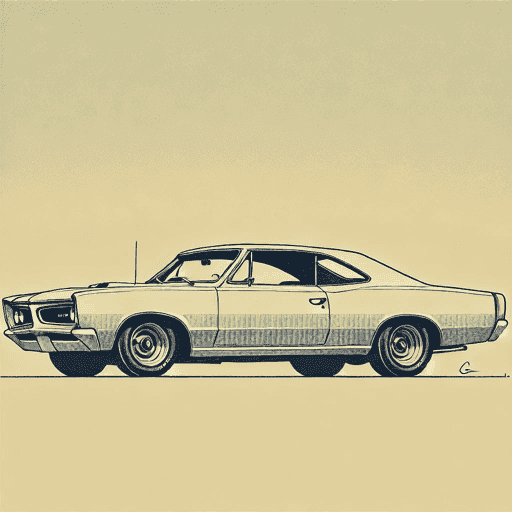
Throughout the novel, various vehicles stand as tangible legacies of the characters’ actions, debts, and settlements. This pattern is first introduced when Harley, who is still enraged that Toke managed to swindle him out of a decent selling price for his GTO, uses this grievance to justify his attacks on Joe. Toke bought the GTO from Harley for $5,000, then failed to honor the men’s verbal agreement that he would pay Harley an additional $15,000 when he was able. Notably, the car then became a prop in Toke’s second alibi. At the end of the novel, Dub demonstrates how Toke tied a balloon to an oscillating fan and lit it with a hand lamp to create moving shadows on the office wall, simulating his ongoing presence while he slipped out the back to murder Jeannie. (The same trick was running the night Toke died, which is why Toke never returned to clean it up.)
Toke’s previous vehicle, the red truck, carries a similar level of significance, for it is implied to be the vehicle that collided with Vicky’s mother years ago, sending her car into the river and killing her outright. Vicky tells Joe that Toke’s red truck disappeared the night her mother was killed, and that the red paint on the wreckage was never matched because Toke conveniently reported his truck stolen. The car’s absence protects Toke from a charge that would have ruined him a decade before the novel begins. Finally, in the novel’s climax, Joe’s sedan is destroyed in the fire that Charlie sets at the inn, hoping to kill him. Bob Mullen later points out to Joe that the GTO is the only piece of property that Toke legitimately owned, and as such, it becomes the only inheritance that Joe receives from his father, the slayer statute having indirectly deprived him of the Hix estate.

Unlock the meaning behind every key symbol & motif
See how recurring imagery, objects, and ideas shape the narrative.
- Explore how the author builds meaning through symbolism
- Understand what symbols & motifs represent in the text
- Connect recurring ideas to themes, characters, and events