The Shipping News
The Shipping News
A modern alternative to SparkNotes and CliffsNotes, SuperSummary offers high-quality Study Guides with detailed chapter summaries and analysis of major themes, characters, and more.
Summaries & Analyses
Quizzes
NEWReading Tools
Summary and Study Guide
Overview
Annie Proulx’s novel The Shipping News (1993) is a work of literary fiction that earned both the Pulitzer Prize for Fiction and the National Book Award. The story follows Quoyle, a large, ineffectual third-rate newspaperman from upstate New York. After a series of personal calamities, including the deaths of his parents and his cruel, unfaithful wife, Quoyle moves with his two young daughters and paternal aunt to their ancestral home on the stark coast of Newfoundland. Taking a job at a small local newspaper, The Gammy Bird, he begins the arduous process of rebuilding his life while confronting his family’s dark past. The novel explores themes such as Adversity as a Path to Personal Healing and The Struggle to Break Generational Trauma, as Quoyle’s journey is shaped by the unforgiving landscape and the history of his troubled lineage.
Proulx is known for her meticulously researched fiction set in challenging rural environments, including the story collection Close Range: Wyoming Stories, which features “Brokeback Mountain.” For The Shipping News, she drew on her experiences living in Newfoundland, grounding the narrative in the province’s recent history, including the economic devastation caused by the 1992 cod fishing moratorium and the legacy of government resettlement programs. The novel’s unique structure is borrowed from The Ashley Book of Knots, with several chapters titled after specific knots that function as metaphors for the events within. Quoyle’s journey of transformation examines the theme of Vulnerability as a Source of Masculine Strength, as his capacity for love and emotional endurance ultimately allows him to build a new life. The Shipping News was adapted into a major motion picture in 2001.
This guide refers to the 2003 Scribner trade paperback edition.
Content Warning: The source text and this guide feature depictions of child abuse, child sexual abuse, pregnancy termination, death by suicide, substance use, graphic violence, sexual violence, sexual content, cursing, illness, mental illness, ableism, death, animal death, bullying, physical abuse, and emotional abuse.
Plot Summary
Quoyle is a large, lumbering, and unhappy 36-year-old man, marked by a monstrous, jutting chin and a lifetime of failure. Living a dreary existence in upstate New York, he works as a third-rate newspaperman for the Mockingburg Record, a job secured by his only friend, Partridge. His life is defined by the psychological abuse his father and brother inflicted on him, his professional incompetence, and his disastrous marriage to the promiscuous and cruel Petal Bear, with whom he has two daughters, Bunny and Sunshine. Quoyle endures Petal’s constant infidelity and contempt, believing his silent suffering is a test of love. This bleak stasis is shattered through a rapid series of catastrophes. First, his terminally ill parents die by suicide together, leaving only a cold message on Quoyle’s answering machine. Shortly thereafter, Petal abandons him, taking the children and running off with a new lover. Petal sells Bunny and Sunshine to a pornographer in Connecticut named Bruce Cudd. Days later, Petal is killed in a fiery car crash. The police find a receipt for $7,000 for “personal services” and rescue the terrified girls from Cudd’s home.
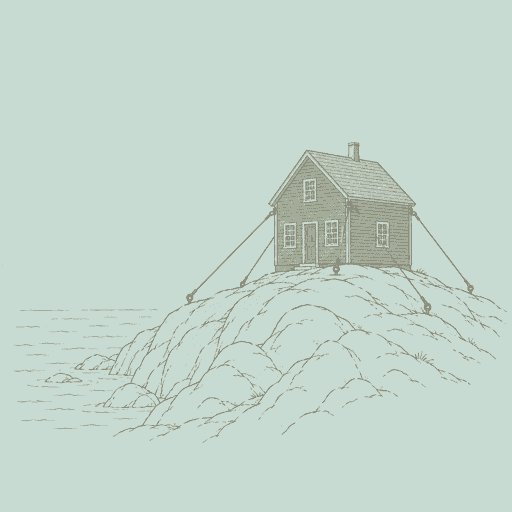
Into this wreckage steps Quoyle’s paternal aunt, Agnis Hamm, a stiff and pragmatic woman he barely knows. She proposes they make a new start by moving to their ancestral home in Newfoundland, a place Quoyle has never seen. Bereft and with no other options, he agrees. Partridge, now a long-haul trucker in California, uses his old connections to find Quoyle a potential job at a small weekly paper, The Gammy Bird, in Killick-Claw. Quoyle, the aunt, his two daughters, and Agnis’s aging dog, Warren, drive to the remote island. The journey to the family homestead on Quoyle’s Point is arduous, culminating in the discovery of a dilapidated green house lashed by cables to a barren rock. The house has been empty for 44 years but is miraculously still standing. As they explore, Bunny is terrified by the vision of a menacing white dog that no one else can see. Realizing the house is uninhabitable, they find lodging at the miserable Tickle Motel in Killick-Claw, and Quoyle begins his new job. He meets his eccentric colleagues: the acerbic managing editor Tert Card; the folksy Billy Pretty, who secretly writes the gossip column; and the erudite English expatriate B. Beaufield Nutbeem. The paper’s owner, a grizzled ex-fisherman named Jack Buggit, dismisses Quoyle’s newspaper experience and assigns him to cover car wrecks and compile the shipping news, a simple list of vessels in port.
As the family adjusts to Newfoundland, Quoyle feels inept at work and adrift in his new life. The aunt hires Jack Buggit’s estranged son, Dennis, a carpenter, to begin repairing the green house. To solve the problem of commuting across the bay, Quoyle buys a cheap, poorly built speedboat, which earns him the scorn of the local fishermen, including Jack, who calls it a “shitboat.” Quoyle slowly learns about the community, listening to stories from Diddy Shovel, the garrulous harbormaster, who recounts Dennis’s near-drowning and dramatic rescue by his father. Quoyle also finds himself drawn to Wavey Prowse, a tall, quiet woman he often sees walking along the road with her son, Herry, who has Down’s syndrome. He learns her husband, Herold, died when the Sevenseas Hector oil rig collapsed.
Quoyle interviews the obnoxious owners of a Dutch yacht, the Tough Baby, and the resulting story, a profile of the vessel, unexpectedly wins Jack’s approval. Jack instructs Quoyle to turn the shipping news into a weekly column, giving Quoyle his first-ever taste of professional accomplishment. His connection to the place deepens when Billy Pretty takes him to Gaze Island, the original home of the Quoyle clan, and reveals their dark history as pirates and wreckers. Quoyle’s tentative romance with Wavey stalls when she remains bound to the memory of her husband, though Quoyle later learns Herold was a cruel womanizer. The family is also unsettled when an elderly, estranged cousin, Nolan Quoyle, leaves knotted strings to practice folk magic around their house. When confronted, Nolan reveals a shocking family secret: Quoyle’s father, Guy, had sexually abused Agnis when they were children.
As winter sets in, the family abandons the isolated green house and moves into a rented house in Killick-Claw. The aunt takes a long-term upholstery job in St. John’s, leaving Quoyle in charge of the girls. He steps into the role of managing editor at The Gammy Bird after Tert Card quits. Bunny’s behavioral problems escalate; she is suspended from school for pushing a teacher who was mistreating Herry Prowse. To help the girl confront her recurring nightmare of the white dog, Wavey gives her a white husky puppy, which Bunny names Warren the Second.
The climax of Quoyle’s transformation arrives with the sea. One day, Jack Buggit goes out to tend his lobster pots and fails to return. A search party finds his boat and his body submerged beneath it, his foot tangled in a line. The community gathers for Jack’s wake, with his body laid out in a coffin in his parlor. As his wife, Mrs. Buggit, grieves over him, Jack suddenly coughs, expels a jet of seawater, and returns to life, having survived in a state of hypothermia-induced suspended animation. The wake erupts into a celebration. For Bunny, witnessing Jack’s “resurrection” finally allows her to grasp the finality of her mother’s death. In the emotional aftermath of the miracle, Quoyle and Wavey commit to their love, realizing it can exist without the pain and misery that defined their past relationships.
In the wake of Jack’s return, life settles into a new, hopeful pattern. A ferocious storm, the same one that nearly killed Jack, destroys the green house on Quoyle’s Point, tearing it from its foundation and sweeping it into the sea. The aunt, having insured the property, is pragmatic about the loss and decides to purchase her shop building in Killick-Claw, planning to live upstairs with her new business partner, Mavis Bangs. This frees Quoyle to buy the house he, Wavey, and the children now live in. Alvin Yark, Wavey’s uncle, completes a new, seaworthy boat for Quoyle. The narrative ends with Quoyle firmly rooted in his new life. He is a competent editor, a loving father, and a partner to Wavey. He has navigated the treacherous waters of his past and found a safe harbor, surrounded by a quirky but supportive community, symbolized by a wedding gift from Wavey’s father: a row of shining hubcaps mounted on sticks in their front yard.

Unlock all 63 pages of this Study Guide
Get in-depth, chapter-by-chapter summaries and analysis from our literary experts.
- Grasp challenging concepts with clear, comprehensive explanations
- Revisit key plot points and ideas without rereading the book
- Share impressive insights in classes and book clubs