The Witch
A modern alternative to SparkNotes and CliffsNotes, SuperSummary offers high-quality Study Guides with detailed chapter summaries and analysis of major themes, characters, and more.
Summaries & Analyses
Quizzes
NEWReading Tools
Important Quotes
Content Warning: This section of the guide includes discussion of death, graphic violence, sexual harassment, emotional abuse, and gender discrimination.
“But I never expected to be slaughtered in Town Square. And certainly not for being a witch.”
(Prologue, Page 2)
This quote establishes the novel’s central conflict through Caroline’s opening revelation. The word “slaughtered,” typically used for animals, strips her of humanity and emphasizes the brutal, dehumanizing nature of her execution. The parallel structure of “never expected” and “certainly not” emphasizes that she was wholly unprepared for a violent, unjust public execution. Meanwhile, the matter-of-fact tone contrasts with her horrific fate.
“It’s a black metal knocker molded into the image of a bear’s head, its mouth wide-open and its teeth bared. That knocker used to scare the crap out of me when I was a kid.”
(Chapter 1, Page 5)
Julia’s description of Pemberton’s bear knocker functions as both a symbol and foreshadowing. The imagery of the “wide-open” mouth and “bared” teeth personifies the house as a predator, suggesting that danger lurks at its threshold. The color “black” carries connotations of death and secrecy, while the aggressive animal imagery hints at the violence buried in the estate’s history. Julia’s casual, colloquial voice (“scare the crap out of me”) contrasts with the menacing description, emphasizing how childhood intuition recognized a threat that her adult mind has tried to dismiss.
“‘Don’t move them!’
My hand freezes, trapped in Gram’s death grip, an inch away from the largest of the combs. ‘Why not?’
‘She doesn’t like it when you move the combs.’”
(Chapter 1, Page 11)
The author uses sharp, fragmented dialogue and tactile imagery to create narrative tension. The phrase “death grip” links Letty’s fearful reaction to the mortal stakes attached to these objects. The ambiguous pronoun “She” withholds information from both Julia and the reader, creating mystery and suggesting a lingering presence without naming it. This exchange establishes the coral-blue combs as a recurring motif associated with the house’s haunting history.
“‘Archie and Molly are buried at the town graveyard.’ She rubs her hands together. ‘But Caroline has no gravestone. According to what I have read, Archie buried her in the backyard in an unmarked grave.’”
(Chapter 4, Page 24)
The author uses juxtaposition to contrast Caroline’s hidden “unmarked grave” in Pemberton’s backyard with the respectable “town graveyard” of her husband Archie and Molly, the woman who usurped her. This structural comparison visually represents the patriarchal hierarchy that dictated Caroline’s fate, grounding the haunting in literal, buried injustice. The small gesture of Ethel rubbing her hands together is a telling physical detail that signals discomfort, hinting that this family history remains unsettling generations later.
“The wind almost sounds like a voice whispering in my ear: See…see…”
(Chapter 5, Page 27)
The author employs auditory imagery and personification, immersing the reader in Julia’s eerie sensory experience. The wind’s human-like voice reaches intimately into Julia’s ear, while the ellipses create a drawn-out, breathy rhythm that mimics actual whispering. The homophone “See” is wordplay that functions as a clue hiding in plain sight—readers and Julia interpret it as a command to look, but its true meaning is revealed later. The hedging word “almost” captures Julia’s rational resistance to what her senses tell her.
“The ticking of the grandfather clock has gone silent again. The realization is enough to make my blood run cold.”
(Chapter 21, Page 90)
The silenced grandfather clock symbolizes time itself halting, as buried traumas keep Pemberton’s residents from moving forward. The idiom “blood run cold” links Julia’s physical response to the coldness and death haunting the estate. The word “again” establishes this event as a repeated supernatural phenomenon. The short, declarative sentences mirror the sudden silence itself.
“Verily, this man is pure evil—a tool of the devil if not the devil himself. The world will be a better place without him in it.”
(Chapter 22, Page 96)
Caroline’s assessment of Jonas when he’s charged with being the Night Reaper illustrates her naïve faith in the justice system. The archaic word “Verily” grounds the quote in the historical period while emphasizing Caroline’s absolute certainty—a certainty that the reader will come to see as misplaced. The author uses hyperbole (“pure evil,” “the devil himself”) to show how bias distorts Caroline’s judgment, making her oblivious to the fact that her own respected husband, Archie, is the serial killer. Her assumptions highlight the theme of Respectability as a Shield for Corruption, suggesting that true evil often hides behind a facade of social respectability.
“So why did they burn her to death? Burning at the stake was more of a religious-type execution, much more common in Europe. It’s just…strange.”
(Chapter 29, Page 121)
Henry’s rhetorical question invites the reader to investigate alongside Julia, creating a shared sense of mystery. The understated word “strange” quietly signals that something is deeply wrong without overdramatizing. This discrepancy between the official record and historical norms becomes the catalyst for Julia’s investigation into her family’s past.
“‘You may join us by your own accord, or we shall escort you against your will.’ He licks his lips at the idea of the latter. I remember the way he eyed me at the jailhouse and shudder. ‘But mark ye well, it will be a blow against you if you do not cooperate.’”
(Chapter 31, Page 131)
The author uses the disturbing physical detail of Deputy Strickland licking his lips to reveal the sexually predatory nature hidden behind his legal authority. The false choice presented (“by your own accord, or […] against your will”) is a rhetorical trap that strips Caroline of real agency. The formal, archaic language (“mark ye well”) lends his threat an official weight that masks personal cruelty, demonstrating the institutional power wielded against accused women.
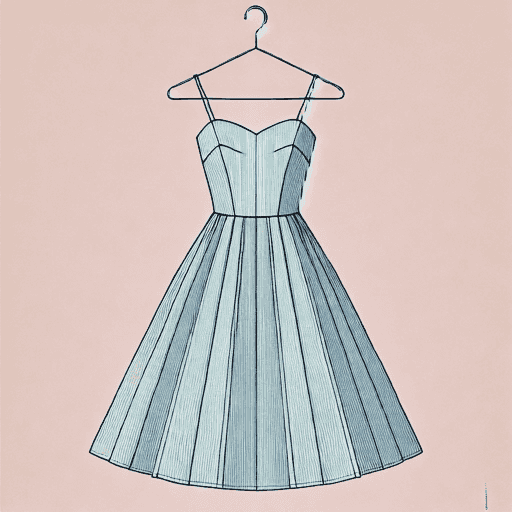
“It’s the peacock-blue dress.”
(Chapter 33, Page 140)
This brief, standalone sentence describes Julia’s discovery of Caroline’s distinctive dress in the attic. The one-line paragraph structure forces readers to pause, mirroring Julia’s own stunned recognition. The specific color detail “peacock-blue” evokes the traditional association of peacocks with vanity and display, foreshadowing the dress’s link to stolen identity and false appearances. The object becomes a recurring motif, creating a tangible bridge across centuries, solidifying Julia’s personal investment in uncovering the truth.
“‘Your judgment will not be fair,’ he says. ‘Magistrate Putman will accept spectral evidence. Your trial will go as Hitty’s did.’”
(Chapter 36, Page 152)
Jonas’s grim prediction connects Caroline’s inevitable fate to Hitty’s, establishing a pattern of injustice. The flat, declarative sentences create a tone of hopeless certainty, with no softening language to offer comfort. The phrase “spectral evidence”—testimony based on dreams and visions—highlights the absurd standards used to condemn women, emphasizing the theme of The Endurance of Patriarchal Oppression Across History.
“He rips every bit of clothing from my body until I stand before the two men, shivering and stark naked.”
(Chapter 38, Page 158)
The violent verb “rips” creates visceral imagery that captures Deputy Strickland’s brutality, while “every bit” emphasizes the totality of Caroline’s exposure. The contrast between her shivering vulnerability and the two clothed men watching her establishes a stark power imbalance made visible through physical description. This moment illustrates how the witch hunt provided a pretext for brutalizing women with impunity.
“Before he can finish that sentence, the red light indicator cracks right down the middle. And the entire machine goes dead.”
(Chapter 43, Page 184)
The response of Dixon’s ghost-hunting equipment to the portrait of Archie and Molly builds narrative suspense, implying an overwhelming supernatural presence. The symbolism of the color red suggests danger and warning. Meanwhile, the phrase “goes dead” personifies the machine, as if it has been fatally struck. This event is a key moment of misdirection, deepening the paranormal mystery while obscuring the human machinations at play.
“[M]y gaze drops to the object she’s holding close to her chest. It takes me a second to realize what I’m looking at, and when I do, I feel like I’m going to throw up. It’s a bone. And it looks human.”
(Chapter 46, Page 195)
Julia’s slow recognition of the object that her grandmother has unearthed creates a mounting sense of dread while making the theme of The Cyclical Nature of Family Trauma and Secrets tangible. Her visceral reaction, “I feel like I’m going to throw up,” grounds the supernatural mystery in physical, bodily horror. The short, choppy final sentences (“It’s a bone. And it looks human”) hit like hammer blows, each delivering a new jolt of information.
“Molly’s red hair is swept from her face, and she has pilfered my best peacock-blue dress from my own closet as well as my white shawl. I have been absent from our home for barely half a week, and she has already scavenged from my closet!”
(Chapter 49, Page 202)
The author uses the loaded verbs “pilfered” and “scavenged” to characterize Molly’s actions as both criminal and animalistic, like a vulture picking over a body. The color symbolism is pointed: Molly’s “red” hair suggests danger and passion, while Caroline’s stolen “white shawl” represents the innocence being appropriated. The exclamation point and repeated possessive “my” (used four times) emphasize Caroline’s outrage at the violation of personal boundaries. The dress becomes a tangible symbol of betrayal and the theft of a woman’s place.
“I would not. I am a man of God, and I am unable to defend my wife’s actions to this courtroom.”
(Chapter 54, Page 221)
Archie’s declaration exposes his hypocrisy as he proclaims himself “a man of God” while condemning his innocent wife to death. The repetition of “I” three times reveals Archie’s true focus: self-preservation disguised as piety. The formal, measured sentence structure makes his betrayal appear reasoned, showing how carefully he has crafted this performance. His use of religious authority as a shield exemplifies how patriarchal institutions can be weaponized to serve personal ends.
“I drop my eyes, and that’s when I discover the tip of the needle has been so worn down as to be useless. It has not broken through my skin because it is not sharp enough to do so. Strickland knows this, but nobody else in the courtroom is close enough to see the dull point.”
(Chapter 57, Page 233)
In this passage, the dull needle that Deputy Strickland uses to “prove” that Caroline is a witch symbolizes a corrupt justice system that goes through the motions of truth seeking while being manipulated by those in power. The spatial detail that “nobody else in the courtroom is close enough to see” reinforces how injustice thrives on distance between the powerful and the vulnerable. The methodical, almost clinical description mirrors Caroline’s horrified recognition of the trap.
“It’s one of Caroline’s coral-blue combs. For some reason, it was on the floor of my room, and when I stepped on it, it broke.”
(Chapter 62, Page 249)
The motif of the coral-blue combs returns to connect past and present, symbolizing Julia’s disturbance of Pemberton’s buried secrets. The breaking comb functions as foreshadowing, suggesting that something treasured and whole (Celia’s long-maintained deception) is being damaged beyond repair. The author uses the phrase “For some reason” to signal Julia’s suspicion that outside forces are at work, planting seeds of the real mystery to come. The event foreshadows an escalation of the supernatural events orchestrated to scare her.
“[T]his bone very likely belonged to a man.”
(Chapter 64, Page 262)
Henry’s short, scientifically neutral delivery of this line creates maximum impact through understatement. The qualifier “very likely” maintains a professional tone while delivering a devastating plot twist. By revealing that the bone belongs to a man, the narrative shatters Julia’s assumption that Caroline’s disturbed spirit is responsible for the hauntings. The single sentence recontextualizes all previous events.
“I will kill him because if we do not, Caroline, we will never remain free. If we burn this jailhouse down with him inside, the townsfolk will think we died here too.”
(Chapter 65, Page 266)
Jonas uses parallel structure (“if we do not […] If we burn”) to lay out his argument logically, framing murder as the only path to freedom. In his plan, fire, traditionally used to execute witches, is turned against the oppressors and symbolizes the erasure of their old identities. The direct address “Caroline” personalizes the moral weight of the decision he’s asking her to share.
“The recording starts again. The woman’s voice comes back on the tape, and now I realize that she wasn’t saying ‘see’ or ‘sea’ or even ‘C.’ She was saying something entirely different. Celia…Celia…Ceeeeelia…”
(Chapter 72, Page 292)
The author resolves the earlier wordplay, revealing how the homophones “see,” “sea,” and “C” all pointed toward one hidden truth: the name Celia. The elongated spelling “Ceeeeelia” forces the reader to hear the drawn-out whisper as Julia hears it. The repetition builds an incantatory rhythm, almost like a chant or spell being broken. This moment reframes supernatural occurrences as human manipulation, signaling the moment when buried family secrets actively push their way into the present.
“‘I want you to get out of our house.’ She sticks a shaking finger in my face and then points to the door. ‘We took you in as a favor when you were down on your luck, and this is how you repay us! You’re not welcome here anymore. I want you gone first thing tomorrow morning.’”
(Chapter 73, Page 295)
The physical detail of Celia’s “shaking finger” reveals through body language the panic beneath her aggressive words. The author uses the possessive “our house” to show how deeply Celia has claimed Pemberton as her territory. Her language, calculated to inspire guilt (“took you in as a favor […] how you repay us”), casts herself as the wronged party, a classic manipulation tactic. The repeated commands and specific timeline (“first thing tomorrow morning”) emphasize her desperate need to control the situation and remove the threat that Julia represents.
“I can never help myself. I stare at the fiery red marks on Molly’s neck. It is at that moment that I realize the truth: Jonas is innocent. My husband is the Night Reaper.”
(Chapter 76, Page 305)
This is a moment of anagnorisis—the critical discovery that completely reorients Caroline’s understanding of her world. The visual imagery of the “fiery red marks” on Molly’s neck uses color symbolism to connect violence, passion, and infernal evil in a single detail. The short, declarative final sentence—“My husband is the Night Reaper”—conveys absolute, horrifying certainty, its blunt structure refusing any possibility of denial. The possessive “My husband” makes the betrayal intimate and personal, deepening the horror of the revelation.
“‘Oh, Julia,’ Celia sighs. ‘I wish you had just stayed locked in your bedroom like I told you to. This whole thing would have had a much happier ending.’”
(Chapter 78, Page 313)
Celia’s sigh and gentle exclamation, “Oh, Julia,” create an unsettling contrast with the murderous intent beneath her words. The phrase “happier ending” reveals how Celia views her victims as characters she controls rather than people she harms. Her argument that Julia should have remained “locked in [her] bedroom” exposes the control and confinement she sees as reasonable. The speech solidifies the novel’s argument that true evil often hides behind a mundane facade.
“Presumably, the female skeleton belonged to Caroline. But who was the man? Why was there another person buried in the backyard of Pemberton? And who killed him and put him in the ground? I guess we’ll never know.”
(Epilogue, Page 339)
Julia ends her narrative with a series of rhetorical questions that pile up unanswered, resisting her attempts at complete resolution. The hedging word “Presumably” signals how uncertain even the “solved” parts of the mystery remain. Julia’s casual closing phrase “I guess we’ll never know” uses understatement to deliver a profound truth about history itself—that the past guards its secrets jealously. At the same time, the declaration ends the novel on a note of dramatic irony, as readers know that the unidentified man is Archie and that the body assumed to be Caroline is Molly.

Unlock every key quote and its meaning
Get 25 quotes with page numbers and clear analysis to help you reference, write, and discuss with confidence.
- Cite quotes accurately with exact page numbers
- Understand what each quote really means
- Strengthen your analysis in essays or discussions
Related Titles
By Freida McFadden