When Lemons Give You Life
A modern alternative to SparkNotes and CliffsNotes, SuperSummary offers high-quality Study Guides with detailed chapter summaries and analysis of major themes, characters, and more.
Summaries & Analyses
Quizzes
NEWReading Tools
Chapters 1-17Chapter Summaries & Analyses
Content Warning: This section of the guide includes discussion of illness, substance use, emotional abuse, physical abuse, suicidal ideation, death by suicide, and death.
Chapter 1 Summary: “Griff: 31 December 2024”
On December 31, 2024, Griffith “Griff” Barlow, a former Michelin-starred chef, resides in the Sunny Glen Aged Care Facility. Miserable with the low-quality food and his loss of independence, he throws his tinned spaghetti at the wall. The facility manager, Allison, reprimands him, calling him Greg. A young nurse named Dayna treats him condescendingly, and Griff overhears her suggesting he get a roommate for his double room. Griff privately consults his “Death Menu,” a notebook listing methods of dying by suicide. He has been hoarding sleeping pills and plans to overdose that night with whiskey. Griff reveals to the reader that he is 64 and is faking dementia.
Chapter 2 Summary: “Lisa”
The perspective shifts to Lisa Barlow, Griff’s 51-year-old half-sister, who has recently been diagnosed with ADHD. Her home is in a state of chaos, and she struggles with daily tasks like finding her phone. After taking a call from the nursing home about a fundraiser, Lisa reflects on her disorganized life. She prepares to visit Griff, whom she believes has early-onset Alzheimer’s disease and no longer recognizes her.
Chapter 3 Summary: “Lisa”
At Sunny Glen, Lisa finds Griff scowling at Allison and gives him his favorite Anzac biscuits. She takes him down the hall to a musical performance by Frank, a tall, gentle guitarist. Lisa is immediately attracted to him, and the music seems to stir a rare emotional response in Griff. Afterward, Lisa has a pleasant conversation with Frank. She then helps another resident, Rob, who is agitated, by calming him with a story about his cat. His sister, Mabel, is immensely grateful. Back in Griff’s room, Lisa unsuccessfully tries to entertain him by playing the ukulele.
Chapter 4 Summary: “Griff”
From Griff’s perspective, Lisa’s ukulele playing is agonizing, but he maintains his dementia facade. He thinks about how his diagnosis helped him to avoid the public shame of a lethal food-poisoning incident at his former restaurant, Lorraine (named after their mother). He believes telling Lisa the truth now would only cause more pain and destroy his legacy.
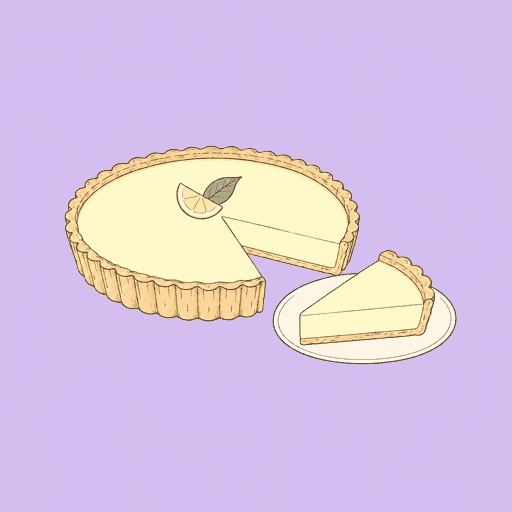
After overhearing Allison upselling the nursing home, which doesn’t offer most of what it purports to, Griff details his secret life in the facility: He uses a hidden smartphone and a secret bank account to order items online, having them sent to the abandoned house next to the nursing home, then climbing out his window at night to retrieve them. He decides to sneak into the kitchen to bake a lemon tart as a last meal before following through with his plan to die by suicide.
Chapter 5 Summary: “Griff (Age 42)—December 2002”
In a flashback to December 2002, a 42-year-old Griff prepares to propose to his partner Beau during a beach picnic. He has hidden the engagement ring inside a homemade lemon tart. The romantic gesture goes awry when Beau bites into the tart and breaks a tooth instead of finding the ring. At the emergency dentist, Beau discovers the ring in the pastry container. Despite the mishap, Griff formally proposes, and Beau happily accepts.
Chapter 6 Summary: “Griff”
Now, on December 31, 2024, Griff sneaks into the facility’s kitchen. Unable to find a rolling pin, he improvises by dismantling a broken walking frame and using its metal crossbar. The act of baking the lemon tart is deeply comforting and makes him feel in control for the first time in months. Just as he finishes and cuts a slice to eat as his last meal, he hears the kitchen door open.
Chapter 7 Summary: “Griff”
Rob, a resident who has dementia, wanders into the kitchen, drawn by the aroma of the tart. He mistakes Griff for his deceased mother. Touched by Rob’s tears, Griff shares the tart. Eating it brings Rob immense joy, and he holds Griff’s hand, believing he is with his mother. The connection moves Griff, who decides to save the last slice to give to Rob the next day. He also postpones his plans to die. He takes Rob back to his room; remembering a time he refused to comfort a young Lisa and filled with regret, he sings Rob a lullaby.
Chapter 8 Summary: “Griff (Age 13)—September 1973”
In a flashback to 1973, a 13-year-old Griff meets his newborn half-sister, Lisa, and feels instantly protective. His abusive stepfather, Brent, taunts him and blames him for the family’s problems, including blaming him for his father’s death. Later, finding the kitchen empty, Griff cooks a tomato meat sauce with spaghetti, finding a sense of control and safety in the process. When Lisa’s crying interrupts his peace, he briefly wonders if Brent was right that she would make his life miserable.
Chapter 9 Summary: “Lisa”
After she goes to her dog-grooming job, Lisa visits Sunny Glen, where she gives Rob and Mabel the gifts she ordered: a soft pair of headphones for Mabel to help her unwind at night and a stuffed cat that purrs and looks like Rob’s former cat, Cottonmouth. When Griff refuses to attend Frank’s musical performance, Lisa brings another resident, Walter, pretending he is her brother. Her plan unravels when Allison brings the real Griff to her, forcing her to invent the term “grandbrother” to a confused Frank. Despite their chaotic introduction, Frank asks Lisa on a date, and she accepts.
Chapter 10 Summary: “Griff”
Before she leaves, Lisa gives Griff a card from a former colleague that praises his culinary talent, stirring painful memories for Griff. Alone, he prepares again to end his life. He takes out his hoarded pills, a bottle of fine whiskey, and his will. He decides he will do it after he takes Rob his remaining piece of lemon tart.
Griff puts on “Martin’s” chef whites, along with his mandated post-COVID face mask, and takes the tart down to Rob’s room. On the way, he sees another resident, Sylvia, who is always begging people to help her go home to Rome. He makes her a cup of tea and continues down the hallway. There, he meets Rob’s sister Mabel, and they share the tart. She exclaims about how it tastes like their mother’s. Although he feels good about helping Rob, the talk of family makes him sad, and he returns to his room alone.
Chapter 11 Summary: “Griff (Age 14)—September 1974”
In a 1974 flashback, Griff is 14. His stepfather, Brent, becomes enraged that Griff’s mother, Lorraine, bought Griff a coriander plant for his herb garden instead of saving for a TV. Brent slaps Lorraine in front of a terrified Lisa, who stands clutching her stuffed bear. To protect his sister, Griff hides with her under his bed and soothes her sobs by whispering their mother’s Anzac biscuit recipe. He resolves that Lisa will never witness such violence again.
Chapter 12 Summary: “Griff”
Continuing his preparations, Griff takes his hoarded pills from Beau’s urn. He reflects on his late husband’s life and writes a final, secret-filled letter to Beau, hiding it inside Beau’s broken viola. He retrieves the whiskey he and Beau had been saving for their 30th anniversary. As he puts the pills in his mouth, the action triggers a memory of how he and Beau first met.
Chapter 13 Summary: “Griff (Age 41)—August 2001”
In a flashback to 2001, Griff is the head chef of a prestigious restaurant. His estranged sister, Lisa, is there for a work dinner. When a young waiter spills champagne on a man at Lisa’s table, the man is remarkably kind and reassuring. Lisa criticizes Griff for his harsh management style.
Later, Griff finds the young waiter crying in the bathroom, worried about paying for the expensive bottle. Griff secretly gives him $200. As he leaves, he glimpses the man stepping out of the far stall; their eyes meet, and the man gives Griff a small nod of acknowledgment before Griff is called back to the kitchen.
Chapter 14 Summary: “Griff”
In the present, another resident, Gladys, who is blind, enters Griff’s room. With a mouthful of pills and whiskey, Griff is unable to speak as Gladys tells him she is looking for the “new chef.” She wants him to bake lenja pita, a traditional Serbian apple cake, for her husband Herb’s birthday.
Griff is forced to spit out the pills and whiskey, splattering Gladys slightly. He lies that the chef is gone, but Gladys’s plea moves him, and he agrees to ask the “chef” for help. He then impulsively offers to let her cook with the chef. As she leaves, Gladys finds some of the pills stuck in her hair, takes them for the cereal she had for breakfast, and swallows three of them, leaving Griff horrified that he may have accidentally killed her.
Chapter 15 Summary: “Lisa”
Lisa and Frank have their first date at an Italian restaurant. Lisa confesses she brought Walter to the concert just to see Frank, who is charmed by her honesty. The date is comically disastrous: Lisa orders an extremely spicy dish, and Frank kindly swaps meals with her. Later, overcome with laughter after a prawn falls from his mouth, Frank spews wine out of his nose, sending them both into fits of laughter.
They bond over stories about their families and the difficulties of caring for ailing parents. Lisa opens up about her fractured relationship with Griff and the loss of her parents. Frank offers to cook with her, a gesture of kindness she always craved from her brother.
Chapter 16 Summary: “Lisa (Age 6)—September 1979”
A flashback to 1979 shows a six-year-old Lisa desperate to help Griff cook. He dismisses her, so she makes a chef hat and name tag to prove she is serious. Her father, Brent, comes home smelling of alcohol and sends Lisa against Griff before heading upstairs. Griff tries to keep Lisa away from their parents, who are having a loud, violent fight upstairs. After the shouting stops, Griff wordlessly brings Lisa a piece of pork crackling as a peace offering.
Chapter 17 Summary: “Griff”
The next day, Griff confirms that Gladys survived the sleeping pills and wakes her late that night to cook. In the kitchen, using a fake posh accent, he pretends to be the “new chef.” Gladys is ecstatic to be cooking again, and the two bond over warm beer and shared stories of their late husbands.
After they finish the cake, Gladys reveals she knows his true identity—a carer found more pills stuck to her hair and identified them as sleeping pills, and Gladys connected the dots. She promises to keep his secret but asks him to be her “eyes” and watch her husband’s reaction to the cake. She tells Griff to cancel his other “plans,” insisting he is still wanted, which causes him to reconsider his decision to die.
Chapters 1-17 Analysis
In these opening chapters, Griffith’s initial act of rebellion, flinging a bowl of “lukewarm tinned spaghetti” against his wall (1), immediately establishes the novel’s interest in exploring the connections among food, dignity, and personal agency. For a former Michelin-starred chef, the flavorless, institutional meals at Sunny Glen are more than just unpalatable; they are a daily representation of his complete loss of control and a direct contradiction of his life’s work. His bitter conclusion, “If [food is love], then nobody loves me, not anymore” (1), frames the facility’s culinary neglect as a lack of care and respect, reflecting the documented crisis in aged care. When Griff later sneaks into the kitchen to bake a lemon tart, the act transcends a simple craving for a final meal: It is a reclamation of his core identity. The kitchen becomes a sanctuary where he can shed his dementia façade and momentarily become himself again. This private rebellion, initially a step toward his own planned death, evolves into an act of care as he shares the tart with Rob and later bakes with Gladys. Their reactions remind Griff of food’s power to restore joy and forge human connection, establishing the theme of Food as Care and an Affirmation of Selfhood.
The narrative’s structure, which alternates between the present-day perspectives of Griff and Lisa and flashbacks to their youth, methodically uncovers the layers of trauma fueling their estrangement but delays revealing the truth behind those flashbacks. Griff’s decision to fake dementia is initially implied in these chapters to be a desperate attempt to protect his professional legacy against a past food-poisoning incident. The flashbacks add another layer of history by exposing the abuse perpetrated by their stepfather, Brent. Scenes like Brent slapping Lorraine in front of a terrified Lisa and Griff’s subsequent cooking, initially undertaken to feed his little sister, reframe his lifelong relationship with cooking; from a young age, the kitchen was a safe space, a world of order and control where he could retreat from violence and chaos. This history, and Lisa’s failure to remember it, directly informs the siblings’ dysfunctional dynamic, establishing the novel’s conceit that these wounds must be directly confronted to be healed, developing the exploration of Restoring Fractured Relationships Through Honesty.
Through their character development in these chapters, the novel establishes how both Griff and Lisa engage in forms of performance to navigate their lives, hiding their true selves behind carefully constructed facades. Lisa’s adult ADHD diagnosis provides her with a new framework for understanding her chaotic existence as a neurobiological condition, not a personal failing. Her messy “floordrobe” and home are classic symptoms for which women with ADHD have historically been shamed, which her relentless inner critic Ursula points out. Her desire to present a “polished version” of herself is a form of masking, an exhausting effort to appear neurotypical. Griff’s feigned dementia is a more calculated performance, designed to erase his present self, but he has also been performing throughout his life due to society’s biases against queer individuals. This performance is tested when he discusses Beau with Gladys. His hesitation to correct her assumption that Beau was his “wife” before finally saying “husband” touches on the complexities of Queer Identity at Different Ages, revealing the constant negotiation of safety and authenticity faced by older LGBTQIA+ individuals in institutional settings that are not implicitly inclusive.
While the siblings are trapped in their respective performances, the narrative introduces kindness from outsiders as a catalyst for genuine connection. Lisa’s chaotic but ultimately successful date with Frank demonstrates this dynamic. Despite her lack of confidence, a true connection forms because of Frank’s gentle acceptance. He doesn’t judge her; instead, he swaps his meal and shares in the laughter, modeling acceptance and nonjudgment, contrasting with the critical voice in Lisa’s head. This is paralleled in the flashback to Griff and Beau’s first meeting, where Beau’s compassion toward a clumsy waiter is what first catches Griff’s attention. Griff’s own secret act of kindness in that same scene—giving the waiter $200—reveals a softer side he habitually conceals and only Beau witnesses. These encounters suggest that vulnerability and acceptance, rather than the control and secrecy practiced by the Barlows, are the foundations of meaningful relationships. In addition, Frank’s offer to cook with Lisa is a key moment in which he extends the collaborative warmth and validation that Griff always denied her in the kitchen, establishing both the status quo of the dynamic between the siblings and how it will have to change.
Food and its preparation are central to the narrative, and particular food items function as powerful symbols and motifs whose meanings evolve throughout the early chapters. The motif of the Anzac biscuits is introduced in the present as Lisa’s offering of love, one of the few ways she can reach her seemingly absent brother. A flashback, however, reveals its origin as a talisman against trauma: A teenage Griff whispers the recipe to a terrified young Lisa to soothe her during their father’s violent rage. This dual meaning encapsulates their complex history: an act of care rooted in a painful secret, one that the narrative makes clear Lisa doesn’t remember. The symbol of the lemon tart undergoes a similar transformation. It first appears in a flashback as an emblem of Griff’s romantic love for Beau, containing the engagement ring. In the present, it begins as a monument to his grief and part of his plan to die by suicide, but its meaning expands when he shares it with Rob, shifting into a conduit for empathy and shared joy. The shifting significance of these objects mirrors the characters’ potential for growth, suggesting that items tied to trauma and death can be repurposed into expressions of love and life.

Get in-depth, chapter-by-chapter summaries and analysis from our literary experts.
- Grasp challenging concepts with clear, comprehensive explanations
- Revisit key plot points and ideas without rereading the book
- Share impressive insights in classes and book clubs