When Lemons Give You Life
A modern alternative to SparkNotes and CliffsNotes, SuperSummary offers high-quality Study Guides with detailed chapter summaries and analysis of major themes, characters, and more.
Summaries & Analyses
Quizzes
NEWReading Tools
Symbols & Motifs
Content Warning: This section of the guide includes discussion of illness and death.
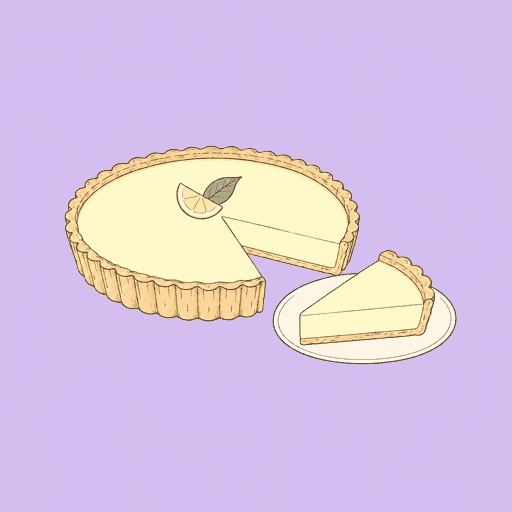
The Lemon Tart
The lemon tart is a symbol of Griff’s core identity as a chef, his lasting love for Beau, and his eventual reawakening to life. The tart first appears in his botched proposal to Beau, where a romantic gesture turns into a dental emergency, humorously grounding their love in real-world imperfection. Years later, after deep loss, Griff bakes the tart as a “last meal,” an act that transforms from an ending into a powerful reclamation of his purpose. The act of cooking it in the nursing home kitchen is a rebellion against the tasteless, undignified food served to residents. When he shares the tart with Rob, the joy it sparks in him demonstrates food’s power to restore dignity and selfhood, a key aspect of the theme of Food as Care and an Affirmation of Selfhood. This moment is the catalyst for Griff’s return to life as he adopts the secret mission to feed the residents properly, giving them the same experience that Rob had. The tart’s bright, sharp flavor mirrors the jolt of life it brings back to him and others, evolving from a symbol of his past love into the tangible form of his renewed purpose and return to life after Beau’s death.
Beau’s Viola
Beau’s viola represents Beau’s voice, memory, and unique spirit, especially after Alzheimer’s robs him of his ability to communicate with words. The music he plays is a direct line to his soul, a way he continues to express his love for Griff and connect to his own identity. The viola is an extension of his being, a beautiful and emotional form of nonverbal expression. Consequently, the moment Allison “accidentally” breaks it is a brutal act of silencing that represents the dehumanization Griff sees within Sunny Glen, where a resident’s identity, history, and most precious possessions are dismissed as insignificant inconveniences. Allison’s callousness in this moment is what solidifies her as the story’s antagonist for Griff, and the viola’s meaning consequently shifts after it is broken. The broken viola becomes a manifestation of Griff’s grief and rage, and he later hides his final, secret letter to Beau inside its cracked body. This transforms the silenced instrument once again, this time into a sacred vessel, holding the truth of Griff’s love and sacrifice.
The Garbage Bag
The garbage bag represents the shame Lisa feels about her chaotic life and her attempts to deal with her newly diagnosed ADHD. Her habit of “garbage-bagging” her mess is a physical manifestation of her tendency to hide the parts of herself she believes are unlovable and unacceptable. By stuffing everything into a bag and shoving it out of sight, she creates a fragile illusion of order, terrified that her true, messy self will be rejected. This habit culminates in the disastrous scene where she hides a garbage bag in the oven, which Frank then accidentally sets on fire while preheating. The moment the bag melts, spilling its contents—including “a fork and a pair of old beige high-waisted undies” (144)—forces a moment of total vulnerability. However, instead of the judgment Lisa anticipates, she receives laughter and acceptance from Frank. This scene is an important turning point in her character arc, initiating her journey toward self-acceptance and demonstrating that honesty, not concealment, is the key to Restoring Fractured Relationships Through Honesty.
The Anzac Biscuits
The Anzac biscuits function as a recurring motif of the complex, painful, and loving bond between Lisa and Griff. Throughout the novel, Lisa bakes the biscuits as an offering of care, as she herself finds them comforting through the connection to her mother, whom she remembers whispering the recipe to soothe her. For Griff, the biscuits carry a much deeper, hidden meaning. The narrative reveals that the recipe was a secret mantra he would whisper to Lisa to calm her when he hid with her to protect her from knowledge of their stepfather’s abuse, demonstrating a deep, protective love she never knew he possessed. He recalls whispering the steps, “slow and steady like a lullaby” (57), to a young, terrified Lisa. This revelation, and the memory it evokes in Lisa, reframes their entire dynamic, transforming the Anzac biscuit into a symbol of both their shared trauma and Griff’s buried affection. The motif powerfully illustrates the theme of Restoring Fractured Relationships Through Honesty by showing how, with Griff’s revelation about the origins of the recipe’s importance to them both, he has unlocked Lisa’s memories and allowed them to reconnect through their shared history.

Unlock the meaning behind every key symbol & motif
See how recurring imagery, objects, and ideas shape the narrative.
- Explore how the author builds meaning through symbolism
- Understand what symbols & motifs represent in the text
- Connect recurring ideas to themes, characters, and events