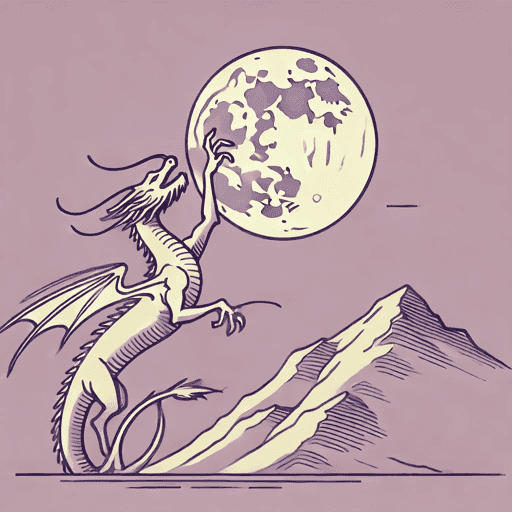
When the Moon Hatched
When the Moon Hatched
A modern alternative to SparkNotes and CliffsNotes, SuperSummary offers high-quality Study Guides with detailed chapter summaries and analysis of major themes, characters, and more.
Summaries & Analyses
Author Insights
Quizzes
NEWReading Tools
Sarah A. Parker on When the Moon Hatched
In her own words: quotes and insights from the author.Why she wrote it
A world before a storyThe Moonfall world arrived roughly three years before Parker wrote a single scene. She had been carrying it privately, walking its logic, living in it without any plot to anchor her, until the pressure of loving something that spectacular demanded she act.
I just fell in love with this world. And I just knew that I needed to do something spectacular to kneel to this amazing world that I was living in my head. [paraphrased from audio]
Parker traces the seed of the whole project to something physical: a small ornament on her grandmother’s table that she stared at as a child while reading through her nana’s stack of fairy books on a New Zealand farm.
My nana used to have a little hatching dragon egg ornament I’d enjoy whenever I went over to her place to read her stack of fairy books. I like to think this all hatched from there.
 twelvepaleroses.wordpress.com, “Exclusive Author Interview: Sarah A. Parker – When The Moon Hatched (Moonfall #1)”
When the story finally broke through after those three years of incubation, it didn’t arrive piece by piece. Parker describes the moment the characters started speaking as something that happened to her rather than something she engineered.
I feel like someone just leant forward and whispered it in my ear, because once the characters did start speaking, I couldn’t stop them. But it was definitely the world that came to me first. I walked through that world like it was a video game for three years, and loved every moment of it, and it was such a joy. [paraphrased from audio]
Parker was also writing through a period she did not fully recognize as difficult until the book was finished. The escape the story provided was not a creative indulgence but something closer to a lifeline.
This story for me was a breath of air when I didn’t realise I was drowning. It was a rich, luscious, exciting, magical, heart aching ESCAPE. I hope it offers the same for others.
How she wrote it
Clay on the wheel, smashed back downBefore Parker opened a draft, she spent one full month doing nothing but naming. Every creature, culture, and location in the world needed its own sound, drawn from a personal archive of words and syllables she had been accumulating for years.
I spent an entire month prior to writing Moon naming everything in the world. Honestly, this was so fun for me. I had such clear visions for the different cultures, so I wanted each different culture/part of the world to have its own flavour so to speak.
twelvepaleroses.wordpress.com, “Exclusive Author Interview: Sarah A. Parker – When The Moon Hatched (Moonfall #1)”That month of naming preceded 3.5 years of world-building, all of it before a single chapter was drafted. The sequence matters: Parker built the container first and only then poured story into it.
Parker’s decision to keep the world entirely free of real-world cultural borrowing was not incidental. It was a condition she set for herself before she began, one that shaped every invented name, institution, and custom in the book.
When I’m building a fantasy world, I try my best not to draw from real world cultures at all. For me, writing is an escape, and I don’t like to tether that to reality if I can avoid it.
twelvepaleroses.wordpress.com, “Exclusive Author Interview: Sarah A. Parker – When The Moon Hatched (Moonfall #1)”Her drafting method runs in distinct passes: first a skeleton of dialogue and scene cues, then a full first draft, then a flesh-out pass that adds roughly 30,000 words, then a trim. She uses a pottery metaphor for the whole cycle. Editing is not a stage she tolerates but the place where she says she actually changes as a writer.
Every piece of feedback is like GOLD. I use it to invest in myself, to broaden my mind, look at things from a different angle, better my story. It’s hard, yes. Rewrites are painful, but they’re always, ALWAYS for the better.
One of the book’s central characters resisted every expectation Parker had for him. Kaan, the Moonfall series’ male lead, arrived on the page with an agenda of his own, and that resistance became the most absorbing part of the writing.
Kaan. I had an idea for how his voice was going to be, but I realised once I began writing him that he had other plans. Every moment he stepped onto the page I was in my absolute element.
Readers frequently describe the world of Moonfall as feeling lived-in rather than constructed. Parker locates the reason not in any single technique but in the cumulative weight of the time she gave the story before she asked anything of it.
I think it feels real to them, because it feels real to me. I gave the story the time to put its roots down and to grow its wings. I really loved the story. I spent time loving it. I gave it everything that I possibly could of myself. [paraphrased from audio]
The personal thread
Her grandmother’s death, buried in the draftParker’s grandmother died while she was deep in the writing. That loss did not redirect the story but pressed into it, changing its weight in ways Parker only named publicly at a 2024 event at Christchurch City Libraries, where she said her personal grief had collided with the manuscript and made it heavier.
A lot of us have an ‘other’ inside of us.
Parker connected that remark directly to Raeve, the book’s protagonist, who buries painful memories under ice rather than face them. She described her own version of that same tendency and said buried things have a way of bludgeoning back up, which is the arc the book traces.
What she wants us to sit with
An escape that asks you to face thingsParker is deliberate about not telling readers what to conclude. She frames that restraint not as modesty but as a genuine belief about how reading works, and she said so directly when pressed on the question.
Reading is such a personal experience, and I hate to ever tell readers what to take away from my stories.
That refusal to prescribe a reading sits alongside a very specific hope: that the book does for readers what writing it did for her. The same emotional function the book served during its creation is the one she wants it to serve on the other side.
This story for me was a breath of air when I didn’t realise I was drowning. It was a rich, luscious, exciting, magical, heart aching ESCAPE. I hope it offers the same for others.